2026 Olympic Women’s Hockey Preview: Japan

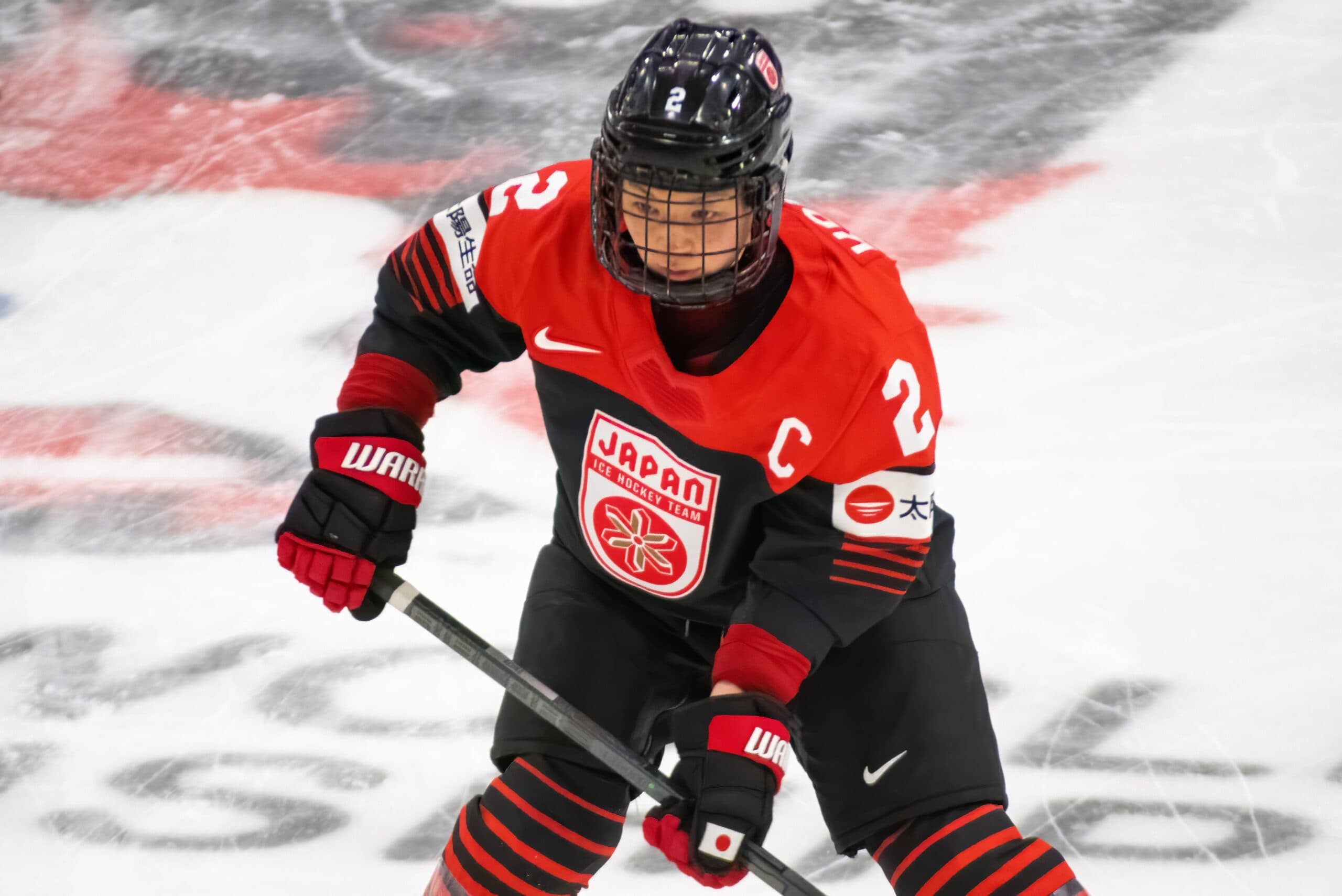
A country with a long history of women’s hockey is hoping for another good showing on sport’s biggest stage.
While a medal in a major international tournament has eluded Japan for the better part of 40 years, the country has always managed to stay competitive in the top division for close to a decade. They look to continue that narrative in the 2026 Winter Olympics.
This will be Japan’s fifth time icing a team at the Winter Games. Some players are making their Olympic debuts, while others have been part of the national team for a long time.
With a tight-knit group that has been together for several years, Japan has a core that cannot be taken lightly in Group B.
LOOKING BACK TO 2022
Japan was one of the pleasant surprises of the Beijing tournament. Led by a talented netminder in Nana Fujimoto, the team won three of its four games, picking up points in each of its group-stage contests, including beating Czechia and Sweden. The Japanese squad finished atop Group B, the team’s best performance in any major tournament.
Japan’s dream run ended with a 7-1 quarterfinal loss to Finland, the eventual bronze medalists. Things seemed to be on the up and up as Japan looked like a team that could challenge the best in the world, moving up to Group A in the 2022 and 2023 IIHF Women’s World Championship. However, the team has yet to make it beyond the quarters.
OFFENSE
What hurt Japan at last year’s Women’s Worlds was the loss of Akane Shiga to injury. However, the former Ottawa Charge forward is back and looks to contribute with an experienced forward group. Shiga led Japan during Olympic qualifying last year and posted another three points during the IIHF Asia Championship this past November.
Another player who stepped up during qualifying last year was Yumeja Wajima. The 23-year-old narrowly missed out on playing in Beijing, but proved last season that she could be an important offensive asset. She led all skaters in Japan’s Olympic Qualifying group, scoring five goals in three games, and potted her first goal at the Women’s Worlds in the spring.
Rui Ukita is one of the more experienced members of the Japanese roster, having played in each of the previous three Olympic Games. Her production might not be as consistent, but she always finds a way to score a big goal at important times. Ukita led Japan with eight points as the Asian Games last season.
The team will get a boost from the returning Haruka Toko. The 28-year-old has played in each of the past Olympic events, leading Japan with six points in Beijing. She hasn’t played for the national team since the 2024 Women’s Worlds, instead solely playing for Linköping HC in Sweden. She will provide the experience and a little more scoring that Japan needs to keep up with the rest of Group B.
Other offensive weapons Japan will need to be successful include Makoto Ito and Mei Miura, talented skaters with playmaking abilities.
DEFENSE
Japan might not have the depth required to be successful in the later rounds of the tournament, but they have a couple of players who are fun to watch. Like Ukita, Ayaka Hitosato has become an Olympic veteran, playing at each tournament in Sochi 12 years ago. While tasked with facing the opposition’s best every single game, the Hokkaido native has produced offensively, finishing tied for second on the team in scoring with 4 points in Beijing. At the WWC, she has been named one of Japan’s top three players in each of the past three tournaments.
Hitosato’s talent is why she only plays on the national team part-time, playing with Toko for Linköping in Sweden.
Akane’s sister, Aoi, also has experience playing in top European competition. After playing for Lugano in the top Swiss league two years ago, she joined MoDo Hockey in the SDHL and has been an effective two-way blueliner. Through 34 games this season, the 26-year-old has a goal and 15 assists for 16 points. Shiga also registered four assists during Olympic qualifying last year.
Of the national team regulars, Shiori Koike might be the most talented of the bunch, providing solid minutes, but the team doesn’t have as much stability in the bottom four to hold off the better teams in the tournament.
GOALTENDING
There are still many of us bummed that Nana Fujimoto no longer plays. However, the absence has led to an opportunity for Miyuu Masuhara. She was just 20 when she was Japan’s third-stringer in 2022, but has since taken over the starting role over the past couple of years. The FISU Winter Universiade silver medalist was exceptional during last year’s Women’s Worlds, playing every game for Japan, going 3-2-0 with a 2.62 goals-against average and .926 save percentage.
Riko Kawaguchi was the team’s starting netminder during the 2023 and 2024 WWC, but things didn’t go well, as she won just one of eight starts during that span. Outside of France or Italy, I wouldn’t suspect Kawaguchi to play unless something were to happen to Masuhara.
COACHING
Yuji Iizuka has been the head of the Japanese women’s team since the 2008 Women’s Worlds. While the team has been relegated twice from the world championships, he has guided his team to stay in the top division for most of his tenure, including earning a spot in Group A for the 2023 tournament. On top of that, his coaching has led to Japan to the Olympics four times.
Along with putting together a competitive team for major international competition, Iizuka has coached the team to success at the continental level. During his time as head coach, Japan has won gold at the Asian Games twice, as well as the last two IIHF Challenge Cups of Asia in 2011 and 2012, and the first two IIHF Asia Championships.
BURNING QUESTION
Will Japan’s camaraderie overcome its lack of depth?
The one big advantage Japan has compared to other teams in the tournament is that the majority of the national team trains and plays together year-round. However, that doesn’t give the players, aside from a few of them, a chance to measure themselves against the best players in the world. While the team has a few players who can be effective, the bottom half of the lineup has been known to struggle in keeping up when they face teams like Germany and Sweden.
PREDICTION
While teams like Italy and France have a couple of talented players, I like Japan’s chances to get at least a couple of wins in the lower Group B. However, with how good Sweden is, and Germany is expected to be a stronger group this time around, I don’t know if the Japanese have enough skill to finish in the top two, but they will punch their ticket to the quarterfinals.
However, that’s as far as the team will go. With the fact that the team will have to take on either the United States or Canada to open the knockout stage, it’s looking like another quarterfinal exit for Japan.
FULL ROSTER
Forwards
Rui Ukita (Daishin IHC, JPN)
Suzuka Maeda (DK Peregrine, JPN)
Haruka Toko (Linköping HC, SDHL)
Mei Miura (Toyota Cygnus, JPN)
Remi Koyama (Seibu Princess Rabbits, JPN)
Akane Shiga (Luleå HF, SDHL)
Yumeka Wajima (DK Peregrine, JPN)
Makoto Ito (Toyota Cygnus, JPN)
Rio Noro (Daishin IHC, JPN)
Riri Noro (Daishin IHC, JPN)
Ai Tada (Daishin IHC, JPN)
Umeka Odaira (Daishin IHC, JPN)
Defenders
Akane Hosoyamada (DK Peregrine, JPN)
Shiori Koike (DK Peregrine, JPN)
Ayaka Hitosato (Linköping HC, SDHL)
Aoi Shiga (MoDo Hockey, SDHL)
Kanami Seki (Seibu Princess Rabbits, JPN)
Shiori Yamashita (Seibu Princess Rabbits, JPN)
Kohane Sato (Daishin IHC, JPN)
Nana Akimoto (DK Peregrine, JPN)
Goaltenders
Rei Halloran (Järnbrotts HK, NDHL)
Miyuu Masuhara (DK Peregrine, JPN)
Riko Kawaguchi (Daishin IHC, JPN)
PRELIMINARY ROUND SCHEDULE
- Friday, Feb. 6: France vs. Japan, 6:10 a.m. ET
- Saturday, Feb. 7: Germany vs. Japan, 6:10 a.m. ET
- Monday, Feb. 9: Japan vs. Italy, 6:10 a.m. ET
Tuesday, Feb. 10: Japan vs. Sweden, 6:10 a.m. ET
The quarterfinals will begin on Feb. 13 and conclude the following day. Both semifinals are taking place on Feb. 16. The tournament will wrap up on Feb. 19 with both the gold and bronze medal games.