2026 Walter Cup Final: Charge vs. Victoire series preview

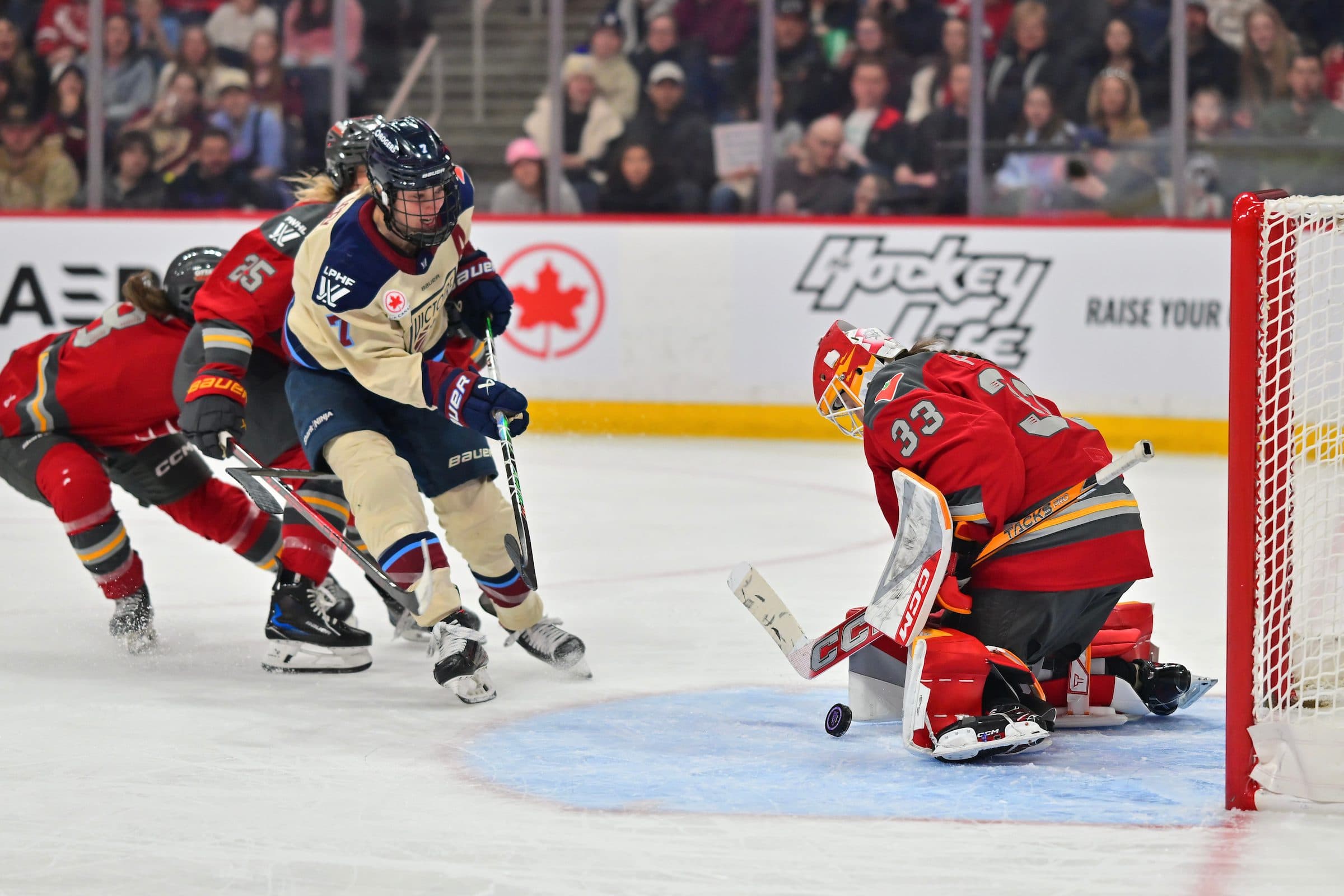
Montreal Victoire: 1st place, 16-6-2-6 (62 points)
Ottawa Charge: 4th place, 9-8-1-12 (44 points)
Schedule (ET)
| Date | Game | Time |
| Thursday, May 14 | 1. Charge at Victoire | 7 p.m. |
| Saturday, May 16 | 2. Charge at Victoire | 2 p.m. |
| Monday, May 18 | 3. Victoire at Charge | 6 p.m. |
| Wednesday, May 20 | 4. Victoire at Charge* | 7 p.m. |
| Saturday, May 23 | 5. Charge at Victoire* | 12:30 p.m. |
*if necessary
The Skinny
We’re set to have a new champion this year. This is the first time we’ll have an all-Canadian matchup in the final, marking the first time that the Walter Cup will be hoisted north of the border.
The Victoire are in the final for the first time in its history. Despite consistently being one of the top teams in the league during the regular season, Montreal has struggled to translate that to postseason success, having been swept by the Boston Fleet in the 2024 semifinals before being stunned by the Charge in four games in the opening round last spring. Yet, the Victoire managed to finally put it together this year. After finishing atop the PWHL standings, Montreal chose to play the two-time defending champion, Minnesota Frost. It certainly was an exhilarating series, with captain Marie-Philip Poulin coming up clutch, twice, scoring a pair of game-winning goals, including the do-or-die Game 5, to help her team finally get over the hump.
Even though they seemingly came into the 2025-26 season as greater underdogs than the year before, when they first made it to the Walter Cup Final, the Charge have overcome the odds to play for a championship. They once again snuck into the playoffs on the final day of the season, and went up against one of the best defenses in the league in the Boston Fleet. Even going up against the best goaltender in the world, Aerin Frankel, Ottawa bounced back from losing Game 1, reeling off three wins in a row, including a double-overtime thriller in Game 4, to advance to the final.
Head-to-Head
Montreal: 3-0-1-0
Ottawa: 0-1-3-0
The Victoire certainly have had the Charge’s number during the regular season, though three of the four meetings were decided by two goals or less. They won both games in Laval, along with Sandra Abstreiter posting a shutout at the Canadian Tire Centre on April 3. Ottawa’s lone victory over its border rival came in overtime during the Takeover Tour game in Winnipeg back in March.
It certainly isn’t like the Victoire have hammered the Charge during the regular season, and there was enough concern with having to go up against Philips in the playoffs that led Montreal to not select Ottawa as its first-round opponent. That comes from last year’s semifinal, when the young netminder stole the show (sound familiar?), leading Ottawa to become the first Canadian team to play in the final.
Top Five Scorers
Montreal
Marie-Philip Poulin, 5 pts
Laura Stacey, 4 pts
Hayley Scamurra, 3 pts
Abby Roque, 3 pts
Erin Ambrose/Nicole Gosling, 2 pts
Ottawa
Fanuza Kadirova, 5 pts
Jocelyna Larocque, 4 pts
Ronja Savolainen, 3 pts
Michela Cava, 3 pts
Rebecca Leslie, 3 pts
Offense
The Victoire possesses one of the top offenses in the league, finishing second with 78 goals during the regular season. Unlike last year, it isn’t just Marie-Philip Poulin and Laura Stacey leading the way. The addition of Abby Roque has been an important acquisition this year, bringing grit and skill the team needs, with Nicole Gosling adding some additional offense from the back end. While Hayley Scamurra has been a prominent player for the U.S. National Team, she has flourished since signing with the Victoire. After setting career highs in goals (8), assists (8) and points (16) during the regular season, the 31-year-old delivered three points against the Frost, including the game-winning goal in Game 3.


Cap Summary
Draft Picks
What has made Montreal even more dangerous compared to years past is its power play. After special teams being a killer for the team in the two seasons, the Victoire’s PP was second in the PWHL during the regular season, going 3-for-12 in the five games against Minnesota. Ottawa will have to be wary and stay out of the box in order to keep the Victoire from rolling.
The Charge certainly are far from the most dominant scoring attack. The team had the fewest goals scored among the four playoff teams, with Brianne Jenner and Rebecca Leslie the lone players reaching the 20-point mark during the regular season. When it came to the postseason, they didn’t need a whole lot of offense to get through the Fleet (more on why later). Timely goals have been the key to Ottawa’s success all year long, especially against Boston. Fanuza Kadirova has been a welcome addition this year. After scoring a respectable 10 goals during the regular season, the Russian potted two goals and five points in the semifinals, leading all skaters.
Going up against a more high-powered lineup will certainly expose the Charge’s lack of firepower. They were brutally outshot in the four-game series against the Fleet, and I don’t expect that factoid to be any different this series. If they want to keep up, they need to find a way to be more efficient on the power play. Against Boston, Ottawa scored just twice on 13 chances on the player advantage.
Defense
The Victoire have a stout D-corps that has made them painful to play against. Only the Fleet and New York Sirens had a better Corsi Against during the regular season, with the Victoire’s xGA of 59.5 sitting at the top in the PWHL heading into the postseason. Sure, the high-powered Frost gave the Victoire fits during the semifinals, but Montreal’s blue line did its best to limit the dangerous scoring chances for most of the series.
What makes Montreal’s defense so tough is how they have players like Erin Ambrose, Amanda Boulier, and rookie Nicole Gosling, who simply play top-notch defense, while they have someone like Maggie Flaherty, who isn’t afraid to lay the body to send a message.
When you see that the Charge gave up just seven goals against the Fleet, you might think that the team was sound in its own zone. That couldn’t be further from the truth. As I stated earlier, Ottawa was outshot and outchanced in all four games of its first-round series, having already entered the postseason with the fourth-worst Corsi Against during the regular season. This team simply gives up way too many dangerous scoring chances, relying on Philips to come up with big saves.
The mixture of age and inexperience has come to the forefront several times so far in these playoffs. Whether it be the pair of Jocelyne Larocque and Rory Guilday, or the other such as Ronja Savolainen and Kathryn Reilly, the Charge can be a tough team to watch in their own zone.
Goaltending
As if Philips going up against her Team USA teammate, Aerin Frankel, in the first round wasn’t enough, now she gets to do a face-off with Ann-Renee Desbiens for the second year in a row in the playoffs.
Desbiens really impressed me with how she rose to the occasion against the Frost. We saw her be unable to get the job done in previous postseasons, but she came up clutch so many times against Minnesota. In facing 151 shots against the best offense in the PWHL across five games, the Quebec native was beaten just nine times, five of which came in the first game of the series. With a Victoire team clearly battling illness in Game 5 on Tuesday, she was incredible, making 25 saves in the clinching victory.
There’s no question that Desbiens is still one of the best goaltenders in the world. She proved that during the regular season as well, posting the best goals-against average (1.11) and save percentage (.955) in the PWHL, as well as tying Frankel for the most wins (19).
Philips is her team’s ride-or-die. That’s been the tale of the Ottawa Charge since the right-handed-catching netminder took over as the starter following Emerance Maschmeyer’s injury late last season. No one faced more shots or made more saves during the regular season than Philips, and the heavy workload carried into the first round of the playoffs. Against the Fleet, the Northeastern standout was tasked with stopping 135 of the 142 shots she faced, outclassing Frankel. Last year’s playoff MVP certainly staked her candidacy once again, especially after her heroic 43-save effort in the series-clinching win on Mother’s Day.
It goes without saying that if the Charge were to win the Walter Cup, it’s going to happen because the Ohioan stood on her head. She’s managed to bail her team out so many times over the past few months. The question is – can she do it three more times?
Injuries
The Victoire had been dealing with injuries all season long, especially to their stars. Ambrose missed time both in the early part of the season and coming out of the Olympic break, with Poulin being limited to just 19 games due to the knee injury she suffered in Milan. Yet, even with MPP clearly laboring against the Frost, she still managed to shine in the spotlight, playing up to her legendary nickname.
The Charge enter the final healthy, all things considered. They dealt with some players banged up throughout the regular season, but the return of Brooke Hobson was helpful, as she scored the game-tying goal against the Fleet in Game 4.
Intangibles
Neither team has tasted PWHL glory, but that doesn’t mean players on each roster don’t know what it takes to win.
This is uncharted territory for the Victoire, having only won their first playoff series this year. Yet, the core has a long history of winning. Across the roster, there are seven Olympic gold medals and 18 IIHF Women’s World Champions. In a short series like this, knowing what it takes to win is important, even if the team is only figuring it out in the Walter Cup Playoffs.
12 players are back from last year’s Charge roster that came within two wins of winning it all. The addition of Michela Cava, who won a pair of Walter Cups during her time with the Minnesota Frost, has given the team a needed winning pedigree in the pro game.
Jenner and Larocque are the most decorated of the bunch, as the duo have combined for eight WWC gold medals and four Olympic gold medals. Philips has obviously become a decorated star with the United States. Savolainen and Sanni Ahola both have won bronze at the world championships and Olympics, while Czech star Katerina Mrazova and coach MacLeod have been a huge part of that country’s rise on the international stage.
X-Factor
I said her name earlier, and I’ll say it again – Hayley Scamurra is the real deal. She won’t wow you with her skill, but her ability to come up big in key moments of games, especially playing on the same team as Poulin, means something. She’s also an incredibly reliable player in her own zone, as the Buffalo native is one of the more effective two-way players in the game.
Heading into the semifinals, I tabbed Kadirova as the player who would make the most difference for Ottawa. It’s hard for me not to say that she has what it takes to be a game-changer in the final. She doesn’t need time and space, she creates it herself. She also has the undeniable knack for scoring big-time goals, especially on home ice. Kadirova has the skill and confidence with the puck that makes her a thrilling player to watch and a terror to play against.
Prediction
I half-jokingly told people that this series is going to go the distance and only five goals will be scored. That said, it wouldn’t surprise me if that came to fruition. Even with the quality of scorers on both sides, the goaltending is just so freaking good that it’s going to be hard to buy a goal in this series. As outstanding as Philips was against the Fleet in Round 1, I just don’t think she’ll be able to give up fewer goals than Desbiens, especially with a Victoire team that’s going to have some confidence after exercising some of their own demons.
Victoire wins, 3-2

