5 PWHL innovations the NHL needs to steal right now

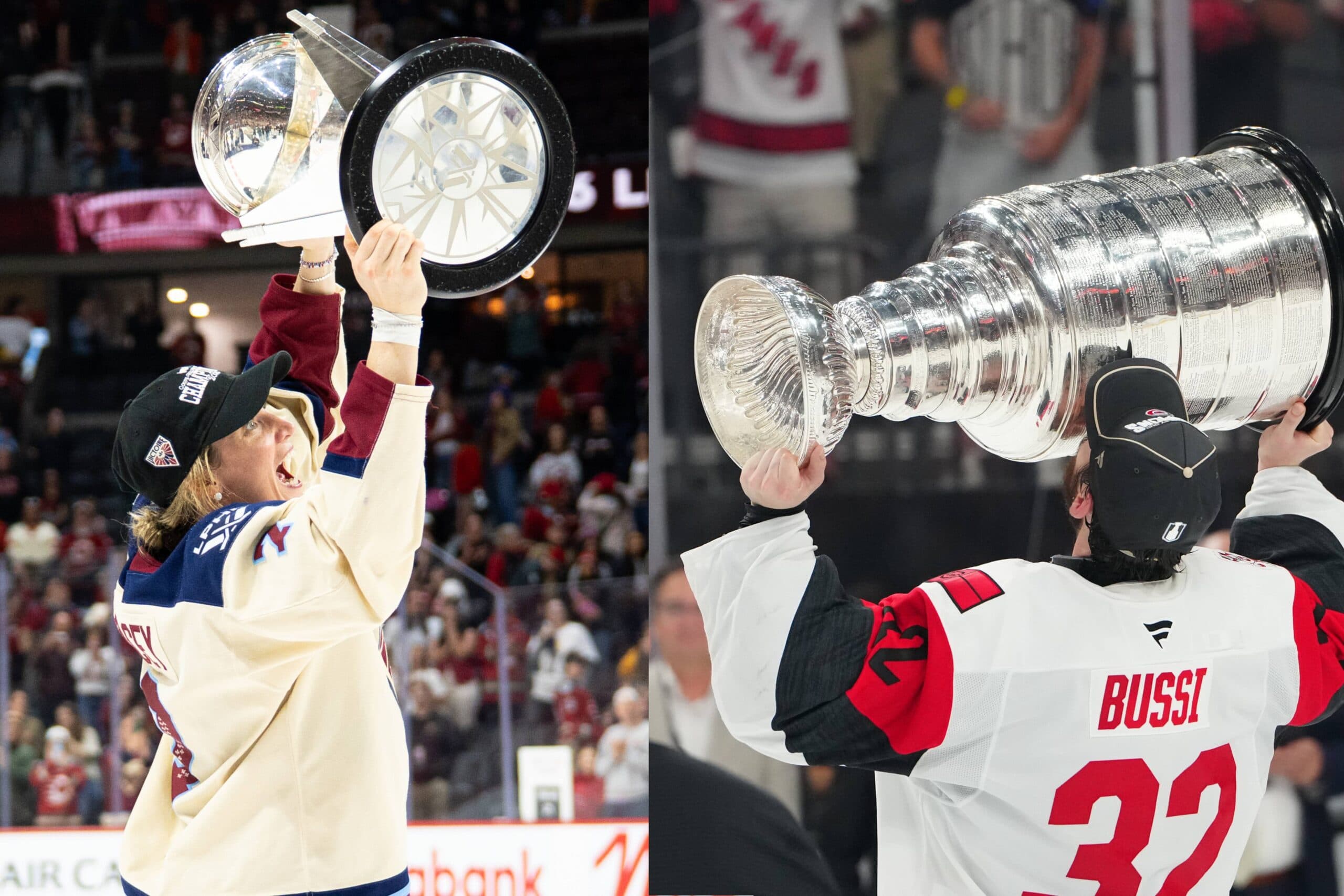
While there is over a hundred-year difference between the National Hockey League and the Professional Women’s Hockey League, there are some things that the fastest-growing pro sports league has been doing that could benefit the established men’s league.
The PWHL has prided itself on trying to be different from the NHL, for better or worse. There are some head-scratching directives, such as calling the offseason an “Open Signing Period” rather than just free agency, and “standard player agreement” instead of the traditional contract terminology. Yet, the PWHL has instituted rules and practices that set it apart from the traditional game.
Here are five things that the PWHL currently does that the NHL should consider bringing into its game:
Jailbreak Goal
This is an easy one, and I think anyone who has ever watched a PWHL game would agree – the jailbreak goal is one of the most electrifying things to happen in a regular game. When a team is shorthanded, they can literally kill off its penalty by scoring a goal. A shorthanded goal in an NHL game is detrimental enough to the team with a power play; now, consider how they’ll feel after going from being on the player advantage back to 5-on-5 because they gave up a goal?
There are a couple of benefits of the Jailbreak. One, it guides the “defensive” team to play a little more aggressively with the puck, as there’s actual incentive for them to score. A late-game penalty doesn’t spell the end of the team trailing, as they can score their way out of trouble. Also, if you’re the home team and you score shorthanded, the crowd recognizes what just happened and goes absolutely bananas. I know the atmosphere at hockey games is great already (depending on the market), but you want to get the crowd jacked up? Pot a Jailbreak goal while down 3-on-5.
In three seasons, there have been 41 Jailbreak goals during the regular season, with another four coming in the playoffs.
Gold Plan
You want to pick No. 1? You have to earn it in the PWHL.
It’s an idea that has been tossed around for years, ever since Adam Gold pitched his original idea in 2012. The Gold Plan is a formula to steer teams away from completely tanking for the entire second half of the season and toward having the best odds in the draft. Many don’t believe it would actually work in the NHL, as some players are simply checked out at that point in the season, but in the PWHL, the Gold Plan makes every game matter, regardless of where teams are in the standings.
Like what you might see in European football, teams at the bottom of the table have something to play for, even if they are well out of playoff contention. After a team becomes mathematically eliminated from the postseason, they start earning a separate category of points – Draft Order Points. The team with the most points in the “new” standings wins the first-overall pick in that year’s draft.


Cap Summary
Draft Picks
In the first two years of the PWHL, the plan was rather moot, as the final playoff spots in the six-team league were decided on the final day of the regular season. Last season, though, there was a race between the two expansion teams – the Vancouver Goldeneyes and Seattle Torrent. The Torrent, who went on to set PWHL records for regulation losses (16) and total losses (21) in a single season, had a head start on the Goldeneyes to gain draft points. However, with Vancouver winning its final two games, and Seattle losing two of its final three in regulation, the Goldeneyes clinched the No. 1 pick in the 2026 PWHL Draft. It led the team to take generational talent, Caroline Harvey.
With even more teams coming into the PWHL this year, we could see even more chaos. The NHL might like a little bit of that as well. Rather than fans cheering on their teams to lose in March and April, and hoping that the ping-pong balls bounce in their favor, they can beg their squad to play hard and earn that No. 1 pick. It’s a surefire way to get rid of tanking.
Pick Your Opponent
NHL fanatics have loved complaining about the current format of the Stanley Cup Playoffs (looking at you, Dallas Stars and Minnesota Wild fans). While many clamor for the 1-8 conference format to return, why not try something a little different?
The PWHL made headlines heading into Year 1 by revealing that the team that finishes first in the regular season gets to choose its opponent in the semifinals, having the option to play either the third- or fourth-place team. While one might think it gives an advantage to the regular season champions, historically, it has backfired. In 2024, Toronto finished first and picked the No. 4 seed, Minnesota, in the first round. Toronto blew a 2-0 lead, as Minnesota went on to win the inaugural Walter Cup. The following season, the Montreal Victoire selected the third-place Ottawa Charge, only to get goalie’d by Gwyneth Philips. The Victoire got redemption this year, beating the Frost after finishing first once again, en route to the franchise’s first championship.
If you were to drop this plan in the NHL, you could have the two division champions from each conference select who they want to play in the first round, and create a bracket around that. You could set it up where the two teams could only choose the third- or fourth-place teams in their respective divisions, or the bottom four playoff teams in the conference. If the NHL really wants to get crazy, let the top two teams in the conference select any of the other six squads who qualified for the postseason…let chaos reign supreme!
It’s a great way to cause drama, as higher-seeded teams feel like they have the edge over whom they pick. However, as we’ve seen in the PWHL, it only seems to lay a chip on the shoulder of the “lesser” team.
3-2-1-0 Format
While Gary Bettman likes the way things are now, the point system the PWHL uses (as well as international hockey) makes things very interesting. In the NHL, chalking up regulation wins is important if you ever get caught in a tiebreak at the end of the season. In the PWHL, those victories are important for tiebreaks AND for giving you more points than if you won in extra time.
Case in point, on the final day of the 2024-25 season, the Charge, Frost and Fleet all had a chance to grab the final two spots in the postseason. While Ottawa was able to sneak into third place with an overtime win over the Sceptres, the defending champion Frost needed a regulation win against Boston, the team they were trailing by three points, to qualify. Minnesota hammered the Fleet, 8-1, grabbing fourth place. The Frost turned things on in the playoffs once again, winning a second straight Walter Cup…can’t do that in the two-point system the NHL uses.
Sure, fewer points for any form of victory can keep playoff races tighter, in some ways. However, a team 10 points back of the last playoff spot is far from finished compared to that of a team in the NHL. In theory, it gives teams more hope that they aren’t out of it, and can fight their way back into contention if they can score more victories in 60 minutes.
Side Note: As an avid hater of the shootout…I believe the 3-2-1-0 format should be – three points for a regulation win, two for an OT victory and just one for a shootout win, while the losing team gets zero points. That would create even more chaos in the standings.
No Trapezoid!
As a former goaltender, this one is a little more personal for me.
When the trapezoid was first tried out in the American Hockey League during the 2004-05 lockout, I was rather intrigued by the idea. However, 21 years later, it’s one of the dumbest rules the NHL has ever introduced. It’s totally unnecessary. If goaltenders want to risk getting caught way out of the net in the corner (à la Martin Biron), so be it. Thankfully, the PWHL brass believes that rule is dumb, so they didn’t adopt it. It lets netminders make their own judgment of where and when they want to play the puck, leading to some exciting nonsense, at times.

