Debating the best decade in NHL history

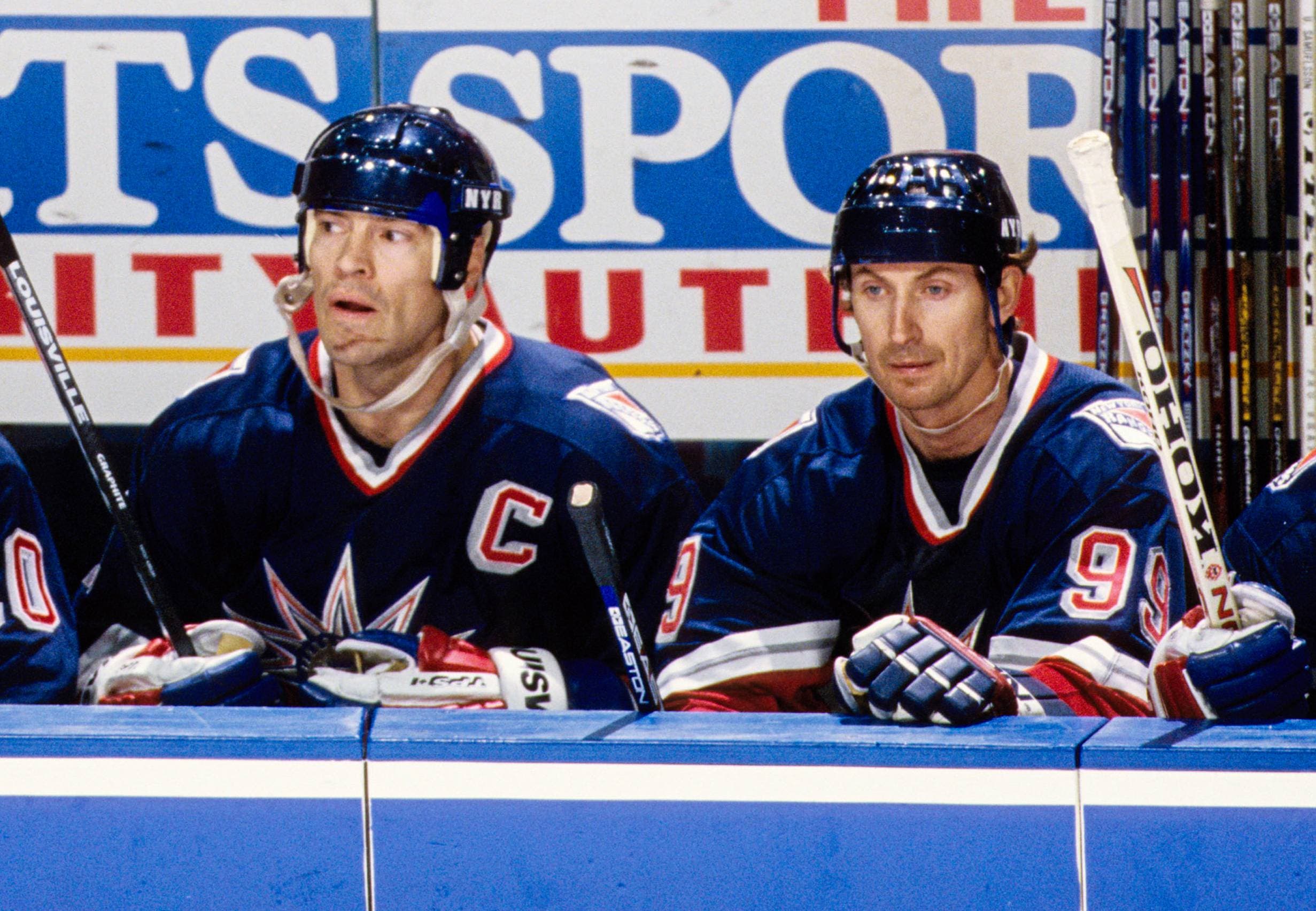
One thing that all sports fans love to do is reminisce about “The Good Ol’ Days,” and hockey is no different. Whether it be our favorite players growing up, or discussing how the game used to be played, we love to compare the past to the present.
When you sit around with your friends and family, how often does the conversation come up about which era is the best in the game’s history? Is it the Golden Era of the Original Six? The high-flying, yet tough-as-nails ’80s? Or is today’s game the best that it’s ever been?
The debate will go on forever, but today, some of our staff at Daily Faceoff came together to give their two cents on which decade was the best in hockey history.
1970s
Jeff Marek: Even though it’s tempting to go with the high-flying 80s, I’m going a decade before that. Here are my top 10 reasons why the 1970s were the best hockey decade:
1972 was the real beginning of international hockey and I can even nail down a single date – Sept. 2nd at the Montreal Forum. Game 1 of the Summit Series. A 7-3 win by the Soviet Union over Canada changed everything about hockey and kicked off an era of global competition that still exists today.
There was an entire other pro league running against the NHL – The World Hockey Association. Hockey had always been a safe, conservative, button-down league until the WHA came along, challenging norms and ushering in a rock-n-roll attitude. They grabbed players from the NHL, the games were wild and, at times, brawl-filled, the logos and uniforms were daring, and the hair was long. The new league forced NHL teams to raise salaries to compete and pointed to a new direction in the game.
This was the decade that kicked off the European invasion, with Swedes like Borje Salming and pioneering Vaclav Nedomansky, who was the first to defect from an Eastern Bloc communist country when he left Czechoslovakia in 1974.
Canada Cup ’76. The first true international best-on-best tournament with NHL’ers playing for several nations. Team Canada featured 18 future Hall of Famers.
The Philadelphia Flyers. Nobody embraced being the NHL’s villains like the Broad Street Bullies. But it was also their skill that brought Philadelphia two Stanley Cups in the ’70s, along with the coaching tactics of Fred Shero, who was a student of legendary Soviet master tactician Anatoly Tarasov. Elements of the Tarasov system were evident in how the Flyers played.
December 31st, 1975 – the Soviet Red Army vs the Montreal Canadiens at the Montreal Forum. A fast-paced, skill-based 3-3 tie called by many the greatest game ever played. Perhaps Vladislav Tretiak’s greatest performance.
Darryl Sittler’s 10-point night against the Boston Bruins in 1976. It’s a record that still stands to this day and may never be broken.
Let’s not forget the decade started off with Bobby Orr flying after a Noal Picard trip, resulting in a Boston Bruins Stanley Cup win and one of the most iconic photographs the game has ever seen, courtesy of Ray Lussier.
In February 1977, the greatest hockey movie ever, Slap Shot was released and got us all ‘right in the mind’.
Also, what could ever top this?: ‘Forgive my Misconduct Last Night’
1990s
Paul Pidutti: To me, every sport is forever the best when you are a kid. Your favorite team’s jerseys feel so vivid, the players gigantic and flawless, and the spectacle of it all on TV or in person is overwhelming. There is no cynicism, dollars, or scandals in your mind. Just joy and wonder.
As someone who grew up in the 1990s, I’ve never been able to convince myself that it wasn’t the best time to love hockey.
I know that Nathan MacKinnon would skate circles around the league in 1998. Andrei Vasilevskiy would be unbeatable in 1993. I know that head shots and line brawls were bad for everyone. The game was harsh and brutal, that the worst skater today would be among the best then, that it was a primitive business operation, that players had few rights, that the goalies were small and unpolished, and that way too much of the game was played on the power play.
But I didn’t know all of that then.
I was just a kid drawing pictures of Felix Potvin and memorizing the leading scorers in The Hockey News – already outdated before it arrived in the mail.
Nostalgia aside, the 1990s were a thrilling, revolutionary ride for hockey. While the league’s economics would later die a slow death in the 2000s, leading to a lost season, the 1990s saw the NHL move from a regional game to a global phenomenon.
Europeans like Sergei Fedorov, Dominik Hasek, and Jaromir Jagr descended upon North America and delivered an electric brand that felt new and different. Five teams debuted in the decade’s first three years alone with fresh logos and vibrant colors: San Jose Sharks, Ottawa Senators, Tampa Bay Lightning, Florida Panthers, Mighty Ducks of Anaheim. Goalie masks were now art: the “CuJo” snarling dog; Potvin’s cat eyes; Ed Belfour’s eagle; Mike Richter’s Statue of Liberty. Hockey mirrored a rapidly changing world.
The on-ice magic and the mysterious comebacks of Mario Lemieux dazzled. Eric Lindros’ hyped debut was the Crosby/Ovechkin show of 2005 packaged in one large man. Wayne Gretzky’s shadow moved south across the USA, unlocking new, game-changing markets in its wake. The Toronto Maple Leafs made consecutive Conference Finals (yes, really) and I saw my first game at Maple Leafs Gardens. Video games were blossoming. Trading cards and annual magazines and the emerging Internet and graphite sticks and colorful goalie pads flooded the imagination. As Bob Cole once said during a hectic moment from the broadcast booth: “Everything is happening.”
In the 1990s, the NHL had arrived. Everything was happening.
My fellow writers will make great cases for other special decades. But while the talent and parity and marketing grow better all the time, sports are always the best in your childhood.
Matt Larkin: Conjure up all the elements you love and romanticize about hockey the most. The iconic stars. The violent collisions and fisticuffs. The scintillating skill. Goaltenders who could actually stop the puck. An expanded field of teams that made the Stanley Cup difficult to win. The 1990s and, more specifically, the early 1990s, pre-lockout from 1990 to 1994, combined all these elements, the best of many eras, simultaneously.
If you clung to old-time hockey, the kind that led to bench-clearing brawls and missing teeth? That generation still bumped up against the early 1990s. If the Toronto Maple Leafs and Minnesota North Stars were lined up for a Norris Division tilt on a Saturday night, for instance, Wendel Clark vs. Basil McRae was appointment viewing, a major part of the draw.
But if you found the rugged parts of the game too antiquated, there was still plenty to enjoy. The 1990s gave us true superstardom. We witnessed the late primes of Wayne Gretzky, Mario Lemieux, Mark Messier, Paul Coffey and Ray Bourque. Steve Yzerman and Joe Sakic were just starting their peak years. We had dazzling, nifty-minded young talents arriving from across the Atlantic and dropping jaws with their speed and skill, from Pavel Bure to Jaromir Jagr to Teemu Selanne to Sergei Fedorov. Gritty all-around dominators Eric Lindros and Peter Forsberg were on the cusp of taking over the sport. The early 1990s still carried hockey’s grimier characteristics but also boasted uber-gifted young players whose abilities carried over into the early post-lockout era.
At the same time, these superstars’ highlights didn’t consist of them sliding week wrist shots on the ice past hapless standup goaltenders. Scoring was a relative challenge because the 1990s birthed some of the most legendary goaltenders of all time. The early part of the decade belonged to Patrick Roy and Ed Belfour. In the mid-to-late 1990s, Dominik Hasek and Martin Brodeur began to blow up the record books. If you’re naming your top 10 netminders of all time, you could make a case for half emerging from the 1990s.
The competition was balanced between skill and physicality, with the goaltenders achieving the magnitude of stardom that had them adorning kids’ walls on posters. And it also wasn’t a tap-in to win the Stanley Cup in a field of six or 12 teams. The decade began with 21 and expanded multiple times, including later in the decade with the Nashville Predators in 1998-99 and Atlanta Thrashers in 1999-00, growing the field to 28 teams.
Oh, and as an aside: the ’90s even gave us the advent of NHL player participation in the Olympics, beginning with the 1998 Nagano Winter Games.
I realize I’m sweeping the Dead Puck Era under the rug by choosing the 1990s as my decade, but while it began mid-decade with the New Jersey Devils and the neutral zone trap, Dead Puck’s nadir actually came in the early 2000s. The 1990s absolutely ruled because they combined the best of pretty much every other era. I’ll forever feel nostalgic toward that decade. Then again, maybe I just have a soft spot for the time in NHL history that intersected with my childhood.
2010s
Tyler Kuehl: As much as I would love to tout the ’90s, as they were very much part of my formative years, the second decade of the 21st Century was crucial in fully pulling the NHL, and hockey in general, back into the limelight. Sure, the first few years coming out of the 2004-05 lockout were fun. However, the 2010s were the official changing of the guard, as players like Sidney Crosby, Alex Ovechkin and Carey Price went from young stars to certified legends. It also gave us several memorable moments that will last well beyond my years
The decade certainly started off with a bang. Not only did we see one of the most chaotic games in the history of the sport in the gold medal match of the 2010 IIHF World Junior Championship, but we saw one of hockey’s most…golden moments just a month later, as Crosby etched himself into history with the game-winning goal in the final of the 2010 Winter Olympics, on home ice, no less. It kicked off several marquee moments that put hockey in the headlines on a global scale.
Where do I begin? The 2011 Stanley Cup Final between the Vancouver Canucks and Bruins was one of the most thrilling conclusions to a season, regardless of sport, and that was before Vancouverites decided to trash the town. Even a lockout in 2012 couldn’t deter fans from forgetting the incredible start by the nearly unbeatable Chicago Blackhawks in 2013, who became the first “dynasty” of the salary cap era, winning three Cups in a six-year span. The final Cup Final of the decade was even a thrill, as the Boston Bruins and St. Louis Blues gave us an incredibly heated seven-game slugfest.
The Crosby-Ovechkin rivalry further captivated a national audience. Following their thrilling battle in the 2009 playoffs, the Washington Capitals and Pittsburgh Penguins were must-see television. HBO’s miniseries, 24/7: Road to the NHL Winter Classic, further bolstered the animosity between the two teams leading up to the 2011 outdoor game, which remains one of the most controversial games in league history, as the Capitals’ Dave Steckel blindsided Crosby, eventually leading to No. 87 missing close to a calendar year of action. The Metropolitan Division rivals met three years in a row in the postseason, with Pittsburgh beating Washington en route to becoming the first team in the salary cap era to win back-to-back Stanley Cups, before Ovechkin and the Caps would finally exorcise their demons in 2018 before going on to win the franchise’s first championship. The constant power struggle between Crosby and Ovechkin helped bring the league back to relevance south of the border.
It was during that 2017-18 campaign that we saw one of the most improbable stories in league history. When the NHL first announced it was expanding to Las Vegas, many thought it was a joke. However, spurred on by a wildly passionate crowd, over-the-top game production, a swagger built by the “Golden Misfits,” and an emotional inaugural campaign after the mass shooting days before the regular season, the Vegas Golden Knights made an incredible first impression, defying the odds and making it to the Stanley Cup Final in Year 1.
The women’s game also saw a sharp rise in popularity. From the raucous atmosphere in the gold medal game in Vancouver in 2010, to Kendall Coyne Schofield’s memorbale performance at the 2019 NHL All-Star Skills Competition (not to mention the controversial finish to the 2019 IIHF Women’s World Championship), women’s hockey was in the limelight throughout the decade. Names like Marie-Philip Poulin, Hilary Knight and Brianna Decker became legends, setting the stage that led to the Professional Women’s Hockey League.
All in all, the 2010s are unquestionably one of the most important in the game’s history. The old guard from the hook-and-grab era was fully pushed out as the decade unfolded, and the modern, high-speed game that we all know and love today took center stage.
Did I forget to mention that Connor McDavid became the best player in the league before the decade came to a close?
2020s
Steven Ellis: The sport has never been faster or more skilled. It’s an absolute treat getting to watch guys like Connor McDavid, Nathan MacKinnon, Cale Makar, Matthew Schaefer and others pull off the moves they do with a high rate of success. We’ve also seen the NHL expand to new audiences with shows like Heated Rivalry and Off Campus bringing the game to people who might have never followed the sport before. I still think the NHL has its work cut out for them to continue building its global image, but I think the current player crop is positioned to make the sport more fun moving forward (more goalie fights would be an excellent start). Many will miss the days of fourth-line goons scrapping every night, and, honestly, there’s a part of me that misses that too. But the average fourth liner is so much better than they’ve ever been, and that should be celebrated.
Hey, it’s nice to not hear about relocation on a consistent basis. I know the Coyotes ultimately moved, but I remember the days when a team going up for sale meant relocation rumors were rampant. The Penguins, Predators, Panthers, you name it. I think the sport is in a good spot right now, and continued international participation should help the sport’s popularity. I think it’s only going to get better from here.
I’m not one for nostaliga. I enjoy watching games now more than I ever have. That’s why I’m sticking with this, even if I’m alone.
PRESENTED BY THE DAILY FACEOFF NEWSLETTER