‘It’s going to be a blood bath’: Canada’s calm meets USA’s confidence on a pressure-packed Olympic stage

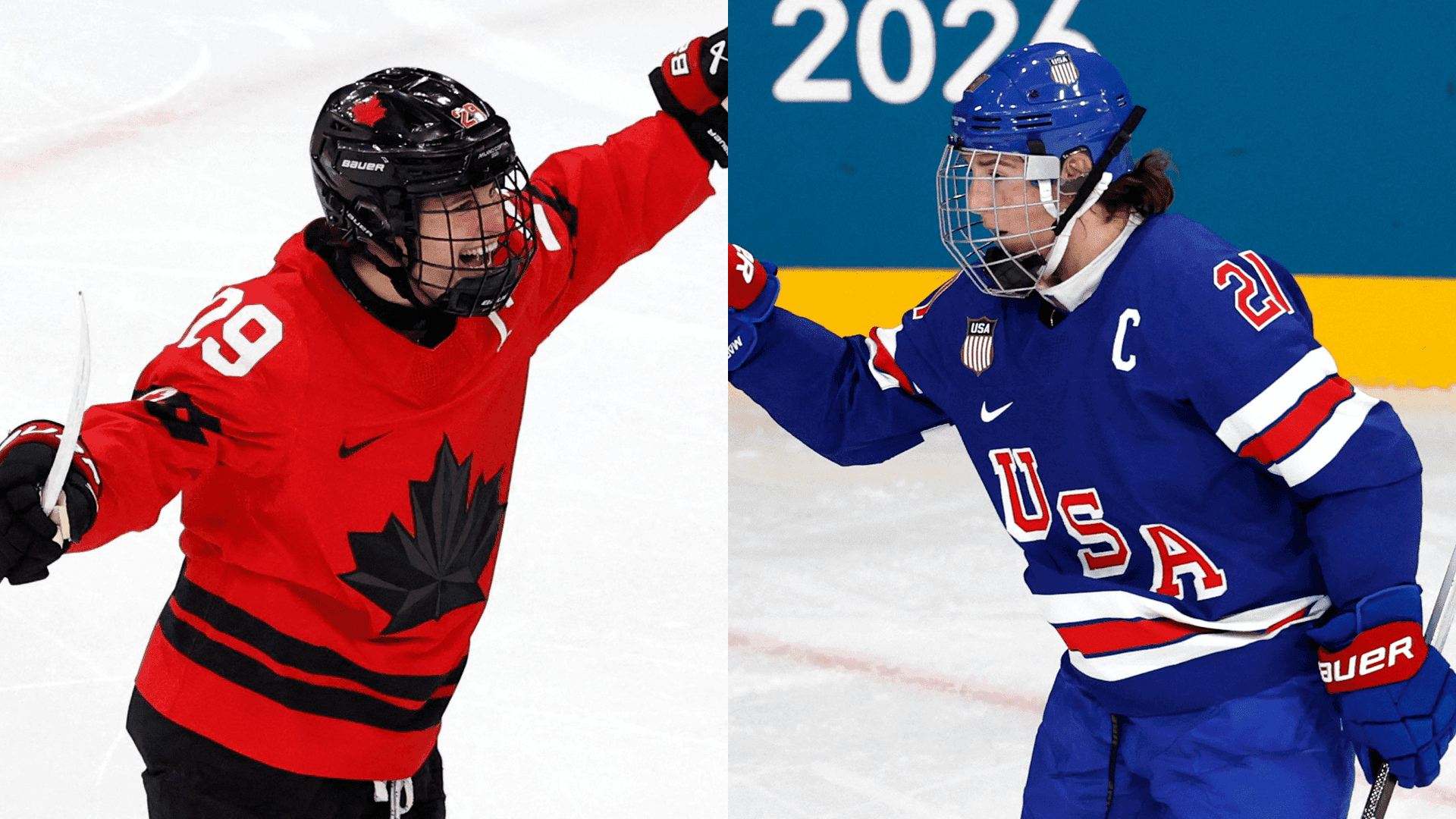
Marie-Philip Poulin dove, extending her stick and her arms as if she were a superhero swooping in at the final moment. There was no hesitation, she clipped the puck, forcing it over Switzerland’s goalie’s shoulder — it was Canada’s winner.
Through most of the last two decades of women’s international hockey, that’s been Poulin. A superhero, in so many ways, and on this day at the Milano Santagiulia Ice Hockey Arena, she was delivering once again, scoring twice, setting the record for the most goals in Olympic women’s hockey and lofting Canada 2-1 over Switzerland.
She was the difference, despite a 43-8 shot count favoring Canada. And so too, she clinched yet another gold medal showdown against the United States, setting the stage for the latest chapter in one of hockey’s greatest rivalries.
“There is a reason she is the best in the world, and there is no one more deserving than her for breaking this record,” said Canadian defender Renata Fast. “Very few people can be clutch, after clutch, after clutch. Year, after year, after year. It does not happen by fluke.
“She means so much to your team and our country.”
On Thursday, the North American powerhouses clashed for Olympic gold as they have in six of the seven Olympic women’s hockey tournaments since the event’s debut at Nagano 1998.
“It’s going to be a blood bath,” added Fast. “This is the moment we have been fighting for, to play for gold. There’s no better matchup than playing the USA.”
For some, like American Hilary Knight, Thursday bookends a storied Olympic journey. In contrast, for others, like Canada’s Darryl Watts and the USA’s Taylor Heise, it marks another step in a formative generation of women’s hockey.
Poulin, who will be 38 at the next Olympics of French Alps 2030, doesn’t want to think of any grand finale, saying “I’m in the present, and I just want to enjoy it all,” but that of the “new ones coming in…they’re all, they’re quite skilled.”
At the same time, Watts said her first Olympics “have been a blast,” just hours after USA’s Abbey Murphy, a standout with the University of Minnesota, called the moment “surreal,” after her team knocked out Sweden to clinch a spot in the gold medal game.
As generational tides turn and the first Olympics to feature Canadian and American players holding current or future full-time roles in the PWHL reach their pinnacle, the matchup finds both sides at very different stages.
Despite their historical Olympic dominance, Canada enters as a significant underdog, having lost the last seven games against the USA, including a 5-0 defeat in preliminary play, a gap even a healthy Poulin would have unlikely closed.
With Poulin sidelined for two games, a massive loss to the USA and a condensed schedule after a norovirus outbreak postponed their opening game against Finland, it hasn’t been the tournament that Canada would have dreamed of.
Yet, here they are — one game away from a gold medal, against a team many of them have beaten before. After all, general manager Gina Kingsbury chose experience as her strategy to beat the Americans on the biggest stage and now gets to see it play out.
“It’s a non-factor. It’s a one-game showdown,” Canadian head coach Troy Ryan said. “We know we’d like to have played better in those seven games, but I don’t think they’re going to impact the gold medal game.”
United States embracing pressure
With a shutout streak of over 331 minutes and having outscored opponents 36-1, there is little reason for the Americans to be nervous. Nobody has been close to them, and it’s been a while since even Canada looked within a similar realm.
Led by Murphy, goaltender Aerin Frankel and strong play from two-time PWHL Walter Cup champions, Kendall Coyne Schofield and Heise, they come into the gold medal game as overwhelming favorites.
For Heise, among the new faces on the American team compared to the one that lost four years ago, it’s the culmination of everything she’s worked for and a chance to become one of a select few to win the Walter Cup, the World Championship, and the Olympics.
She’s brought to a light weep, even thinking of the feat with her sight.
“It’s been since I was 11 or 12, that’s kind of when I figured out the USA has a women’s Olympic hockey team, and right from the start, there was when I knew that I could do something special, and I wanted to be here more than anything,” she said. “I’m my best self, both players in person here in 2026, so I’m excited to be here with this group.”
The battle of confidence
Their approach, unabashedly confident and determined, is drastically different from other overwhelming Olympic favorites at these Games. It doesn’t seem like there’s any worry of a hiccup; it’s pure, relaxed determination.
Through all their success, this American team is handling the weight of gold better than their countrymates at Milan Cortina 2026, including Ilia Malinin, who fell twice in his men’s singles free skate after being dubbed as “unbeatable,” and Mikaela Shiffrin, whose ski racing struggles continue despite having the most World Cup race wins of all time.
“I want it so much,” said American forward Hayley Scammura. “I want it more than anything I’ve ever wanted in my life. The whole team feels the same way. This has been our end goal, and we’re one step from that.”
At least publicly, the Canadians are giving off that same confidence, even if their recent history against their biggest rivals isn’t lost on them.
“It hasn’t been perfect, [the message] is going to be all about us. It’s been a four-year process, and obviously, the last year, we’re all aware of where we’re at,” Poulin said, refusing to reveal what she may say to her team pre-game.
“For some of those girls, it’s the first time they’re ever going to play in a gold medal game…enjoy that moment, because it can maybe come every four years, but it’s not that easy to get there.”