One crucial need to fill for each of Round 1’s eight eliminated teams

How quickly the joy turns to despair. When the NHL regular season ends, the 16 teams who miss the playoffs trudge into the offseason feeling disappointed and wondering what they must fix to join the big dance. Meanwhile, the 16 playoff qualifiers are elated at their opportunities to pursue the Stanley Cup. But two weeks later or, in some cases, one week later, half that playoff field joins the loser pile. And for those of the eight teams knocked out in Round 1 who couldn’t even win a game, it’s fair to ask if they were any better off than those who missed the postseason altogether.
Let’s sort through the wreckage of Round 1’s eliminated clubs and identify a key need for each of them to address.
Boston Bruins: Another core star
Jeremy Swayman, David Pastrnak and Charlie McAvoy simply couldn’t do everything on their own vs. the Buffalo Sabres, and James Hagens is still a couple years away from being someone who can take the team on his back. The Bruins skew a little bit too “lunchpail crew” and lack all-around star power. The good news is they can put most of their $16.44 million in cap space to work as they don’t have any major core players up for new contracts this summer, having locked in Morgan Geekie a year ago. If GM Don Sweeney is convinced his retool is actually working and that the Bruins are ready for consistent contention again after one year out of the playoffs, it’s time to get shopping for a prime-year contributor, be it a scoring forward or a high-end puck mover on defense or both.
Dallas Stars: Cap space to add a defenseman
General manager Jim Nill finds himself in a quagmire following Dallas’ first-round elimination, a decided step backward following three consecutive Western Conference Final trips. The Stars project to have $11.11 million in cap space for 2026-27; that might not be enough to merely break even and re-sign RFA forwards Jason Robertson and Mavrik Bourque. Robertson alone deserves at least that much on his next deal. That’s a problem, because the Stars badly need another reliable two-way defenseman. It’s true that goaltender Jake Oettinger wasn’t nearly good enough in Round 1, but Tyler Myers wasn’t the proper band-aid at the Trade Deadline, the Stars got outscored 14-4 at 5-on-5 in the series, and Dallas was exposed against Minnesota once Nils Lundkvist went down in Game 4. Dallas will have to move money out to find blueline help. The burning question is whether that means exploring a blockbuster Robertson trade.
Edmonton Oilers: Absolute urgency to fix their goaltending
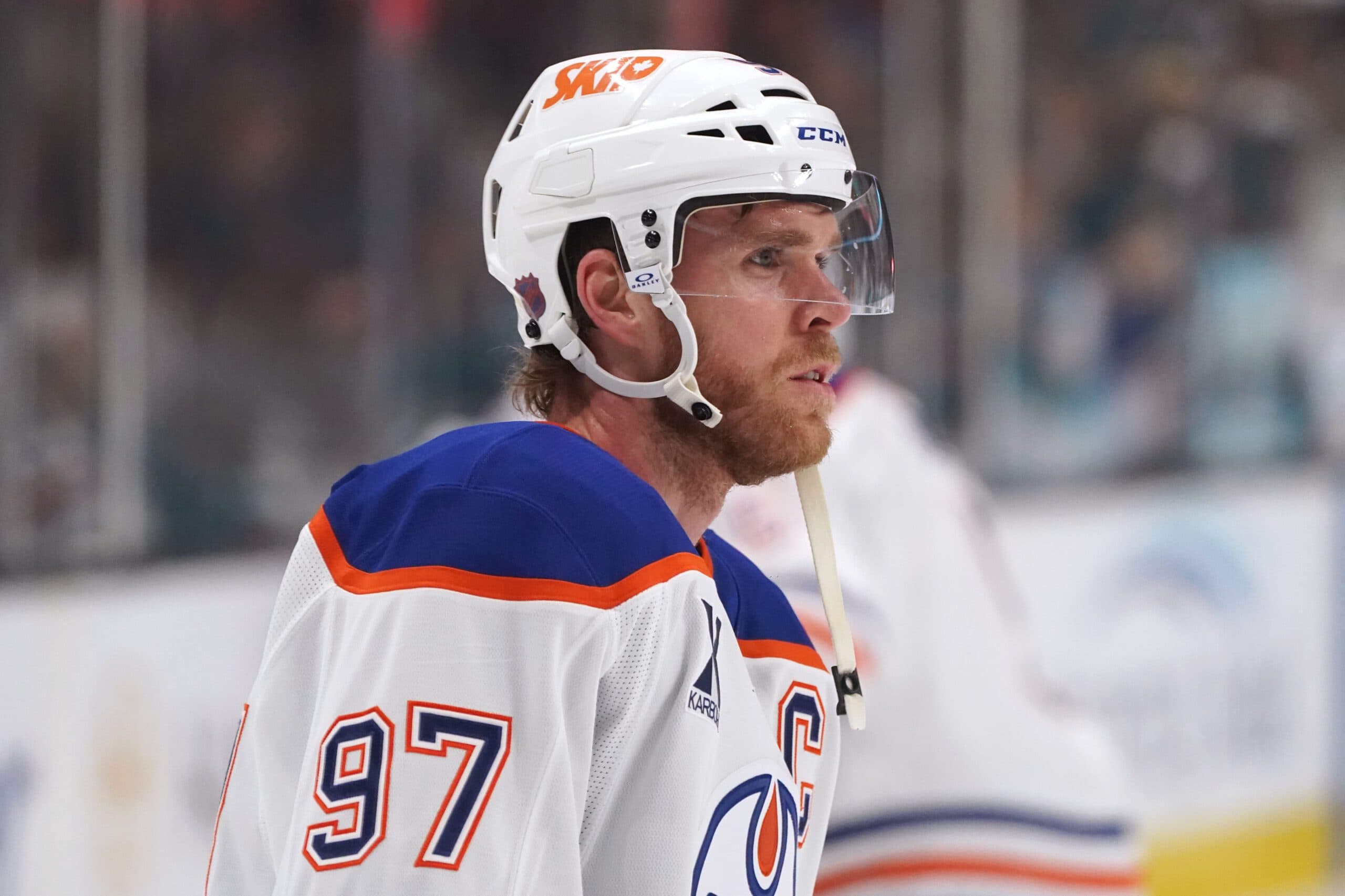
As a disclaimer: I agree goaltending was not the sole reason Edmonton bombed out in Round 1 of the playoffs. Far from it: the Oilers lost a ton of depth in the 2025 offseason and were more of a top-heavy team this time around. Connor McDavid was also playing hurt for half the series vs. the Ducks. That doesn’t change the fact that the Oilers, year in and year out, have trotted out volatile, subpar, downright neglectful choices in net. Trusting a Tristan Jarry / Connor Ingram duo while in the midst of a generational talent’s win-now window was laughable. It’s time now for GM Stan Bowman to behave with desperation. Clear the cap space to chase Sergei Bobrovsky on a one-year deal. Kick the tires on Connor Hellebuyck or Linus Ullmark. Think of all the pipe-dream targets and start checking on them one by one. The time for realistic options is over now that McDavid embarks on his two-year (final???) contract extension in Edmonton.
Los Angeles Kings: An identity
The Kings haven’t won a playoff series since 2014. They’re the sixth-oldest team in the Western Conference. They’re saying goodbye to franchise icon Anze Kopitar, yet they’ve just inked star left winger Artemi Panarin, 35 in October, to a two-year extension. Their prospect pool is absolutely barren now, having shipped out their one remaining blue-chipper in Liam Greentree to acquire Panarin. Their young core of NHL talent, from Brandt Clarke to Quinton Byfield, is good but not “keys to the franchise” good. So where do the Kings go from here? Was trading for Panarin and making the playoffs worth the four-game loss to the Colorado Avalanche? The Kings feel like a franchise at a crossroads, not particularly good nor bad nor young nor old. Do they use their $18.48 million in cap space to remain a win-now team and make veteran improvements, or do they consider taking a step backward and trying to get younger in hopes of more sustainable success a few years from now?
Ottawa Senators: A top-end finishing forward
The Sens sat seventh in the NHL in expected goals for in 2025-26. They finished eighth in actual goals for. They did a strong job generating chances and mostly got rewarded for them. But they didn’t have a goal-scorer ranked inside the top 25 this season, with Tim Stutzle’s 34 leading the team. No Ottawa player has scored 40 since Daniel Alfredsson in 2008-09. They had a higher 5-on-5 expected goal share than the Hurricanes in two of four games in Round 1 but still scored just five times across four games in a sweep loss. The free-agent market lacks an elite gunner, so if GM Steve Staios wants to find a difference-making scorer, he may have to look for one on the trade market. A backup plan would be to target a potential bargain shooter like Victor Olofsson or Eeli Tolvanen in free agency.
Pittsburgh Penguins: A decisive push to get better…or worse
The Pens were a fascinating success story this season, thriving under new coach Dan Muse, particularly on special teams, and converting numerous spare parts into important contributors, from Egor Chinakhov to Anthony Mantha and more. In the end, however, it only got them two playoff wins, and they’ve now gone eight years since their last playoff series victory. That puts GM Kyle Dubas at a crossroads. Should he ease up on the gas pedal, recognize that this past season was a fun anomaly and continue the trend toward making his team younger and building for life after Sidney Crosby? That might mean walking away from UFA and franchise legend Evgeni Malkin and prioritizing young upside in any offseason acquisitions. The other path: treat this season as a meaningful step forward, believe that this group could push deeper next season, and use the team’s $45.8 million (!) in projected cap space to pursue some major prime-year stars. The Pens’ farm system is on the rise, and many of their veterans, from Crosby to Erik Karlsson, were effective this season, but they’re missing top-end players in the mid-to-late-20s age bracket.
Tampa Bay Lightning: Change for the sake of change
The Bolts were a borderline consensus choice to represent the Eastern Conference in the Stanley Cup Final. After all, they finally got to avoid the Florida Panthers in Round 1, and they boasted one of the most star-studded and well-rounded teams in the NHL. It still wasn’t enough; they allowed just nine shots on goal to the Montreal Canadiens in Game 7 and walked away the loser. Make that four consecutive first-round exits for Tampa following their three consecutive Stanley Cup Final trips. They had to play Montreal without their captain and franchise defenseman Victor Hedman, but still…at this point we have to call Tampa’s group stale, no matter how good they look on paper. Something has to change. Is that goaltender Andrei Vasilevskiy? Coach Jon Cooper? I feels absurd even to write those words, but Tampa can’t possibly keep everything the same after its latest disappointment.
Utah Mammoth: Special teams help
The Mammoth were a strong play-driving team at both ends of the ice this season. They got mostly reliable goaltending from Karel Vejmelka and ranked among the league’s better teams at generating and preventing 5-on-5 chances. But their 18th-ranked power play and 19th-ranked penalty kill were weaknesses heading into a series against a Vegas team with the league’s sixth-ranked power play and seventh-ranked penalty kill. The special teams discrepancy made a difference; Utah only converted at 6.3 percent on the power play while killing off a so-so 80 percent of its penalties in the six-game defeat. The Mammoth must find a way to get better when not playing 5-on-5 hockey, whether that means adjusting their systems or acquiring personnel on the player or coaching side to assist the PP and PK.
_____
POST SPONSORED BY bet365
_____
Recently by Matt Larkin
- Top 50 NHL UFAs of 2026: Bobrovsky isn’t in the playoffs, yet his value is rising
- Why Blackhawks need to be 2026 NHL offseason’s most aggressive team
- 2026 NHL Draft Lottery Chaos Rankings: Which winning team would be pure rage bait?
- It’s time for the Senators to have the Brady Tkachuk trade conversation