David Pastrnak’s greatest value to the Bruins: His adaptability

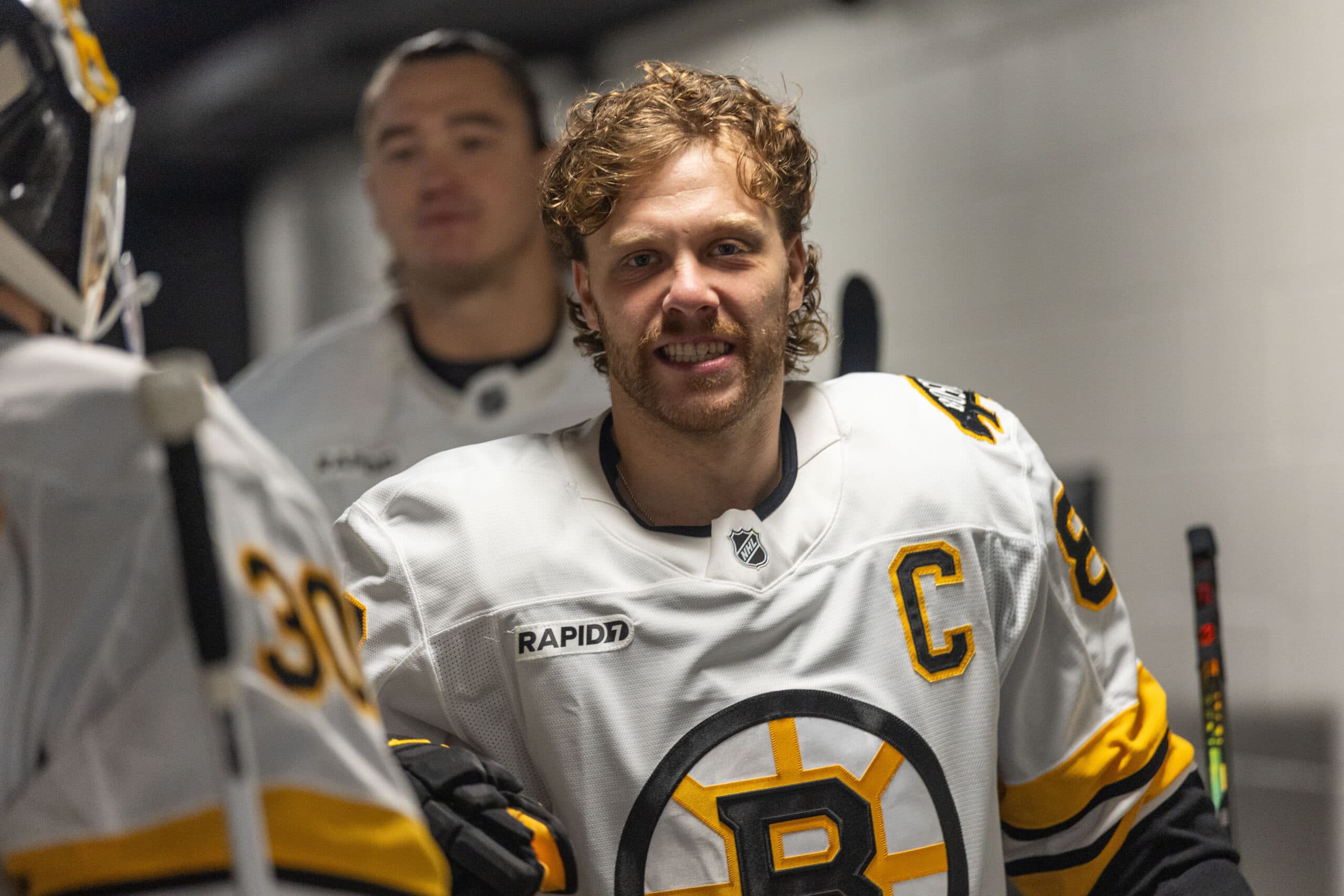
Doubting the Boston Bruins has become an annual tradition in the post-Zdeno Chara, post-Patrice Bergeron, post-Brad Marchand era. They aren’t deep enough to win, many of us say. We point out that they were a terrible defensive team last season and would be hard-pressed to make the playoffs again in 2026-27 with such unsustainable play. When Daily Faceoff published its season predictions last month, only one voter out of 10 had Boston reaching the postseason.
Here they are, 10 games into 2026-27, and they’re 7-2-1, tops in the Atlantic Division, with the NHL’s fourth-highest points percentage through Tuesday’s action. And that’s despite the fact their No. 1 defenseman, Charlie McAvoy, missed the first six games serving a suspension.
We can point out, like my colleague Anthony Trudeau did this week, that the Bruins are playing legitimately improved hockey so far this season, that young center Fraser Minten has taken another step forward, that they actually have a positive expected goal differential and look like they might be for real. But the driving forces behind Boston’s excellent start remain the two horses who carried them last season: goaltender Jeremy Swayman, who has been arguably the NHL’s best since the start of 2025-26, and superstar right winger David Pastrnak, who has followed up last season’s 100-point campaign with another superb start, amassing four goals and 12 points through 10 games.
And with Pastrnak, 30, it’s been particularly fascinating to watch his role change. He’s no longer the elite complementary piece attached to Hall of Fame level leaders like Bergeron and Marchand. Pastrnak is now the player around which teammates orbit – in more ways than one.
He has been gradually transitioning into more of a vocal leader, something that came reasonably naturally given he’s a colorful personality. And that culminated in him being named the 28th captain in franchise history last month, though he’s not convinced it changes much. He has always viewed the Bruins’ leadership as a committee task.
“We are chasing the Stanley Cup, not worrying about who is going to wear the ‘C’ in our group,” Pastrnak told Daily Faceoff in early September a few weeks before earning the honor. “I grew up through some incredible leaders, hockey wise, and there’s a lot of guys in the room that have been with those guys, too. So it’s always been a group effort there. And no matter what letter you have on the chest, you’re wearing the Boston Bruins logo. And that’s the most important thing. You’re representing Boston Bruins, whether you have ‘A,’ ‘C,’ or nothing on the jersey. That’s just the culture that’s been built there.”
Pastrnak points out he wasn’t a mature player when he first entered the NHL – he compliments Minten for being so much further ahead in that regard as a sophomore player – but Pastrnak has earned the ‘C’ at this point of his career, especially because of how he leads with his on-ice output. Across the 10 seasons preceding this one, he averaged 44 goals and 98 points per 82 games; became the 18th NHL player to record four consecutive 100-point seasons; and played in 94 percent of his team’s regular-season games. Above all, ‘Pasta’ leads by his consistent example as an elite scorer, with just four players over the past decade amassing more points.
But he is also developing into someone who leads his teammates by making them better. Are you familiar with David Pastrnak, elite facilitator?
Before last season, he was best characterized as one of his era’s greatest snipers, with only Auston Matthews, Leon Draisaitl and Alex Ovechkin scoring more goals since Pastrnak’s prime began in 2016-17. But in 2025-26, Pastrnak’s goal total dipped to 29, his assist total reached a career-high 71, and he led all NHL players in primary assists per 60 minutes at 5-on-5. Early this season, he once again paces his team in apples.
So what led to this evolution? For one, the change in his style was logistical.
“With me, it was more the way we were built last year,” he told Daily Faceoff. “I changed power-play spots. Everything was running through me. I was not on my one-timer side, because obviously Morgan Geekie’s shot is elite. And we didn’t have the real lefty that would play-make the power play. So I think it’s just with the personnel, the way the team is built, the way your team is working. The power play was working last year like that. So we can’t change that.”
As Pastrnak added: the change was not forcing a square peg into a round hole at all. The playmaker is actually who he always was.
“It was no problem for me,” he said. “I don’t mind it. Honestly, growing up I always was a playmaker. I was never a goal scorer. I became a goal scorer in the NHL. That’s the thing that a lot of people don’t know. Growing up, I almost always would rather pass and set up the goals.”
Which is quite the revelation from a 60-goal scorer known for having one of the sport’s all-time best one-timers.
“Maybe [I had] a little bit of luck in the NHL, a little bit of the personnel, right?” Pastrnak said. “We had David Krejci, the playmaker, that you play with, and you had ‘Marchy’ running power play. ‘Bergy’ was in the middle. So it’s just the personnel that I was lucky enough [to play with]. I grew up in a certain spot and started scoring goals. Do I love to score goals? Yes, don’t get me wrong…But at the same time, it makes me really happy when I can set up the goal.”
Maybe what makes ‘Pasta’ so unique is in fact his versatility. Yes, he’s still pacing his team in assists, but his playmaker metrics are actually down year over year early this season, while his individual shot attempts and expected goals are at all-time highs in 5-on-5 play early on. Does that mean Pastrnak the sniper is about to return?
Perhaps it doesn’t matter. What matters is that he can be whoever the Bruins need him to be. That’s why he’s their captain and why he should be a big part of the Hart Trophy conversation all year long.
_____
DAILY FACEOFF NEWSLETTER

_____