The defensive defenseman has become the NHL’s newest market efficiency

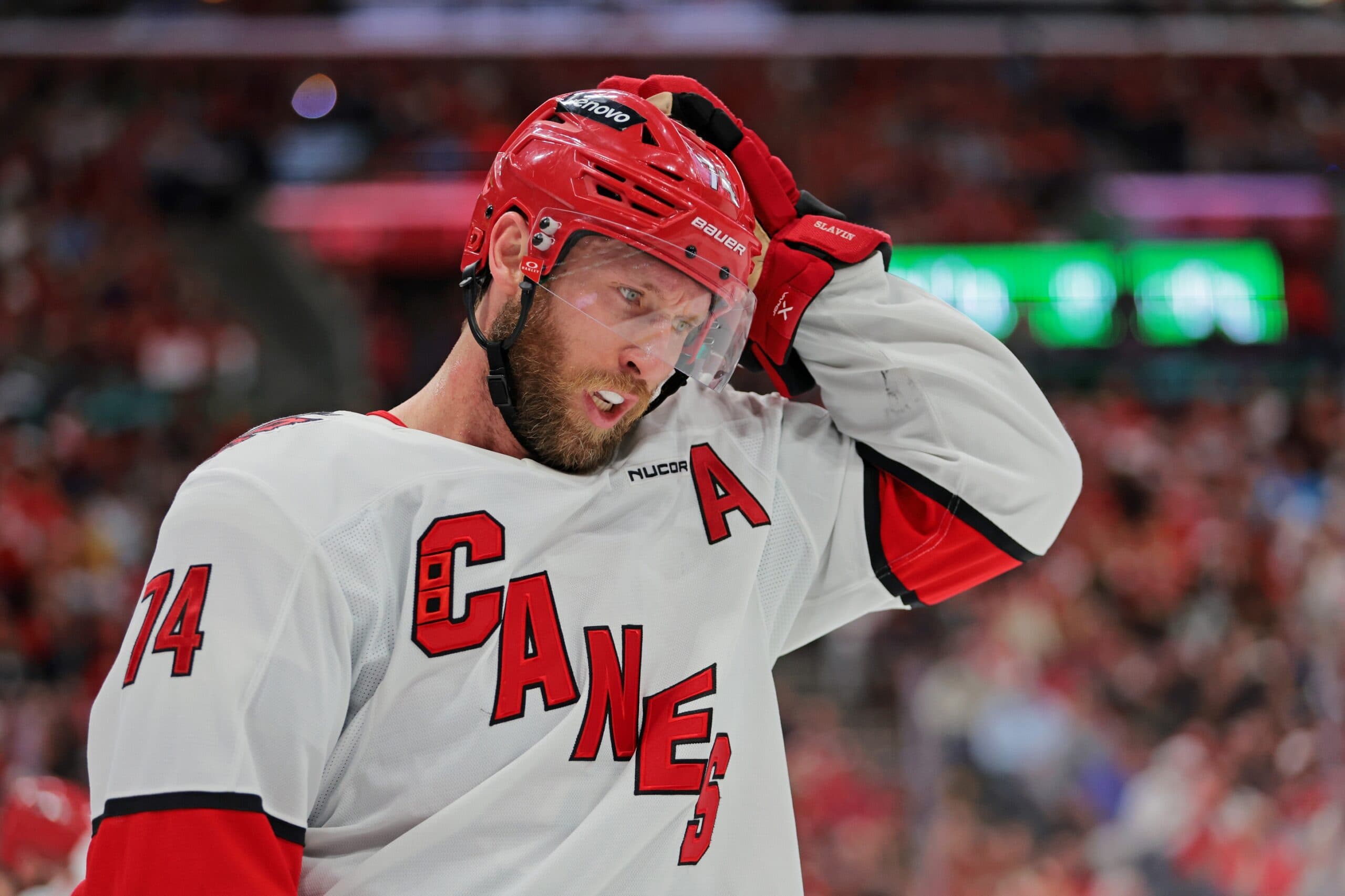
It’s hard for defensive defensmen to get the proper credit they deserve.
It’s still tricky to evaluate a player’s ability to defend. After all, proper defense is not an event, but the lack of an event. It isn’t as noticeable as the goal scorer or the game-stealing goaltender. This is why players who excel defensively aren’t recognized for good performances as often.
Defensemen only seem to get recognition for their defensive ability in two different scenarios. The first is if they’re also elite offensive defensemen. When a player is getting more attention for the offensive side of their game, more people pay attention to their defensive game as well, like with Victor Hedman or Quinn Hughes.
The second is in the playoffs. If a team goes on a deep run, more people have more eyes on the players on those teams for longer. Then, they appreciate the other parts of those teams’ lineups beyond their star players. The Niklas Hjalmarssons, the Jake Muzzins, the Gustav Forslings had strong defensive games long before people noticed it. But they only get recognition when they’re shutting down the other team’s best players on the biggest stage.
Analytics has given us better tools to evaluate defensive defensemen. If you want to evaluate a player’s defensive impact on the ice, we have stats like expected goals and goals above replacement to better illustrate it. If you want to see what specific skillsets a player has to drive their impact, we have microstats.
However, the market still hasn’t caught up. Defensive defensemen remain overlooked in the league, whether in trades or when signing contracts. As the salary cap inflates, salaries are rising with them… except for those handed out to defensive defensemen. Sometimes a savvy team is getting ahead on a player before he becomes more expensive. But most of the time, they’re just undervalued.
The following defensemen had at least a -0.1 in Evolving Hockey’s 5v5 regularized adjusted plus-minus expected goals against per 60 model (5v5 RAPM xGA/60) from the start of the 2024 season and also received contracts in that span. This model isolates a player’s individual impact from factors such as quality of teammates & competition and rink biases. Why only from 2024? That was the beginning of the “rising cap era,” as 2024-25 saw the announcement of higher salary caps.
| Player | Cap Hit | Term | Salary Cap% |
| Brayden McNabb | $3.65 million | 3 | 3.82 |
| Ryan McDonagh | $4.1 million | 3 | 3.94 |
| Johnathan Kovacevic | $4 million | 5 | 4.19 |
| Niko Mikkola | $5 million | 8 | 4.81 |
| Chris Tanev | $4.5 million | 6 | 5.11 |
| Cam York | $5.15 million | 5 | 5.39 |
| Esa Lindell | $5.25 million | 5 | 5.5 |
| Dylan Samberg | $5.75 million | 3 | 6.02 |
| Brett Pesce | $5.5 million | 6 | 6.25 |
| J.J. Moser | $6.75 million | 8 | 6.49 |
| Jaccob Slavin | $6,396,062 | 8 | 6.7 |
| Dmitri Orlov | $6.5 million | 2 | 6.81 |
| Vladislav Gavrikov | $7 million | 7 | 7.33 |
| Average Contract | $5,349,697 | 5.31 | 5.57 |
Defensive defensemen aren’t getting paid despite ranking, on average, 21st in 5v5 RAPM xGA/60 (which indicates their defensive impact is borderline elite). They’re signed to an average of 5.48% of the salary cap at the start of their contracts. Their average cap hits would rank 72nd among all defensemen this season. It’s a significant difference in how much they are paid and the quality of their play.
In comparison, here is how much offensive defensemen are getting paid in the “rising cap era.” Following is every defenseman who is averaging at least 0.5 points per game in the last two seasons and signed a contract in the same time span.
| Player | Cap Hit) | Term | Salary Cap% |
| Shayne Gostisbehere | $3.2 million | 3 | 3.64 |
| Aaron Ekblad | $6.1 million | 8 | 6.39 |
| Jake Walman | $7 million | 7 | 6.73 |
| Shea Theodore | $7.425 million | 7 | 7.77 |
| Brandon Montour | $7,142,857 | 7 | 8.12 |
| Filip Hronek | $7.25 million | 8 | 8.24 |
| Victor Hedman | $8 million | 4 | 8.38 |
| Lane Hutson | $8.85 million | 8 | 8.51 |
| Jackson LaCombe | $9 million | 8 | 8.65 |
| Jakob Chychrun | $9 million | 8 | 9.42 |
| Luke Hughes | $9 million | 7 | 9.42 |
| Moritz Seider | $8.55 million | 7 | 9.72 |
| Noah Dobson | $9.5 million | 8 | 9.95 |
| Thomas Harley | $10.587 million | 8 | 10.18 |
| Evan Bouchard | $10.5 million | 4 | 10.99 |
| Average | $8,073,657 | 6.8 | 8.41 |
Clearly, the offensive defenseman is the more lucrative position. On average, this group is getting paid almost $3 million more per year. They’re signed to almost two more years. They take up almost 3% more of the salary cap. Only Gostisbehere and Ekblad have cap hits below any of the previously listed defensive defensemen. While the average defensive defenseman is the 72nd-highest paid defenseman, the average offensive defenseman is 23rd.


Cap Summary
Draft Picks
To some extent, it makes sense. Defensemen who can move the puck well and produce at the level of top-six forwards are quite rare. They’re also much easier to evaluate. Point totals are the most common way to evaluate a player’s offensive impact, and it’s much easier for the average person to access those numbers than defensive metrics.
But if we were to look at all these player’s two-way impacts with their 5v5 RAPM xG plus-minus per 60 since 2024-25, the value actually skews toward the defensive defenseman. The 13 defensive defensemen used in this study average a 0.171 5v5 RAPM xG +/- per 60. The 15 offensive defensemen average 0.099.
The difference between the two styles and their impacts makes sense. A good defensive defenseman is also good enough offensively to move the puck, which leads to a positive offensive impact. It is more likely to see an elite offensive defensemen struggle in their own end than an elite defensive defenseman struggle offensively. This weighs down the offensive defenseman’s overall impact more.
Now, one could argue not all these contracts are exactly the same. Some are young restricted free agents signing out of their entry-level contracts. Some are players in their late 20s to early 30s getting their first unrestricted free agent contracts. Some are players in their mid-to-late 30s, signing their last big contracts on shorter terms. But there’s still a wide gap, even if we separate these players into different contract types.
| Contract Type | Average Offensive Defenseman Contract | Average Defensive Defenseman Contract |
| Signing out of ELCs | $8.85 million x 7.5 years (9.08% of salary cap) | N/A |
| First UFA contract | $7,770,486 x 6.8 years (8.14% of salary cap) | $5,693,258 x 6.25 years (5.9% of salary cap) |
| Last big contract | $8 million x 4 years (8.38% of salary cap) | $4.8 million x 3.8 years (5.04% of salary cap) |
Once again, the defensive defensemen are overlooked compared to the offensive defensemen in similar stages of their careers. Defensive defensemen are usually paid $2-3 million less per year. They get a year less in term. They take up about 3% less of the salary cap. They don’t even get a chance early on in their careers to earn any money, which goes to show how much point production impacts a defenseman’s early opportunities.
And then there’s the trade market, which has seen similar disparity between offensive and defensive defensemen. First, let’s look at the defensemen who have put up strong defensive metrics and were traded in the last two seasons, and their context in the trade.
| Player | Trade Context |
| Kevin Bahl | Part of return for Markstrom |
| J.J. Moser | Part of return for Sergachev |
| Johnathan Kovacevic | Return was 2026 4th |
| Brian Dumoulin | Return was 2026 4th |
| Ryan McDonagh | Return was 2025 2nd, 2024 7th |
| Olli Maatta | Return was 2025 3rd |
| Urho Vaakanainen | Part of return for Trouba |
| Marcus Pettersson (+ Drew O’Connor) | Return was 2025 1st, Heinen, Desharnais, Fernstrom |
| Vincent Desharnais | Part of return for Pettersson and O’Connor |
| Vincent Desharnais | Return was 2028 5th |
| Brian Dumoulin | Return was 2025 2nd, Traff |
| Carson Soucy | Return was 2025 3rd |
| Henri Jokiharju | Return was 2026 4th |
| Brandon Carlo | Return was 2026 1st, 2025 4th, Minten |
| Jordan Spence | Return was 2025 3rd, 2026 6th |
| Jeremy Lauzon (+ Colton Sissons) | Return for Hague, 2027 3rd |
| Brett Kulak | Part of return for Jarry |
| Yegor Zamula | Return was Tomasino |
| Zach Whitecloud | Part of return for Andersson |
Of the 17 instances of a defensive defenseman being moved during this span, only two saw a first-round pick and/or high-end prospect traded in return for them: Pettersson (packaged with O’Connor) and Carlo (a trade which has since looked like an overpayment). In fact, it was three times as likely for these defensemen to be part of the return for a trade than it was for them to receive a decent return themselves. Even McDonagh, a big-name defensive defenseman, only fetched a 2nd and 7th due to his contract and age.
And once again, the offensive defensemen receive much bigger returns.
| Player | Trade Context |
| Jake Walman | Part of cap dump with 2024 2nd |
| Mikhail Sergachev | Return was 2025 2nd, 2024 7th, Moser, C. Geekie |
| Jakob Chychrun | Return was 2026 3rd, Jensen |
| Seth Jones | Return was 2026 1st, Knight |
| Jake Walman | Return was 2026 1st, Berglund |
| Noah Dobson | Return was two 2025 1sts, Heineman |
| K’Andre Miller | Return was 2026 1st, 2nd, Morrow |
| Quinn Hughes | Return was 2026 1st, Buium, Rossi, Ohgren |
| Rasmus Andersson | Return was 2027 1st, 2028 2nd, Whitecloud, Wiebe |
While first-round picks and high-end prospects are rarities in deals involving defensive defensemen, it’s expected for offensive defensemen. Only two trades didn’t see either asset as part of the return, and both have since been panned quite significantly. In fact, two defensive defensemen in the previous list were part of the return for offensive defensemen in this list.
Another thing to note is the quantity of both kinds of trades. There are almost twice as many defensive defensemen dealt compared to offensive defensemen. This goes to show how expendable defensive defensemen are considered. Offensive defensemen are coveted more, with teams less likely to want to move them
Again, it’s easy to see why this is the case. Offensive defensemen have skill sets which are hard to teach or develop, like hockey smarts; playmaking and puck-moving vision; stick work which leads to smooth hands when working the puck up the ice or in the offensive zone; and lethal shots. But defensive defensemen also have skill sets which are tough to develop. Those same hockey smarts can be applied to defensive positioning and gap control. Their puck-moving ability can distribute the puck up the ice and out of the defensive zone. Their stick work can break up passes and prevent shots in the slot.
The defensive defenseman has always been undervalued. But as the salary cap continues to climb, the difference in value between them and the offensive defenseman is increasing to the point where the defensive defenseman is becoming a market efficiency.
It’s never been easier to bring a player in who can provide defensive impact for below-market value and lock them up long-term at a price which will be a bargain in no time, and the smartest teams are picking up on it. The Tampa Bay Lightning are the most recent example, extending Moser at a price he’s already surpassing. Other teams would be wise to do the same.
_____
SPONSORED BY bet365

