The Hilary Knight sign-and-trade is tampering at its finest

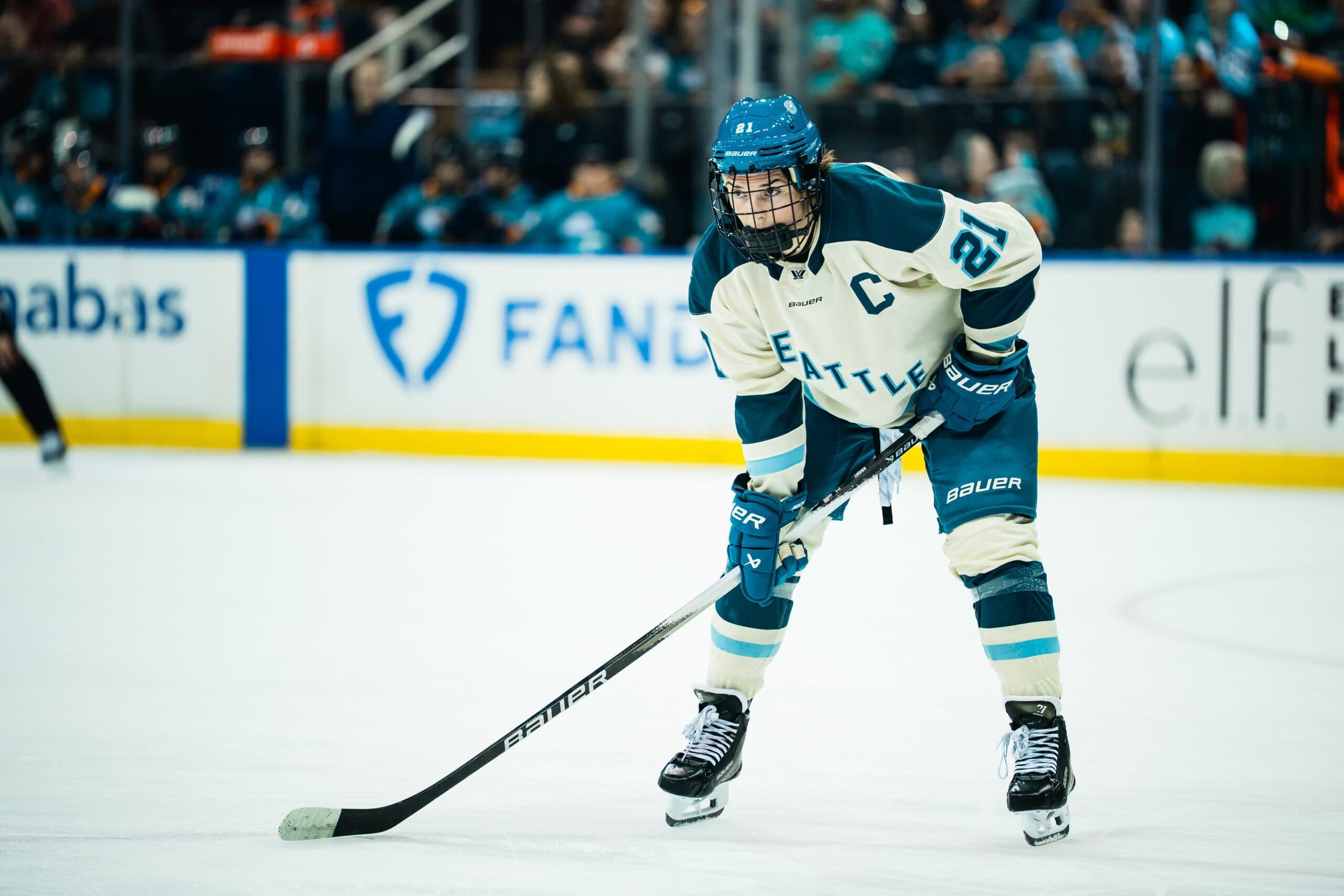
There have been instances in sports where a superstar has earned the right to determine what they want to do with their career, including where they want to play. However, when an athlete seemingly bends the rules to get what they want, eyebrows will be raised, and questions will be asked.
Such a scenario is playing out in the Professional Women’s Hockey League. On Monday, John Wawrow of The Associated Press was the first to report that former Seattle Torrent captain Hilary Knight will sign with the expansion PWHL Las Vegas, but will be traded to Detroit in exchange for their first-round pick of the 2026 PWHL Draft. Las Vegas officially announced that Knight has signed a one-year contract on Tuesday.
How we got to this point is a winding, fishy story.
According to Ian Kennedy of The Hockey News, Knight made her intentions known to teammates that she was going to be joining Detroit. While she initially intended to stay with the Torrent for the foreseeable future, she was left unprotected, as general manager Meghan Turner elected to keep Alex Carpenter, Hannah Muprhy and Anna Wilgren in the fold. So, when Phase 2 of the PWHL Expansion Player Distribution began, many of us expected Knight to sign with the new team in Hockeytown.
The only problem was…she didn’t.
Last Friday, Detroit broke through by signing forward Daryl Watts to a record four-year contract, marking her as the team’s Expansion Foundational Offer – a contract that each expansion franchise has one of, which includes benefits such as a minimum $100,000 salary per year and a $20,000 signing bonus. Many, and supposedly Knight believed, that level of contract was going to her. It hasn’t been clarified by the league how the order or ranking of EFOs was determined or organized, but according to Kennedy, Knight was told she would be assigned to Las Vegas on an EFO, even though she reportedly made it clear she wouldn’t play anywhere but Detroit.
Leading up to the signing phase for the expansion teams, and with it being passed along through the grapevine that Knight was going to Detroit, wheels were in motion for some of the 36-year-old’s U.S. National Team teammates to join her. Hannah Bilka and Cayla Barnes both jumped ship from Seattle to sign multi-year contracts with Detroit, with Britta Curl-Salemme leaving the Minnesota Frost to sign a three-year contract. Jesse Compher was the last American to sign with Detroit on Monday, before the Phase 2 deadline. That in itself should’ve raised some red flags, especially since Detroit arguably signed the best core of players (though Hamilton acquired a pretty good inaugural group, as well).
The question, did Knight not realize the hole in her plan, that she could receive an offer from another team, and not her expected destination?
That leads to the trade portion of the story. Instead of forcing Knight to stick it out, Las Vegas general manager Dominique DiDia has reportedly agreed to send Knight to Detroit, even though the trade can’t be made official until June 16, when the league-wide trade freeze is lifted.
Theoretically, DiDia could’ve said no to the idea of trading Knight, making her stick it out in the desert or maybe elect to wait and see what else she could get for her. Instead, since Knight was only going to play in Detroit, she’s forced to lose a rostered player, and an exceptional one at that, only to receive one extra rookie that may or may not pan out.
Now, some people might think that Knight has earned the right to choose where she wants to play. She’s a future Hall of Famer, and her contributions to the women’s game are immeasurable. Had she been a natural free agent, she could’ve easily waited until Detroit was ready to make a deal. However, the fact that she’s able to tamper with league operations simply to get what she wants, using her status to bend the rules, is completely unfair and tosses whatever purity is left in the women’s game into the garbage. This is professional hockey, something Knight and a lot of the older guard worked tirelessly to achieve, and sometimes you have to bite the bullet and play for a team that you might not want to. The fact she’s getting to play alongside familiar names that she wants to certainly makes this ordeal feel orchestrated.
If anything, Knight could’ve requested a trade and let DiDia do her job, but from this point of view, she’s decided to take matters into her own hands. That’s why the PWHL Players’ Association agreed to this expansion process: so players could have more say in where they go. Yet, not even Knight could get what she wanted, so she’s been relegated to doing some behind-the-scenes dealings with the league to make her move to Detroit happen.
The bigger problem is that the league isn’t going tl do anything to stop it. There has been some backlash from fans and the media alike, who think the PWHL should step in and prevent this deal from taking place. With no individual ownership and the league paying everyone’s salary, it’s hard to imagine anyone within the PWHL ranks daring to stand up to the hierarchy imposed by the league’s superstars.
That said, does the league even care?
One thing that has been noticeable since the league’s inception in 2023 is that the PWHL is for the players, by the players. It has already led to some controversial decisions. Remember two years ago, when a week after Minnesota won the first Walter Cup, then-GM Natalie Darwitz was fired? Multiple reports cite that captain Kendall Coyne Schofield and head coach Ken Klee were part of the group that pushed for Darwitz’s dismissal. That came a few months after the mysterious exit of Charlie Burggraf, the franchise’s first head coach, just days before the league’s inaugural season, leading to the hiring of Klee, a move favored by Coyne Schofield and other veterans on the team.
The Knight sign-and-trade is just another example of how the league is willing to go out of its way to keep the stars happy, even if it means making some unethical moves.
As of Tuesday morning, the PWHL has yet to formally announce Knight’s signing. My guess is that it won’t be announced until next week to avoid mass confusion among casual fans who might still not understand what’s going on.