How the Abby Roque trade won the Victoire the Walter Cup

In the young history of the PWHL, most trades have been inconsequential. Teams making small moves in order to provide a little jump to their lineup had become the norm.
However, last summer, Montreal Victoire general manager Danièle Sauvageau made a move that not only drew headlines but changed the fortune of an entire franchise.
On the draft floor at the 2025 PWHL Draft, Sauvageau helped orchestrate a trade that sent two-way center Kristin O’Neill to the New York Sirens in exchange for Abby Roque. At first, it seemed like it was a cap dump for the Sirens, as it was perceived that Roque was unable to mesh with her teammates in New York while the team stumbled to a pair of last-place finishes. What happened 11 months later made it the most momentous transaction in PWHL history.
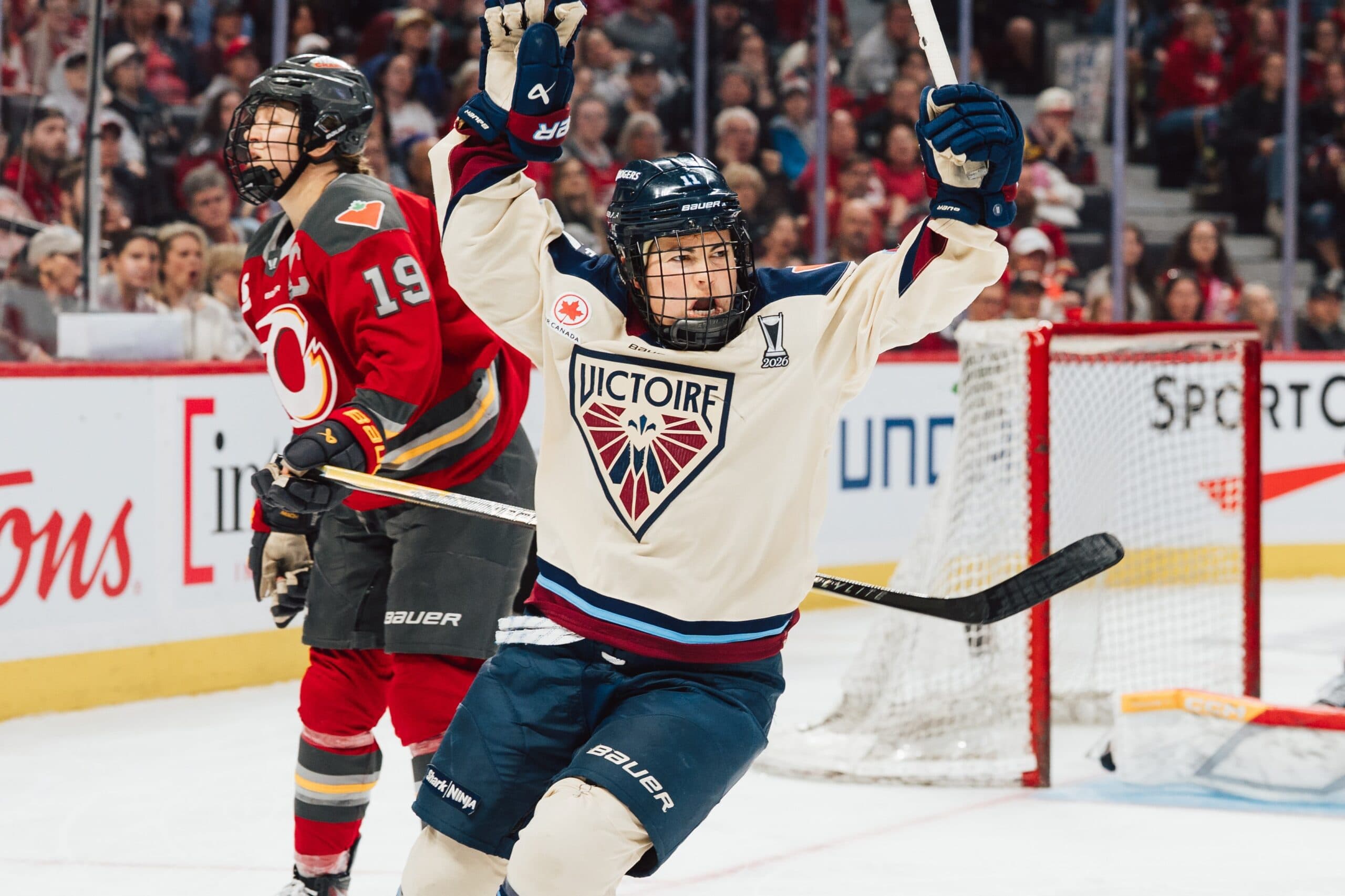
330 days after the trade, Roque scored two of the biggest goals in the Victoire’s history, helping the team defeat the Ottawa Charge and win its first Walter Cup.
Now, the naked eye might recognize the impact the Sault Ste. Marie, Mich. native had on the team by simply looking at the numbers. She finished tied with Marie-Philip Poulin in playoff scoring, as Roque and the Ilana Kloss Playoff MVP Award winner each posted eight points, with Roque’s four goals also tying her with Charge forward Rebecca Leslie and Minnesota Frost defender Sidney Morin for the most in the playoffs…should probably mention that all four of Roque’s tallies came in the final.
However, when you look at how the Victoire played before and after the trade, you realize that Roque’s influence was noticeable across the entire roster. When speaking to the media after the win, Poulin noted that it was wild to see a longtime rival wearing the same crest, but it was clear that Roque was the missing piece to the puzzle.
“That’s what competitors are, and Abby is truly the definition of that,” Poulin said. “She wants to win. She wants to make a difference. Honestly, the last two years I played against her, that was we’re all about. Both want to win, both want to make a difference, both love physical hockey. … Coming into this year, I remember the first practice we had together, seeing her in the Victoire jersey, I couldn’t believe it. I said, ‘Abby, freaking Roque,’ in the Montreal Victoire. All year long, we grew together. We got to know each other better on the ice, off the ice…I’m truly happy that she was the one that made a difference tonight.”
Prior to the former U.S. National Team member coming to la belle province, Montreal had earned a reputation as a fun and flashy regular-season team but struggled to find offense in important games, which is why they were shockingly swept by Boston in 2024 before falling to the Charge in four games. Across the franchise’s first seven postseason contests, the Victoire had scored a measly 10 goals, certainly not ideal for a squad that had the likes of Poulin and Laura Stacey. On top of that, Montreal lacked the grit and physical play needed to make a deep playoff run. Roque checked both boxes.


Cap Summary
Draft Picks
The Victoire had a Corsi For of less than 1,500 in their first two seasons. This year, they had a league-high 1,584 CF, with the team’s xGF% (56%) being the best in franchise history and second in the PWHL. Roque herself was one of the top scorers in the league, scoring a career-high eight goals and 22 points, tying her with Stacey for the team lead in scoring. With Poulin missing several weeks due to injury, Roque and others stepped up to fill the gap, leading to a second straight first-place finish.
Along with her scoring prowess, Roque’s brash personality and toughness seemed to trickle throughout the roster. Montreal was already a tough team to stop, but it became an even tougher team to play against. The combination of physicality and skill provided by Roque helped the Victoire set a new league record for most consecutive games with a point by a team (16).
Playing postseason hockey in the pro ranks was something new for Roque, but she acknowledged that her playing style fit the mold that the league has created.
“I feel like I’ve been waiting for this playoff for a long time,” Roque said. “I love playoff hockey. I love meaningful hockey when it’s physical, and it’s tough, and there’s not a lot of room to do much out there. That’s where it’s fun to me. It’s competitive, and that’s where I want to play. Being able to play in this playoffs is really a dream come true.”
Roque went on to score a pair of game-winning goals in the final – the overtime tally in Game 1 as well as the first goal of the clinching 4-0 win on Monday night. She admitted that anything less than a championship would’ve been a failure for this group.
“Winning it all, that’s what we wanted to do. That’s what we set ourselves out to do at the beginning of the season. There was never a doubt of what our goal was right from the first game, and really, really grateful for this group.”
While the foundation might’ve been there for Montreal to be a contender, it took one trade for one player to make all the difference. She added a layer that the team had been lacking since Year 1. Whether it be the talent she possesses, her style of play or the intangibles she brings from playing on women’s hockey’s biggest stages, thanks to Abby Roque, the Victoire will always be known as Walter Cup champions.

