How the PWHL has changed Olympic roster selections



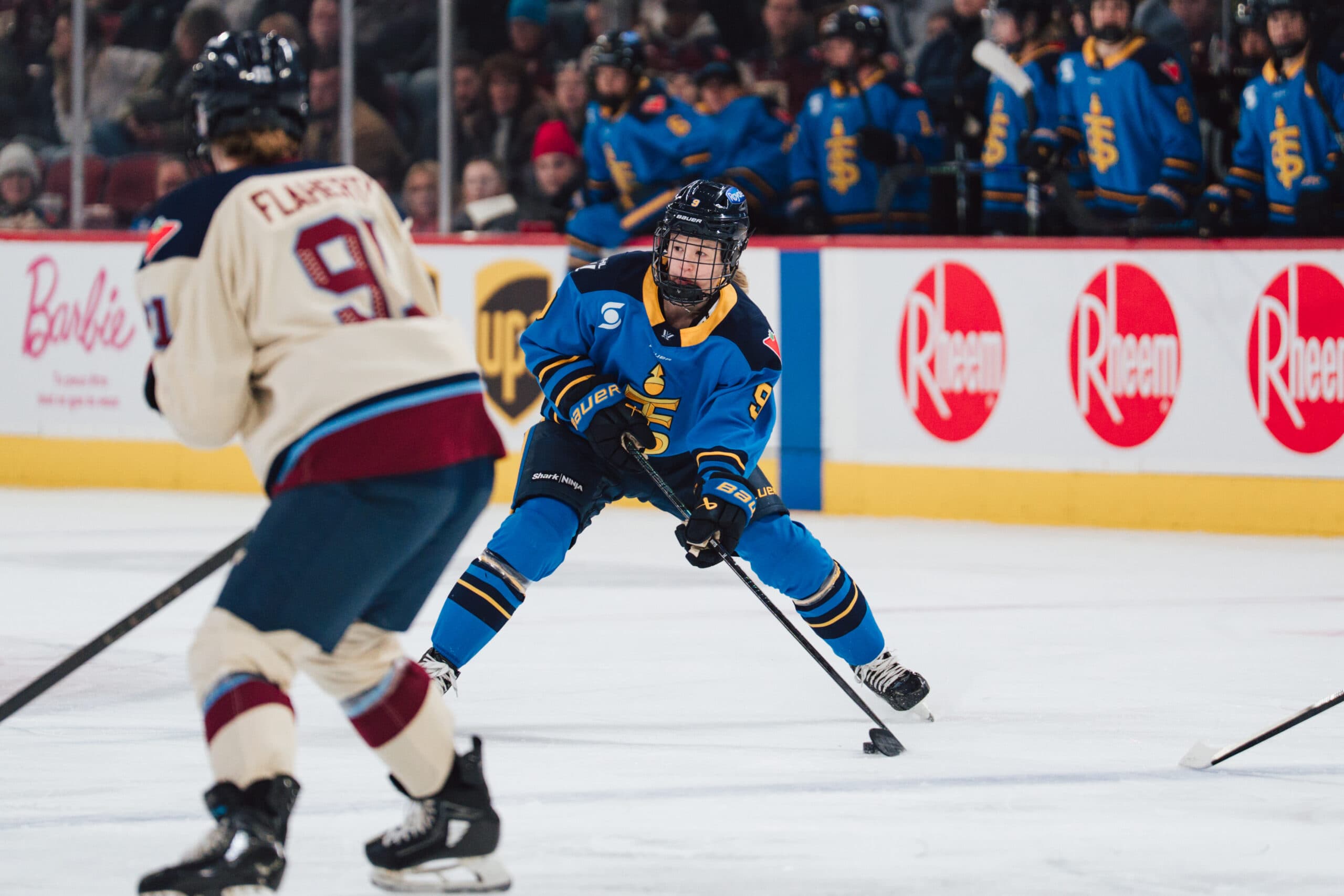
The Professional Women’s Hockey League has given the world’s top women’s players a chance to compete regularly, while building a growing fanbase that can see best-on-best nightly.
It has also given players who might not have been considered for the international stage an opportunity to prove they belong.
That was a topic of conversation heading into the league’s inaugural season, as players would face national team players in every game. It was going to force certain federations to make personnel decisions, as the same old guard wouldn’t be guaranteed spots at the Women’s World Championship or even the Olympics.
Prior to this Olympic cycle, a select number of athletes from the United States and Canada, along with some other countries, were centralized. The groups would spend months together in order to determine the final roster for the Winter Games. With the PWHL, every player has a chance to show they deserve to play on the international stage, even if they weren’t “favorites” to crack a roster.
One of those players is Toronto Sceptres forward Daryl Watts. The Toronto native was one of the most prolific scorers in college hockey history. She was the first freshman to win the Patty Kazmaier Award in 2018, with her 297 points at Boston College and Wisconsin over her career, placing her fifth all-time in NCAA scoring.
Yet, in 2021-22, in what was her final season of college hockey, Watts wasn’t centralized by Canada. The decision really discouraged her, and she ended up retiring after the year, thinking her chance to play on the big stage would never come.
“When I wasn’t centralized for the last Olympics, I thought I should have,” Watts said.” I kind of gave up on the goal of going to the Olympics.”
Watts didn’t stay away from the game for long. She joined the Toronto Six of the Premier Hockey Federation, helping the team win the 2023 Isobel Cup before joining the PWHL the following season.
Watts has brought a thrilling style of play to the league. After a solid first season in Ottawa, she was the most sought-after free agent before landing with the Sceptres in the summer of 2024.
It felt like it was only a matter of time before Watts received her shot with Canada. She finally made her senior national team debut at the 2025 IIHF Women’s World Championship andearned a spot on the Olympic roster for the first time.
Watts has always been confident in herself, but she recognizes that the opportunity to play against the best every night has helped bolster her stock with the Hockey Canada brass.
“Without the PWHL, I don’t think I would be here playing for Hockey Canada at the Olympics. I had a really great college career, and that wasn’t enough to get in the door. So, playing the PWHL kind of made it undeniable for me to get a shot with the team.”


Cap Summary
Draft Picks
The 26-year-old mentioned that having a single league, rather than the old days of the NWHL vs. CWHL or the PWHPA vs. PHF, has reshaped how people gauge talent in the women’s game.
“I think having one singular pro women’s hockey league, it allows all of us to compete night in, night out against each other,” Watts said. “It’s best-on-best competition, which has been the goal of the women’s hockey community forever…The best players just rise to the top.”
Another member of the Canadian roster heading to Italy that some might not have had on their roster projections was New York Sirens goaltender Kayle Osborne. Prior to this season, the Ottawa native had only played for her country at the 2020 IIHF Under-18 Women’s World Championship. While she played for Canada in the first window of the Rivalry Series, there were some skeptics who believed Gina Kingsbury would take Minnesota Duluth netminder Eve Gascon as the team’s third-stringer.
However, Osborne’s play with the Sirens in the first half of the season was difficult to ignore. In 14 games, she has a record of 7-6-1 with a 2.16 goals-against average and .922 save percentage, while sitting tied for the league lead in shutouts (three) with Boston Fleet standout Aerin Frankel.
Osborne further emphasized that the PWHL has helped improve her game, leading to a spot on the Canadian team.
“[We] get to play against the best players in the world pretty much day-in and day-out,” Osborne explained during a media availability last week. “Playing against that competition every single night… it obviously betters your game. … It’s helped a tremendous amount of playing in this league.”
Osborne’s Canada and New York teammate, Kristin O’Neill, mentioned how the number of games players have to compete in the PWHL is another reason why Osborne and players like defender Kati Tabin have the platform to earn their way onto the Canadian roster.
“We’re playing so many more games,” O’Neill said. “I think it’s just an even greater opportunity for everyone you know to get a more level playing field in terms of game quantity. … It’s cool to see other people getting an opportunity. For example, Kati Tabin hasn’t been in the program for a while. If it wasn’t for the PWHL, who knows how many games she would be playing per season? So, I think it’s really cool to see people like her getting an opportunity.”
While players like Watts and Osborne have used the PWHL to earn spots on national team rosters, others have fallen out of favor.
It was four years ago that Savannah Harmon represented the Americans in Beijing. She was part of a young wave of blueliners that was going to lead the country into the future. While she had a promising rookie season with the Ottawa Charge, her outlook changed drastically after she was traded to the Sceptres. Even over a year later, Harmon’s play isn’t nearly as good as it was in previous seasons, leaving her off the Americans’ Olympic roster.
It was just a couple of years ago that Danielle Serdachny was the hero for Canada at the 2024 Worlds, scoring the game-winning goal in overtime against the Americans. Her stock heading into that year’s draft was high, leading ot the Charge taking her second overall. Unfortunately, the Edmonton native hasn’t met expectations.
After an okay rookie season in Ottawa, she was left exposed in the expansion draft and eventually signed by the Seattle Torrent. Even with a new home, Serdachny hasn’t been able to find her game, leading to her being held off Canada’s roster.
While some might point out that the roster Olympic sizes are capped at 23, compared to the 25 set for IIHF events. However, it further shows how tight the competition is and how good one has to be in order to have a shot at playing for their country at the Winter Games.
Many great things have come with the creation of the PWHL, allowing players to be full-time pro hockey players and showcasing the best in the world on a nightly basis for fans across the continent. On top of that, those who want to represent their country on the world stage no longer have to hope to be noticed; instead, they can go out and earn a spot on the national team.

