What’s changing in the new NHL CBA – and what’s already implemented

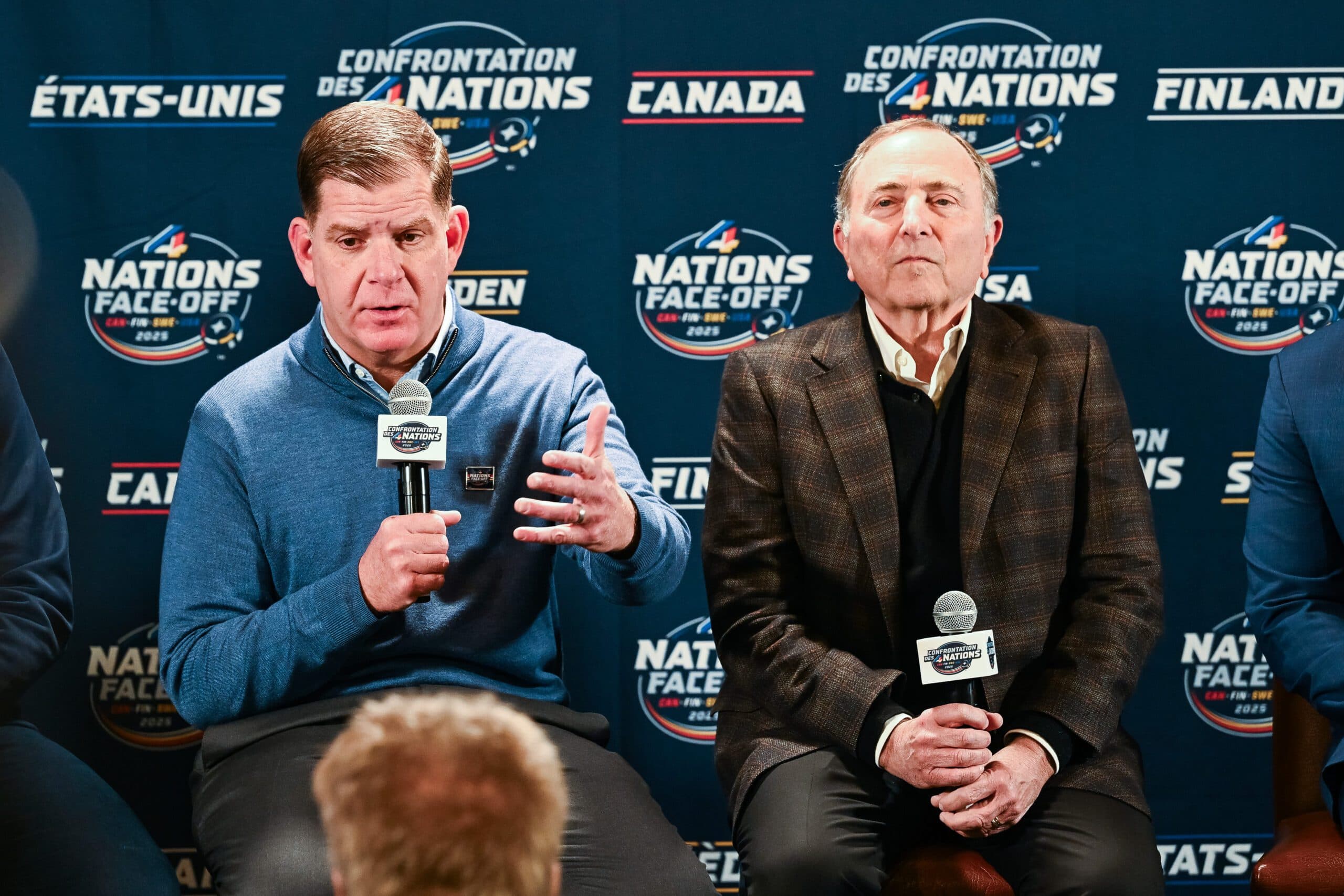
The NHL and NHL Players’ Association have achieved unprecedented labor peace in the era beginning when Marty Walsh took over as executive director of the PA in 2023 and became the union’s primary counterpart opposite NHL commissioner Gary Bettman. In summer 2025, the two sides finalized a shiny new collective bargaining agreement running from 2026 through 2030.
The new deal’s start date has arrived. The CBA kicks in Sept. 16 and runs through Sept. 15, 2030.
What are the key changes and tenets to know in the agreement? Here’s a refresher identifying some of the most prominent adjustments. (If you want a deeper dive into the all the finer details and changes, our partners at PuckPedia offer a great outline here.)
CHANGES ALREADY FAST-TRACKED
The following CBA changes were implemented for the final season of the previous agreement and carry over to the new one:
Playoff salary cap
No longer could teams pull the ole Mark Stone or Matthew Tkachuk trick, add salary at the Trade Deadline, activate their injured stars with no financial penalties and play the postseason with rosters that added up to numbers north of the cap. Beginning last spring, the 20 players a team dressed for any postseason game had to add up to a cap-compliant “averaged club salary.”
Reduced LTIR benefits
The new long-term injured reserve rule limited relief to the league-average salary if a player was slated to, or had potential to, return in-season, and it only allowed for full relief if he was ruled out for the regular season and playoffs, a la Tyler Seguin with the Dallas Stars last season.
No more deferred salary compensation
With teams like the Carolina Hurricanes (Seth Jarvis, Jaccob Slavin) and Toronto Maple Leafs (Jake McCabe, John Tavares) using deferred salary to secure impact players at bargain AAVs, the new CBA made an example out of them and banned the concept altogether. Deferred salary became illegal.
Restricted double salary retention on trades
Third-party brokers in deals – such as the Chicago Blackhawks helping with the 2025 Mikko Rantanen trade – were sidelined, with double salary retention outlawed for 75 days after any trade is made – and that meant 75 days of regular-season time, not calendar time.
Elimination of dress code
Suits and ties were no longer mandated league-wide as part of players’ pre-game attire, leaving them free to turn their wildest looks, as long as they were “consistent with contemporary fashion norms,” per the CBA.
KEY CHANGES FOR 2026-27
Here are some of the more prominent changes effective for the 2026-27 NHL calendar and beyond:
Shorter contract term limits
A simple adjustment: max contract lengths drop from eight to seven years for players re-signing with their own teams and from seven to six years for unrestricted free agents signing with new teams. That’s why it was important to get any eight-year deals in at the buzzer, as the Ottawa Senators did with Drake Batherson’s and the Washington Capitals with Ryan Leonard’s on Sept. 15.
84-game regular season
Self-explanatory. The 84-game season is tied for the longest in NHL history, equalling the mark set by the 1992-93 and 1993-94 schedules. In turn, the preseason has been shortened to four games, and veterans of 100 or more NHL games can only play a maximum of two. That give-and-take makes sense; more regular-season revenues for the owners without unnecessary wear and tear for the veteran players in mid-September games that have no stakes.
Elimination of fitness testing
To reciprocate the concession the PA made to the league for the extended schedule, the NHL agreed to eliminate the mandatory, standardized pre-camp fitness testing, to the delight of pretty much all the players, who always felt like it was an inaccurate or simply unnecessary measure of a player’s actual hockey shape.
“You’re responsible for your own summer and for your own body,” said Blackhawks center Frank Nazar at the NHL Player Media Tour last week. “And if you’re not coming ready to go, then someone’s going to take your spot, and for a good reason, right? So I think [removing the testing] just cuts that babysitting aspect of it out, and you’re able to just take responsibility for your own actions.”
Restrictions on front- or back-loaded contracts
Teams can no longer stack money nearly as much at either end of a deal. Per PuckPedia, “The difference between compensation in any year and the year immediately before or after cannot exceed 20 percent (25 percent for contracts signed prior to September 16, 2026) of compensation in Year 1 of the contract” for front-loaded deals. For back-loaded ones, “The difference between Year 1 and 2 compensation cannot be more than the lower of the 2 years (i.e., the highest compensation permitted in Year 2 is double Year 1).”
Extended draft pick rights for CHL players
NHL teams will now hold the rights to Canadian Hockey League players for four years for 18-year-olds and three years for 19-year-olds instead of two – matching the rights that were previously reserved for NCAA, USHL and European prospects.
Full-time EBUGs
Gone are the heroic average joes, the local amateur goalies like Zamboni driver David Ayres, who tickled hockey fans when summoned for emergency backup goalie duty in a fateful 2020 game. Teams will now all have official, full-time EBUGs on hand for every game. Each must not have more than 80 games of pro experience or have played pro hockey in the past three seasons.
Mandatory neck protection for new NHLers
We’ve already seen a sport-wide shift in neck guard usage ever since a skate cut claimed Adam Johnson’s life in a horrifically tragic in-game incident in England’s Elite Ice Hockey League in 2023. All players have to wear them in the IIHF, CHL and AHL, among other major leagues. But the NHL will finally catch up and mandate cut-resistant neck guards for all players with no previous NHL game experience beginning this season, while veterans of one or more games will be grandfathered in.
AHL loans for 19-year-old players
In the past, there was an inherent advantage in drafting a first-rounder from Europe or the NCAA who wasn’t projected to be an immediate NHLer; those players could be loaned to the AHL, whereas Canadian major junior players could not. Starting this season, 19-year-old CHLers drafted in the first round will be eligible for AHL loans – and not just one per team, as that would punish a team loaded with high-end prospects that has multiple players meeting the eligibility rule.
_____
Recently by Matt Larkin
- Tavares understands Leafs ‘weren’t very good’ – and embraces radical roster turnover
- Why the Wild’s Quinn Hughes’ isn’t stressing about his next contract
- Bill Daly: NHL expansion to Houston or Austin ‘not a done deal’
- Larkin’s trade request ‘sucks,’ but DeBrincat still has his back
- Cheered or jeered, Brady Tkachuk is ready for his Ottawa return