How should penalty kills approach broken sticks?

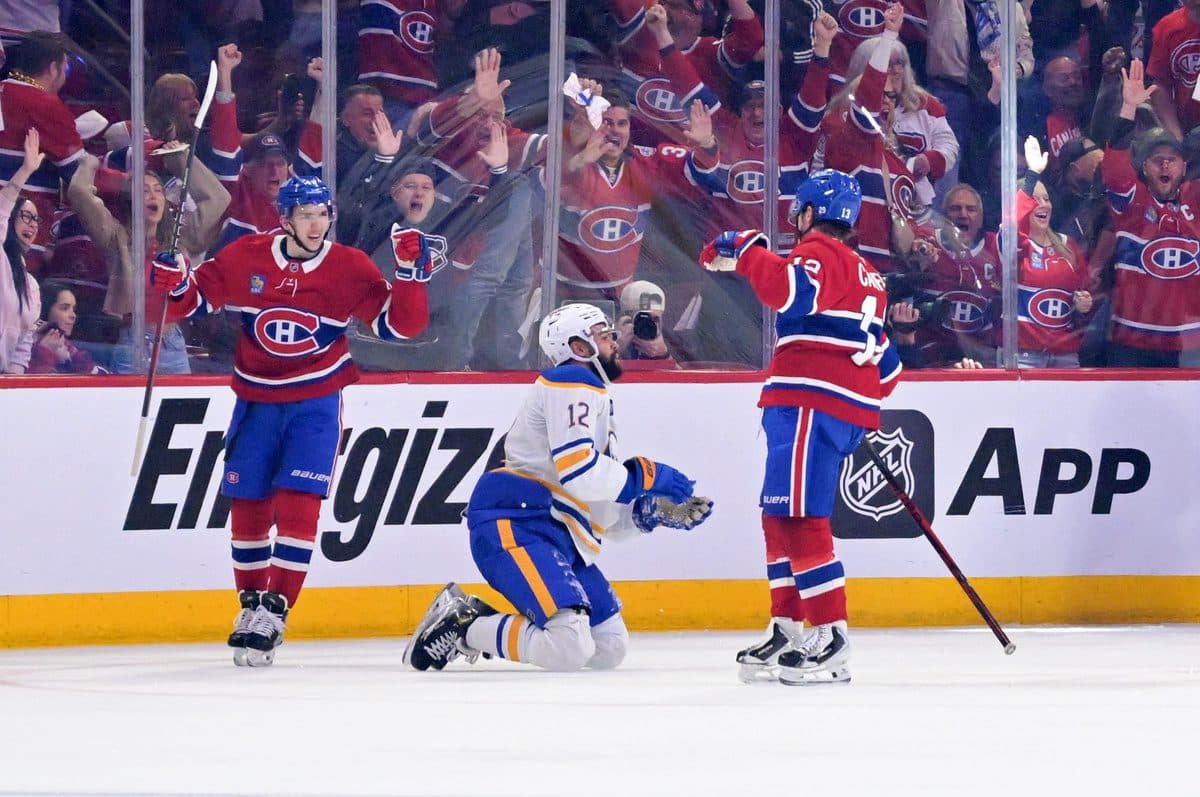
What a penalty killer with a broken stick should do has been a hotly debated topic in sports. Some argue that going to the bench to get a new stick is too risky, and they should try to stay in the right lanes to do something. Others think that, if communicated or practiced well, taking five or so seconds to get a new stick is a worthy risk to take in the long run.
Steve Peters talked about his perspective of players leaving the zone to grab a new stick on Daily Faceoff Live.
Steve Peters: It depends. And I know that’s not the answer people want to hear.
You can’t do it in the second period. You cannot leave the zone to try to get all the way on that long change to grab a stick. I know everybody wants him to. You saw Greenway get beat by Hutson on that goal that leads to the Caufield goal without a stick, and he had no chance.
The body in the lane helps a couple of things. It’ll help dissuade some of those passes, but you can block shots, you can still do something.
I don’t like it for a forward to leave for that long in the second period. In the first and third, if some of those boxes are inside the blue line, sure, it’s two seconds to try to get it. I know you can’t defend without a stick. I don’t think you can do it in the second period.
I’ve had coaches in the coaches room debate this for days and there really isn’t an answer. Most penalty kill coaches will tell you to stay and defend. So I’m going to side with the guys that work on the penalty kill for their living, and I’m going to say you got to stay unless you’re a forward that can make it to the bench in just two or three seconds.
You can watch the full episode here…