Was 2021 Draft class the toughest to scout in NHL history?

It’s easy to forget just how crazy things got worldwide in 2020.
Take, for instance, a meeting that took place between the executives of one NHL team, some of the league’s top decision makers and a medical expert as 24 of the clubs prepared to enter the COVID-19 bubble tournament that July.
The practitioner was making a pitch on how the players should behave on the benches. The idea: mandate that every player face forward when he breathed. With the virus airborne, if they turned to each other to discuss anything, they could transmit the infection.
As one NHL team executive who chose to remain anonymous told Daily Faceoff, the NHL brass were pretty much facepalming at the absurdity of the idea.
“We’re just like, ‘Are you fuckin’ out of your mind?’ ” said the executive.
“It’s a reflection of the times, right?”
A reflection of the times indeed. In those early days when a pandemic gripped the planet, killing millions before a vaccine was successfully created, we were all feeling our way through the altered way of life. It wasn’t just the masking and social distancing; how many of us washed our groceries, not yet fully understanding how the virus was transmitted? That time period feels like, pun intended, a fever dream six years later.
Nothing was normal, and that rung true in the hockey world, as we saw in the 2019-20 bubble tournament and the abbreviated 56-game season that ensued in 2020-21. But the impact extended well beyond the NHL and its schedule.
Things got particularly weird for the sport’s prospect population. Many of them struggled even to touch ice in the 2020-21 season, depending on how strict their leagues’ rules were. And that made the 2021 NHL Draft Class one of if not the most difficult to scout in history.
Five years later, we’re seeing the ripple effects of the challenges NHL franchises faced as they tried to identify the best players to pick without the usual tools and data at their disposal. Daily Faceoff caught up with a number of scouts, including some who were in charge of the decision-making, to look back on the unforgettably odd process that was the 2021 Draft year.
The biggest early challenge in the months leading up to the Draft, which took place with teams announcing their picks remotely in late July 2021, was the ability to see the kids play – for multiple reasons.
For one: they simply played a lot less. In the WHL, teams logged between 16 and 24 games with no playoffs. The OHL played no season at all. The QMJHL teams played roughly half a season each and were the only ones to finish their postseason, but the Memorial Cup was cancelled. With Canada’s pandemic restrictions much tighter than those of most other hockey nations, major junior players were at a disadvantage in terms of exposure. The USHL, on the other hand, played out its season, while European leagues like the KHL, SHL and Liiga got enough games in to finish their schedules and award champions. That meant certain leagues got more scouting eyeballs than others.
“The USHL and the colleges in the U.S. played not full schedules, but they played a good amount,” said a scout. “USHL, for example, you probably got to get into that league a little more thoroughly, which always has some diamonds in the rough.”
Four USHL players went off the board in the top 12 picks: Luke Hughes (fourth), Tyler Boucher (10th), Cole Sillinger (11th but technically 12th as the Arizona Coyotes’ No. 11 pick was revoked) and Matt Coronato (12th but technically 13th).
But the scouting wasn’t easy even for leagues that got their athletes on the ice frequently. On top of having fewer games to watch as they studied prospects, scouts had a much tougher time attending live games due to the pandemic restrictions on travel. That meant pivoting much more to video. Not seeing players live was an adjustment.
“It’s the stuff away from the camera that maybe you don’t see, like how hard a guy is backchecking or some of that stuff that you do need those live views for,” said a scout.
That said: different isn’t always bad. While being forced to use video reduced the odds of those magical, old-timey discoveries in which a scout goes to see player X but falls in love with player Y – think the Detroit Red Wings and Pavel Datsyuk – there were certain benefits if teams were willing to adapt.
“Zoom and all those things became more of a work tool,” said a team executive. “I almost think that forced scouting departments to use video tools more prominently in their scouting. It’s actually become bigger and bigger as analytics teams can use video to focus in on, ‘OK, who do we really need to go see live?’ The video scouting, you can do a lot of that work without ever leaving your home or your office and then, boom, you go, ‘These are the 20 guys that we’ve looked at a bunch of video on, now we want to see them in person, we want to see what they do off the ice, want to interact with them. You can make your scouting staff a lot more efficient.”
The video shift fostered some lasting post-pandemic gains. But the Zoom or Microsoft Teams format, rather than face-to-face, for the interviews leading up to the Draft? Yikes. For most scouts, it rendered the process useless.
“100 percent yeah,” said a team executive. “We interviewed probably 15 guys that we were thinking we might draft – on Teams calls, and it was super awkward. The player doesn’t know who to focus on or just doesn’t develop that rapport, because you try to ask softball questions early just to say who are you, what are you about, before you get into tougher questions, but on a [Zoom or Teams] call, it just doesn’t shine through. You don’t develop that personal rapport immediately with the guy. It’s just artificial.”
“Just by not getting the face-to-face interaction, you [had to] do a lot of your background work,” said a scout. “We’re talking to coaches, people around the player, so you’ve got a good idea, but it’s like anything else: when you see it live and you get to experience it face to face, it always lines up that much more naturally. The other thing about it is: there’s no Combine. So however many kids you wanted to interview, there was no system in place. You had to schedule all of them in one-off interviews with the agent, the player, so that was a lot of legwork as well.”
Another consequence of the decreased exposure in terms of player viewings and face-to-face interactions was that scouts had to pivot and work a lot more with the larger sample size of data they had: 2019-20, a.k.a. the 2021 draft class’ underage season, during which they all played closer to full schedules before the pandemic halted everything in March. But that, of course, could lead to some misreadings of players given how much they physically change between 16, 17 and 18 years old.
“You go back and try to watch a lot of video from guys’ 16-year-old seasons,” said a scout. “But when you think of how much a player changed just from year to year… like, you look at a kid in the OHL who’s playing a 16-year-old season for his first year in the league, he might not be playing that much. And you think of the jump they can make.
“Sometimes you think of the jump that a player makes just from the beginning of the Draft season until the end of the year. It happens all the time that there’s guys that start out in September, October, and they’re deemed as second-round picks, and they become top-10 guys by the end of the season. So given the nature of the age and the [2021] Draft itself and that there’s just so much that changes and goes on over the course of the year, it was certainly challenging to not be able to view the players the way we normally would.”
And what was the result? Did the scouts successfully navigate the storm and come out mostly with the proper calibrations, or did they end up off target in their 2021 evaluations because of the roadblocks they faced?
Per hockeydb.com, the Class of 2021 has had 71 players reach the NHL so far, good for 31.8 percent. That isn’t a final number by any means, given that defensemen and goalies tend to reach the league later – look at 27-year-old undrafted Brandon Bussi starting his first playoff game ever in the Stanley Cup Final this year – but even if you compare 2021 to the drafts immediately before and after it, we see a change. The hit rate on 2019 was 47 percent, and 2020 is 44 percent, albeit those classes have had more runway to break in. Much more tellingly, 2022 has already passed 2021’s hit rate at 33.8 percent.
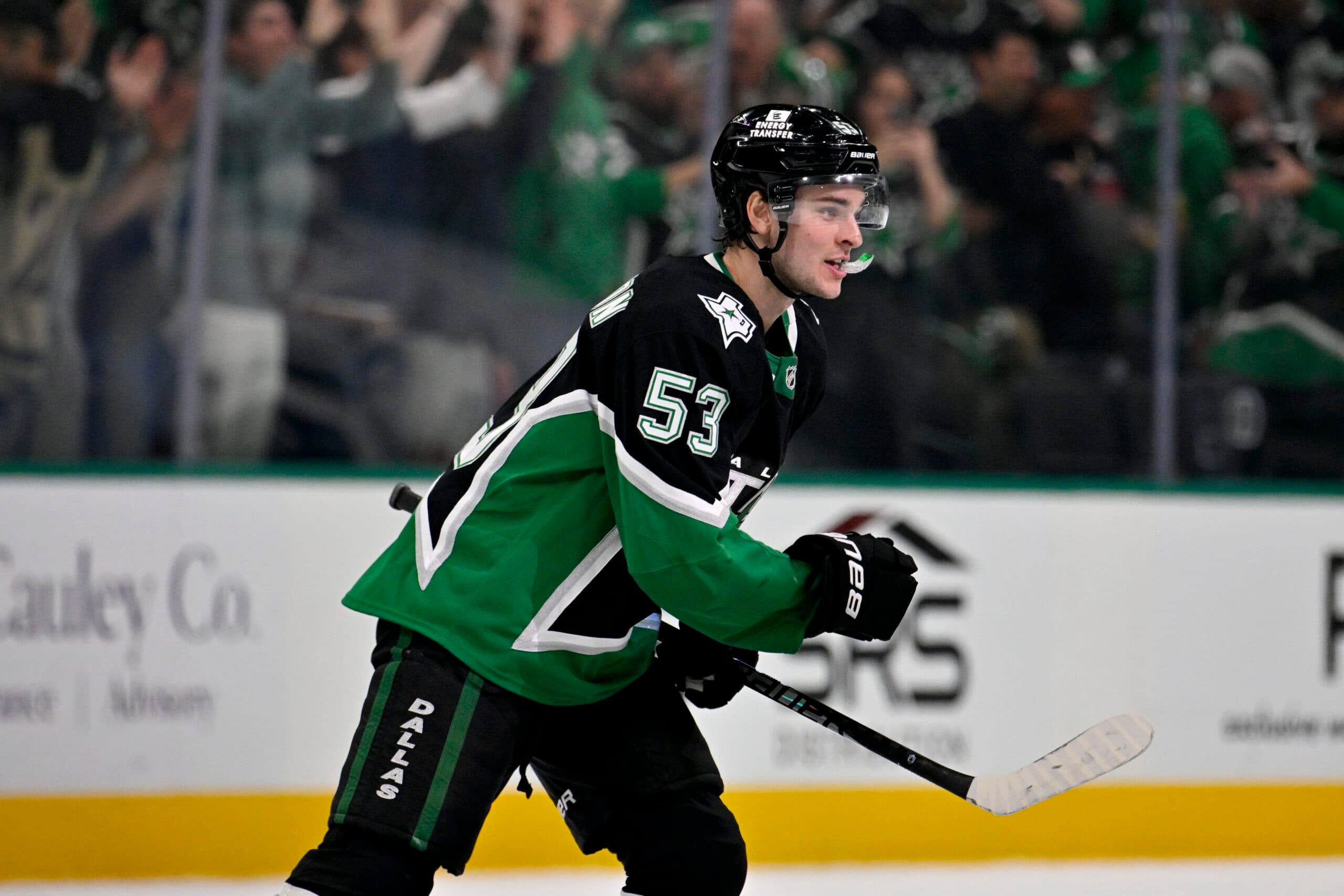
But the bigger discrepancy is less the rate at which the scouts found NHLers and more about which ones were evaluated as the best. Wyatt Johnston of the Dallas Stars has 43 more goals and 67 more points than anyone else in the class already, and he went 23rd overall. As one scout noted, Johnston was hidden in 2020-21; he was an OHLer, so he played no league games at all in his draft year. His only sanctioned hockey action consisted of seven games with Canada the Under-18 Worlds, where Johnston played as a third-line center behind Mason McTavish and Shane Wright on the depth chart.
Ottawa Senators top-10 pick Boucher has yet to reach the NHL, and if you redrafted 2021, you’d get several non-first-rounders elevated to the top half of Round 1, from the Stars’ Logan Stankoven to the Toronto Maple Leafs’ Matthew Knies to the Coyotes’ J.J. Moser. That isn’t to say every single draft doesn’t have first-round misses and later-round gems. But it was decidedly more challenging to figure out exactly who the top dogs were in the Class of 2021, and that makes it one of the most unique fields in NHL history.
Not convinced? Here’s our attempt at a 2021 redraft:
2021 ROUND 1 REDRAFT
(Actual pick in brackets)
1. Buffalo: Wyatt Johnston (Dal, 23rd)
2. Seattle: Dylan Guenther (Ari, 9th)
3. Anaheim: Simon Edvinsson (Det, 6th)
4. New Jersey: Matthew Knies (Tor, 57th)
5. Columbus: Brandt Clarke (L.A., 8th)
6. Detroit: Owen Power (Buf, 1st)
7. San Jose: Jesper Wallstedt (Min, 20th)
8. Los Angeles: Luke Hughes (NJ, 4th)
9. Arizona: Logan Stankoven (Dal, 47th)
10. Ottawa: Jackson Blake (Car, 109th)
11. Arizona – pick revoked
12. Columbus: J.J. Moser (Ari, 60th)
13. Calgary: Josh Doan (Ari, 37th)
14. Buffalo: Matty Beniers (Sea, 2nd)
15. Detroit: William Eklund (SJ, 7th)
16. NY Rangers: Mason McTavish (Ana, 3rd)
17. St. Louis: Matt Coronato (Cgy, 13th)
18. Winnipeg: Zachary Bolduc (Stl, 17th)
19. Nashville: Olen Zellweger (Ana, 34th)
20. Minnesota: Kent Johnson (CBJ, 5th)
21. Boston: Mackie Samoskevich (Fla, 24th)
22. Edmonton: Sebastian Cossa (Det, 15th)
23. Dallas: Ryker Evans (Sea, 35th)
24. Florida: Oliver Kapanen (Mtl, 64th)
25. Columbus: Cole Sillinger (CBJ, 12th)
26. Minnesota: Emil Lilleberg (Ari, 107th)
27. Nashville: Fedor Svechkov (Nsh, 19th)
28. Colorado: Zach L’Heureux (Nsh, 27th)
29. New Jersey: Logan Mailloux (Mtl, 31st)
30. Vegas: Colton Dach (Chi, 62nd)
31. Montreal: Ville Koivunen (Car, 51st)
32. Chicago: Zack Ostapchuk (Ott, 39th)
_____
_____
Recently by Matt Larkin
- Nine offer sheet candidates to watch in 2026 NHL offseason
- Five NHL buyout candidates to watch when 2026 window opens
- Dylan Larkin likes three trade destinations. But which others would make sense?
- Top 50 NHL UFAs of 2026: Boone Jenner now the No. 1 center in a bone-dry market
- How Brandon Bussi’s philosophy prepared him to seize his Stanley Cup Final opportunity
NHL Trade Board: Market for centers heats up with Larkin, Hischier and more