USA, Canada to meet in 2026 IIHF women’s Under-18 gold medal game

Here we go again.
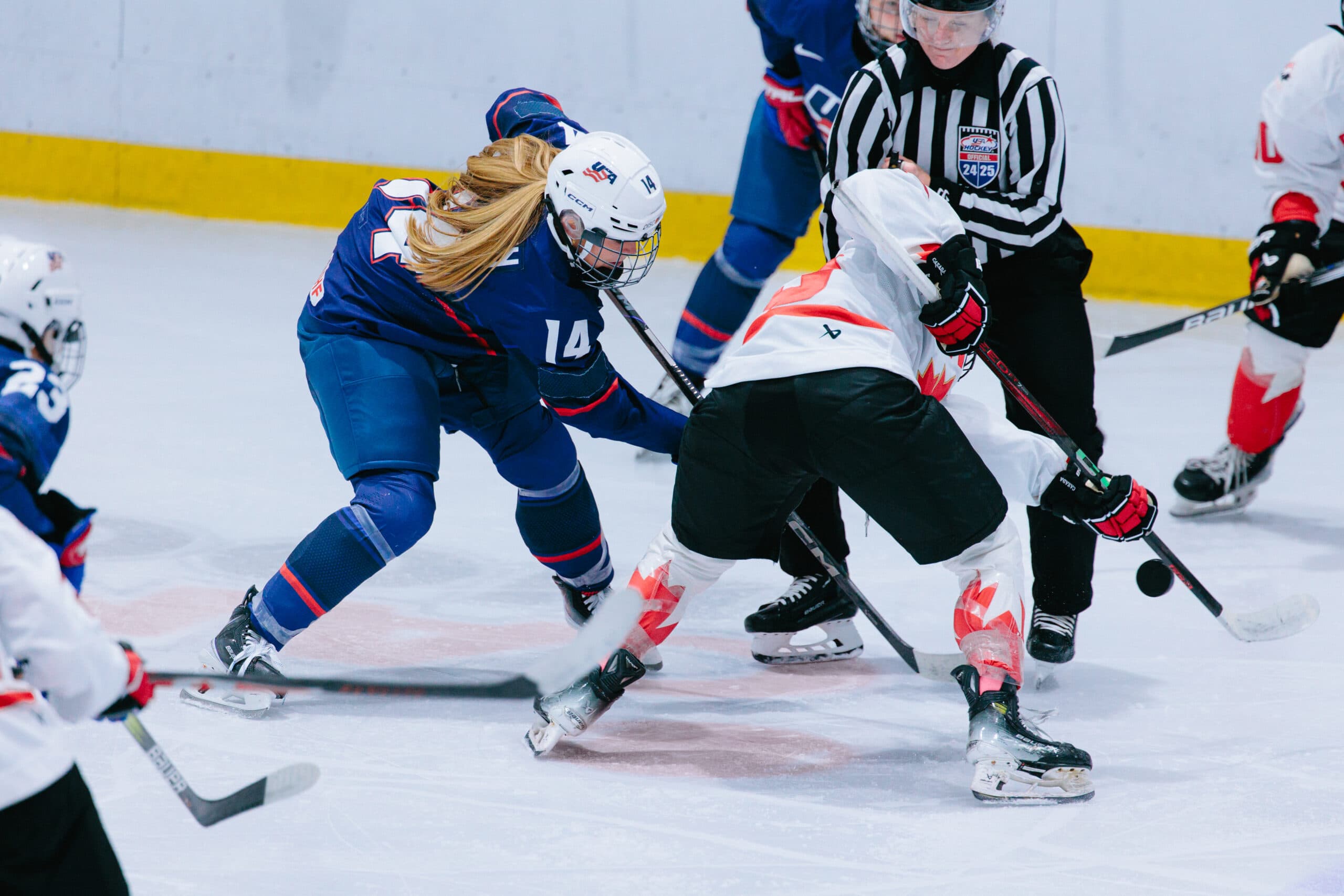
For the 15th time ever, the United States and Canada will meet up in the gold medal game at the IIHF Under-18 Women’s World Championship.
What makes this year’s tournament different from the past few years is how easy the North American powers made their path to the final look. The U.S. looked like an absolute unit in the opening round. On top of scoring 36 goals, nearly three times the number they scored in the group stage last year, the team gave up just one goal on 28 across the three games, winning Group B convincingly. Their +35 goal differential is tied for the best goal differential in the first round of the event.
The Americans waltzed through the first two rounds of the knockout stage, beating up Hungary and Sweden by a combined score of 18-1.
The star of the show has been Jane Daley. The 16-year-old scored a hat trick in each game during the group stage and carried that scoring prowess into the next round. After potting two more against Hungary on Thursday, the Massachusetts native broke the tournament record for goals in a single tournament against Sweden. Her 12th goal in Nova Scotia, surpassing Haley Skarupa’s record that she set 14 years ago.
Daley hasn’t been the only American putting up points; six players have scored at least 10, including captain Maggie Averill. The Princeton commit is one of three players on the roster with 14 points heading into the final.
Canada might not have scored as many goals, but that doesn’t mean they haven’t been as dominant. In finishing atop Group A, the host nation gave up just two goals in the first round, both against the Swedes in the final game of the group stage. The Canadians put up 12 goals on Finland in the quarterfinals, before outlasting Czechia in the semis on Saturday night.
Like the Americans, Canada has had a balanced scoring attack, with seven players posting nine or more points through five games. The team is led by Penn State commit Sofia Ismael, who posted 15 points through five games, including four points in the semifinal. Future Minnesota Golden Gopher Adrianna Milani has been exceptional, scoring 13 points, notching a pair of goals in the semis. Milani’s 10 goals are also the most in the tournament by a Canadian, tying current Minnesota Duluth star Caitlin Kraemer.
What both Canada and the U.S. have been able to do in this tournament is use their talent to quickly strike against their opponents. Even in games against the better teams, the two sides have carried momentum to schools just minutes from each other, if not seconds. That was seen in the United States’ semifinal clash with Sweden, where the team scored a pair of power-play goals on a major penalty and went on to score four goals just over 10 minutes apart.
With so much firepower on both sides, it’s going to come down to who will get scored on less. Both sides have split their goaltending, as the U.S. have played both Bianca Birrittieri and Morgan Stickney, though Birrittieri was in net for the semifinal win over Sweden. Rowan Houweling hasn’t allowed a goal in her two games, even though she’s only faced 21 shots. Lea-Rose Charrois was in goal for Canada against Czechia on Saturday and has allowed three goals on 43 shots against.
The USA and Canada have met in all but three of the 18 gold medal games of the women’s U-18s, with the U.S. holding an 8-7 record against its southern rivals. Yet, Canada has had the latest laugh, shutting out the Americans in last year’s championship game. Calleigh Tiller, one of Canada’s key returners, scored what ended up being the game-winning goal, pushing her country to an eighth gold medal.
The Americans have won a record nine gold medals at the U-18s, and are 13-10 against Canada all-time in the tournament.
Puck drop for Sunday’s final in Sydney is set for 8:30 p.m. ET.
Czechia and Sweden will meet in the bronze medal game for the second year in a row, facing off at 2:30 p.m. ET on Sunday. The Czechs beat Sweden in Vantaa last year, marking the first time the nation has ever won medals in consecutive years. Sweden has won bronze a record five times, while Czechia has finished third three times.