What did the past 10 Stanley Cup champions do at the Trade Deadline?

We’re eight weeks out from the 2026 NHL Trade Deadline March 6. But, really, we’re closer than that. Because the upcoming Olympic roster freeze will pause any trade activity for 18 days, we’re essentially 38 days from the deadline rather than 56 in terms of actual legal transaction time.
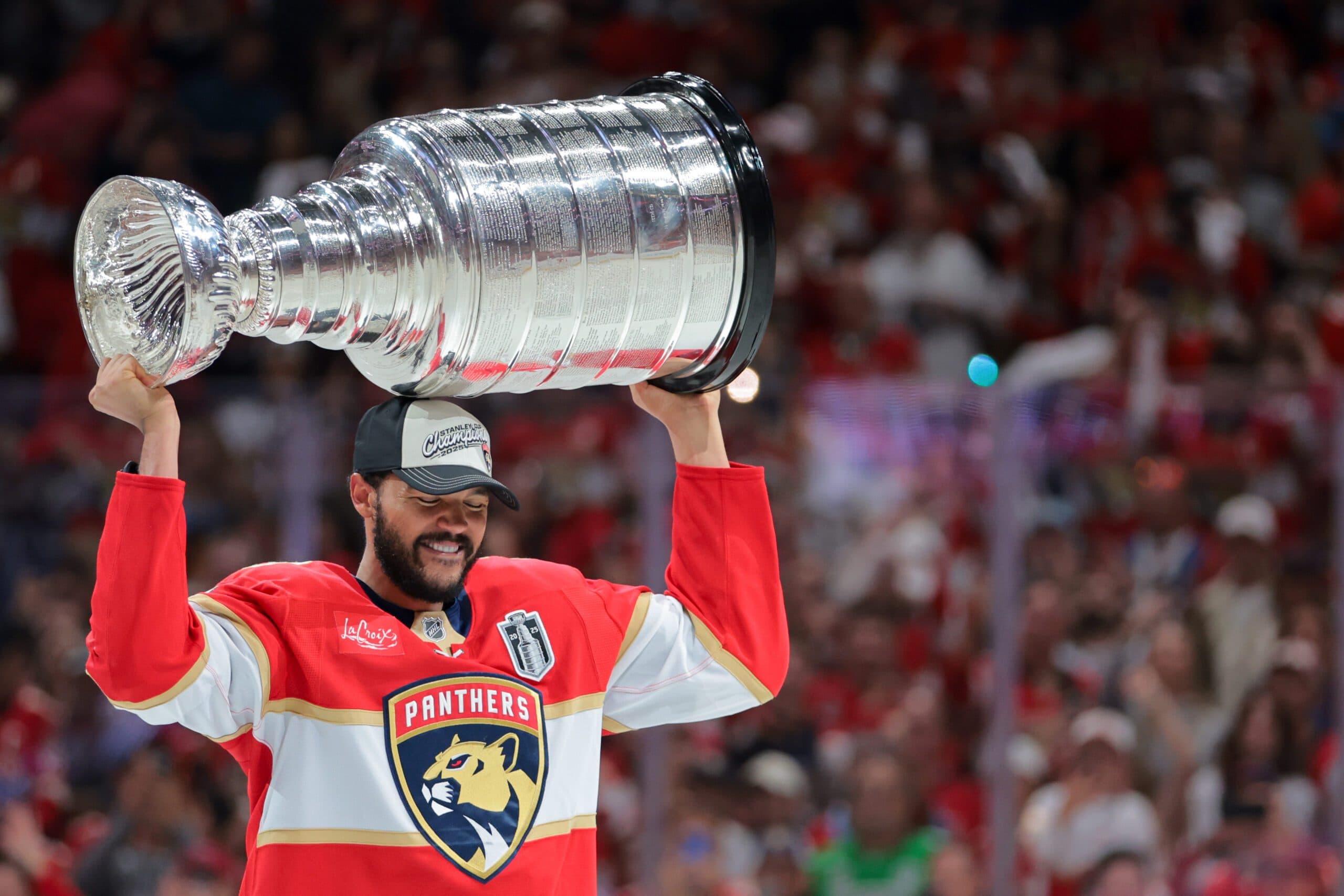
As GMs prepare to get active hammering out deals in the coming days and weeks: what is the best playbook to follow? For the past few seasons, we’ve examined what the previous 10 Stanley Cup champions have done leading up to the deadline. Now, we update the list, sliding the timeline forward one year, meaning we nudge out the 2014-15 Chicago Blackhawks and add the 2024-25 Florida Panthers.
Did each of the past 10 champions make bold moves? Did they make only minor tweaks to augment rosters that were already stacked? Or did they stand pat?
(Disclaimer: we’re using trades made within two months of the deadline, as any deals in that window were made with the stretch run in mind and thus were “deadline deals” in spirit)
2015-16 Pittsburgh Penguins
Key additions: Carl Hagelin, Justin Schultz
Mike Sullivan took over a floundering Penguins team in December 2015, and they began to thrive off speed, speed and more speed, using stretch passes to spring their fleet-footed forwards. You want wheels? Hagelin, acquired from the Anaheim Ducks in a trade for David Perron, was as fast as any player of his generation. He formed the ‘H’ in the ‘HBK’ Line with Nick Bonino and Phil Kessel, arguably the best third line in the league at the time. Meanwhile, Schultz, who had gone from exciting prospect to maligned in Edmonton, found his puck-moving game as a Penguin and made major contributions on back-to-back championship teams, especially in 2017 when Kris Letang missed the entire postseason.
2016-17 Pittsburgh Penguins
Key additions: Ron Hainsey, Mark Streit
The Pens opted for more of an “If it ain’t broke…” approach at the 2017 deadline but did add some useful support pieces. The rugged Hainsey played more than 21 minutes a night during the 2017 postseason. Most importantly, he led all Penguins in shorthanded minutes per game, helping them kill almost 84 percent of their penalties that spring. The 39-year-old Streit was merely an insurance piece and played three playoff games.
2017-18 Washington Capitals
Key additions: Michal Kempny
It felt like a low-key depth addition when the Caps scooped Kempny from the Chicago Blackhawks for a 2018 third-rounder. Instead, Kempny formed Washington’s top pair with John Carlson and played an important role in helping the franchise win its first and only championship. Kempny only played 17:42 per contest during that run, but Washington had 53 percent of the shots and 56 percent of the goals with that pair out together at 5-on-5.
2018-19 St. Louis Blues
Key additions: None
The Blues technically picked up Michael Del Zotto for a sixth-round pick, but he didn’t play a playoff game. Really, the foundation of the Blues’ winning team was built in the 2018 off-season when GM Doug Armstrong swung a blockbuster trade with the Buffalo Sabres to land eventual Conn Smythe Trophy winner Ryan O’Reilly.
2019-20 Tampa Bay Lightning
Key additions: Blake Coleman, Barclay Goodrow
When we think trade deadline and loading up in the current era, I picture what Lightning GM Julien BriseBois did in 2020. He spent two first-round picks to get the guys he knew would bring a hard-hat mentality to every game and help Tampa get over the hump after it had been embarrassingly swept in Round 1 the previous season following a then-record 62 wins. Coleman and Goodrow formed a dynamite third line with Yanni Gourde for back-to-back championship runs. The trades for Coleman and Goodrow established Tampa as a team willing to punt its high draft picks in the name of winning in the present. That’s how confident the Bolts were in their ability to develop lower-rated prospects into viable NHLers.
2020-21 Tampa Bay Lightning
Key additions: David Savard
Another year, another Bolts first-round pick surrendered in the name of pursuing a championship. Executing a three-team trade with the Columbus Blue Jackets, with the Detroit Red Wings eating some of Savard’s salary as a third-party broker, Tampa fit Savard into its lineup with some cap wizardry. Savard functioned mostly in a bottom-pair role, providing some thump and shot-blocking acumen.
2021-22 Colorado Avalanche
Key additions: Artturi Lehkonen, Josh Manson, Andrew Cogliano, Nico Sturm
The Avs had yet to escape the second round of the playoffs in the Nathan MacKinnon/Mikko Rantanen/Cale Makar era and Joe Sakic, in what would be his final run in the GM role, decided enough was enough. He surrendered a second-round pick to get heavy blueliner Manson and even gave up one of the team’s top prospects, Justin Barron, plus a second-rounder in the deal for Lehkonen. The moves couldn’t have worked out better. Lehkonen in particular was a playoff star, scoring four game-winning goals, including two in overtime, as Colorado ended a 21-year Stanley Cup drought.
2022-23 Vegas Golden Knights
Key additions: Ivan Barbashev, Teddy Blueger, Jonathan Quick
Barbashev was having a down 2022-23 after a breakout 2021-22, but that did not dissuade GM Kelly McCrimmon from sending prospect Zach Dean to the St. Louis Blues for Barbashev. He formed a stellar top line with Jack Eichel and Conn Smythe Trophy winner Jonathan Marchessault. Quick’s biggest contribution came in the regular season when he enjoyed a brief hot streak, helping the Golden Knights weather a storm of injuries in net. He won his first four starts and six of his first seven decisions with the team. Laurent Brossoit and, eventually, Adin Hill ended up manning the crease in the playoffs.
2023-24 Florida Panthers
Key additions: Vladimir Tarasenko, Kyle Okposo
Landing Tarasenko was straightforward enough, as the Panthers were deepening their top-six forward group and paid a reasonable price of what turned out to be two third-round picks for a winger with previous Stanley Cup winning experience. He brought depth scoring in the form of a 5-4-9 stat line in 24 playoff games, primarily playing with Aleksander Barkov and Sam Reinhart on the top line. The Okposo edition brought intangible value in adding a beloved dressing-room presence taking his final run at an elusive championship. His role was small in terms of on-ice impact, but every Panther to a man stressed how helpful his veteran leadership was off the ice.
2024-25 Florida Panthers
Key additions: Brad Marchand, Seth Jones, Marco Sturm, Vitek Vanecek
Whoa. Talk about taking a decisive swing to defend your title. The Panthers used leverage to get Marchand for the price of a conditional second-round pick (that did become a first-rounder because Florida won the Stanley Cup and Marchand played in more than 50 percent of the playoff games). He was sidelined with an injury at the time, which may have suppressed his price. Marchand was as vital as anyone during the Panthers’ Stanley Cup run, finishing second to Sam Bennett in the Conn Smythe Trophy vote. Six days before getting Marchand, the Panthers also sacrificed their former top goaltending prospect in Spencer Knight, hoping they could revive the career of another fallen ex-blue-chipper in Jones. They did just that. Jones’ big reach and excellent skating were crucial during the postseason run as he formed a strong play-driving second pairing with Niko Mikkola. It’s no stretch to say the Panthers don’t repeat as champions without their big plays for Marchand and Jones.
Conclusion
Are we seeing a slight changing of the guard? The previous 10-year snapshot told us almost every Cup-winning GM was active at the deadline but was primarily adding complementary players. But, lately, we’re seeing the eventual Cup champs bring in bigger hauls with more impactful players, from Coleman to Lehkonen to Barbashev to Tarasenko to Marchand and Jones. Five of the past six Cup champs have acquired more than one player during the stretch run.
The data seems to be telling us that top teams should shoot their shots and acquire difference makers if the price is fair. That said: doing so was a lot easier when LTIR was in play. The Panthers got Marchand because Matthew Tkachuk’s cap hit was stashed and, after Tkachuk arrived for the playoffs with no cap penalty, Florida won the Cup with a lineup that was $5 million over the cap. Vegas used a similar advantage in 2022-23 and Tampa in 2020-21. So it’ll be interesting to see if the new playoff salary cap, forcing teams to be compliant with their postseason lineups, will reduce the magnitude of contenders’ acquisitions.
_____
POST SPONSORED BY bet365