Top 15 centers for the 2026 NHL Draft

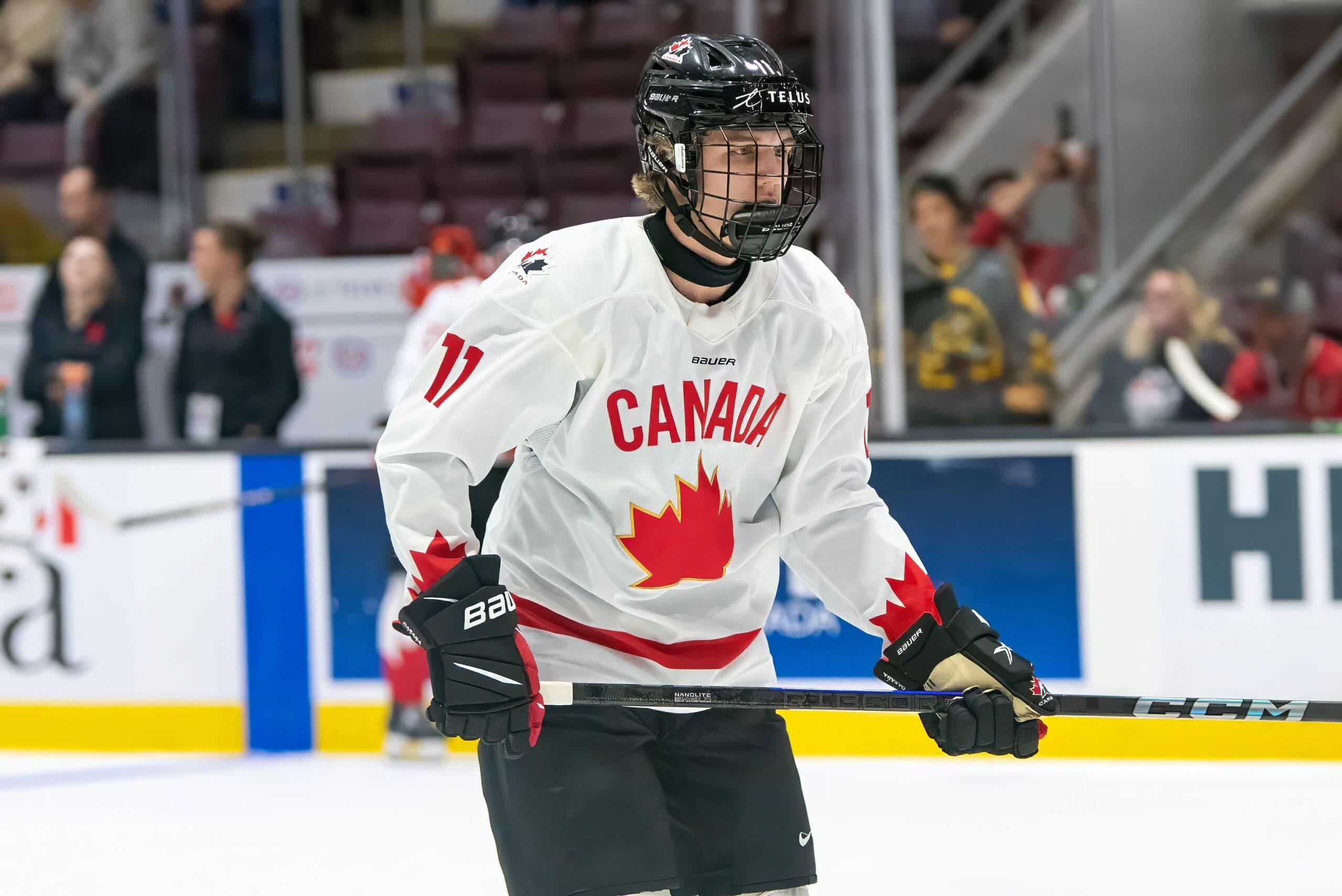
Centers are always a premium at the NHL Draft.
And that’s definitely true again this year. It’s unlikely we’ll see a middleman taken at the top, but it’s not crazy to think we’ll see one – most likely, Caleb Malhotra – land as high as third. From talking to scouts, Malhotra is the clear top center around thanks to his heightened offense, reliable two-way play and high-end hockey sense.
Teams often prefer players who play center because it’s much easier to have one transition into a winger if needed, rather than vice versa. Anton Frondell, for example, has already played both center and wing during his short NHL career. That type of flexibility is why a team will often draft a center whenever the race is tight between two different prospects.
Today, we’re looking at the top 15 centers for the 2025 NHL Draft. Position designations are based on NHL Central Scouting’s final draft list:
1. Caleb Malhotra (Brantford Bulldogs, OHL)
The best prospects are the smartest ones, and that’s where Malhotra shines through. He reads plays exceptionally well – scouts say it’s like he’s always playing a step ahead of the competition. He finds open lanes with ease, and he’s very difficult to contain in transition. Malhotra knows when to carry the puck up himself and when to look for an open lane and regroup. Might seem simple on the surface, but it’s pretty common for young players to panic under pressure. There’s no such thing as panic in Malhotra’s game. There isn’t a single team that couldn’t use more center depth. And for most scouts, Malhotra is the best available. Regardless, it’s been incredible watching him rise up draft boards this year. And, who knows? Maybe he still has another gear in his game to unlock.
2. Viggo Björck (Djurgardens, SHL)
Björck definitely lacks the size teams crave in a center. But that hasn’t slowed him down – he’s absolutely fearless. He didn’t find a player he wasn’t afraid to go up against at the World Championship. We’ve seen him win battles against guys like Stanley Cup champion Ryan O’Reilly (6-foot-1, 216 pounds), David Tomasek (6-foot-2, 209 pounds) and even 6-foot-8 monster Malte Setkov. It’s like watching a younger Zach Benson. Björck’s shot is incredibly deceptive, especially on the power play. He doesn’t give you much to work with if you’re a goalie – and it’s because he doesn’t need to. Sure, he’s small at 5-foot-9, but that shouldn’t be an issue for him.
3. Tynan Lawrence (Boston University, NCAA)
Lawrence is one of the smartest forwards in the draft class. He reads open ice exceptionally well and consistently makes the right passes through traffic. Lawrence isn’t massive at six feet and 185 pounds, but he plays with a ton of power. He plays a solid two-way game, and he boasts a boatload of energy, too. If you’re not moving quickly enough, Lawrence will swarm you instantly and make you pay. Nobody will mistake him for a burner. But Lawrence is a highly competent skater who should have no issue adjusting to the big leagues in that regard. All the missed time and the mid-season league change didn’t help Lawrence’s ranking. We’ll see if he can find his game again at BU next year.
4. Alexander Command (Orebro, Sweden U-20)
Command has all the makings of a reliable, all-situations center in the NHL. His floor is very high – he fits an archetype that succeeds quite frequently. He’s a smart, solid two-way center who makes everyone around him better. He doesn’t seem to have many off shifts, and that’s because he’s effective away from the puck, too. Command can contribute offensively but also will win faceoffs, block shots and make moves with intent. I’ve liked him internationally, and he has played quite well against his own age group. I think he’s more of a second/third-liner in the NHL (more likely in a No. 2 role), but one who shouldn’t have many issues being effective.
5. Ilia Morozov (Miami University, NCAA)
Despite being the youngest player in college hockey, Morozov played with a maturity that made him very valuable to Miami this season. Standing tall at 6-foot-3 and over 200 pounds, he is an imposing pivot who commands the center of the ice. He managed to post highly respectable numbers while operating on a roster lacking high-end offensive firepower. He frequently threads confident passes through heavy traffic. While his ultimate offensive ceiling may not get you out of your seat, Morozov’s off-puck habits and projectable power-center profile make him a compelling prospect. He’s already quite refined, even if the upside isn’t massive.
6. Markus Ruck (Medicine Hat Tigers, WHL)
Markus’ twin, Liam, is getting most of the love from scouts for his play-driving and goal-scoring abilities. But Markus is a special playmaker – he works as hard as anyone you’ll find in junior hockey. He loves to do the dirty work to make plays happen, no matter who he’s looking for on the ice. Ruck has obvious chemistry with his brother but can also dazzle on his own. My biggest concern was how unimpactful he looked during the playoffs – he kept getting pushed around far too much for my liking, and he doesn’t have the top-end skating to burn guys. I would like to see both brothers apart, but the raw talent is definitely there – and his playmaking is among the best you’ll find from a center.
7. Egor Shilov (Victoriaville Tigres, QMJHL)
Shilov was one of the QMJHL’s most proficient offensive generators this year. The Tigres finished second last in the West and were ultimately bounced in four games in the playoffs. But Shilov finished the season with 32 goals and 82 points while showing instant chemistry with fellow Russian draft prospect Alexei Vlasov (80 points). Nobody else came close to even reaching 50, so Shilov was exceptionally important. He dominates the puck game, and he’s as skilled as you’ll find in the CHL. There’s no lack of talent here – but he can get caught watching the puck far too often and simply lacks the pace to thrive at the next level. I think he’ll be a fine pro player, though.
8. Jack Hextall (Youngstown Phantoms, USHL)
Hextall had multi-point efforts in nearly all my viewings this year, both internationally and domestically, with Youngstown. He was no stranger to dominant performances, showcasing a dynamic skill set with an endless motor. That’s what I love about his game – he won’t be a high-end producer in the NHL, but he can play a variety of roles while being effective. He has a good shot, but he’s even better as a setup guy. On the power play, he doesn’t waste much time blasting shots past goalies. I also think he got better physically as the season wore on. I think he’ll be a solid support player at the next level.
9. Brooks Rogowski (Oshawa Generals, OHL)
Is Rogowski good because he’s good, or good because he’s big? I’m still not 100% sure, but I’ve enjoyed many of my viewings. Primarily, I thought he was great at the U-18s in a fourth-line role – I feel like he was enough of a pain in the rear end doing that. At 6-foot-7, he’s obviously got size. But I also appreciated how well he hustled at both ends, chasing pucks and breaking up plays. He’s a smart forward who uses his big frame to win battles, but he also has a good shot and isn’t afraid to launch it from anywhere in an attempt to surprise the goaltender. Rogowski won’t be a big-time offensive threat. But as a supporting player, he has a ton of tools at his disposal to make himself useful.
10. Maddox Dagenais (Quebec Remparts, QMJHL)
Dagenais has had a strong playoff run with Quebec, which will definitely help his draft stock. The son of former NHLer Pierre Dagenais managed to register a point per game in 62 outings with Quebec, often leading the team’s offensive push. He has an NHL caliber-frame at 6-foot-4 and 196 pounds, and he’s extremely reliable at both ends of the ice. Dagenais isn’t flashy, but he’s smart, toolsy and plays with a ton of power. At times, he’s able to dominate the puck better than most other big forwards in this draft class. Dagenais’ hockey IQ is impressive, and he’s a good skater for his size. I think he could be a good middle-six guy.
11. Oliver Suvanto (Tappara, Finland U-20)
Suvanto spent most of the season playing against men in Tappara, where he has shown he can play a reliable two-way game. I was hoping to see more offense from him against junior competition, especially at the U-18s. I really like his play away from the puck, and I thought he looked solid at the World Juniors in a variety of roles. While there are times where he’s easily the best player on the ice, it wasn’t frequently enough, and he doesn’t have the offensive talent to suggest he’s anything more than a bottom-six player at this point. I think he’ll be good in a role like that, though.
12. Ryder Cali (North Bay Battalion, OHL)
I liked Cali in Jr. A last year – putting up more than 50 points as a 16-year-old in the OJHL is no small feat. But I was hoping to see more from him offensively in North Bay this year. Cali is built like a tank, though, and he puts a ton of power into every shift, with and without the puck. His whole game is about making sure you can’t enter the zone with the puck – and if you do, you’d better make a lightning-fast move. I can see him becoming a solid bottom-six forward if he can improve his playmaking. I considered ranking him lower, but I know some scouts really like him as a long-term project. With an NHL frame and solid hockey sense, there’s actually quite a bit to like.
13. Adam Valentini (University of Michigan, NCAA)
Valentini is so energetic that he can chase the whole game without losing much pace. He can be a bit of a pain in the ass around the net because you can almost never keep up with his footwork. I like how his game has progressed in college, but he needs to add more muscle. With the puck, though, Valentini brings so much to the table. I’m not worried about his ability to create damage with the puck on his stick. But is he versatile enough? Is he too small? Maybe, but it didn’t slow him down at the college level because he plays with some decent muscle.
14. Oscar Holmertz (Linköping HC, Sweden U-20)
Holmetz has played at just about every level possible in Sweden this year, including the SHL. He didn’t get much ice time with the big club, but it felt like spending time playing against pros forced him to add another level of urgency to his game whenever he got sent back to junior. He put up good numbers with Linköping’s U-20 squad and has been a reliable two-way threat internationally. I think he’s most impactful as a support guy you can rely on to kill plays in the D-zone, but I’m not sure he’s skilled enough to have a profound role at the next level. There’s third-line center potential here, though.
15. Adam Andersson (Leksands, Sweden U-20)
Andersson really grew on me during the U-18s – even in a bottom-six role. Between killing penalties and some overall solid two-way play, Andersson looked on his game at that event. He’s a tough dude who plays a refined two-way game with his big 6-foot-4 frame. Scouts like him – some see him as a potential second-rounder thanks to his no-nonsense, yet high-reliability playstyle. He’s not going to put up a ton of points, but he’ll be difficult to play against while capable of killing plays.
POST SPONSORED BY bet365
Recent Articles by Steven Ellis
- 2026 NHL Draft Hub: Scouting reports, rankings, interviews and so much more
- 2026 NHL Draft Rankings: May Top 100
- 2026 NHL Mock Draft: June top 32
- Scouting reports on the 2026 NHL Draft prospects from the IIHF World Championship
- What makes 2026 NHL Draft prospect Ivar Stenberg special
- Why Caleb Malhotra’s rise up 2026 NHL Draft boards is so fascinating
- Top 10 ‘big guy’ prospects for the 2026 NHL Draft
- Top 10 ‘small guy’ prospects for the 2026 NHL Draft