Flyers don’t appear to be in Hurricanes’ league. What’s gone wrong?

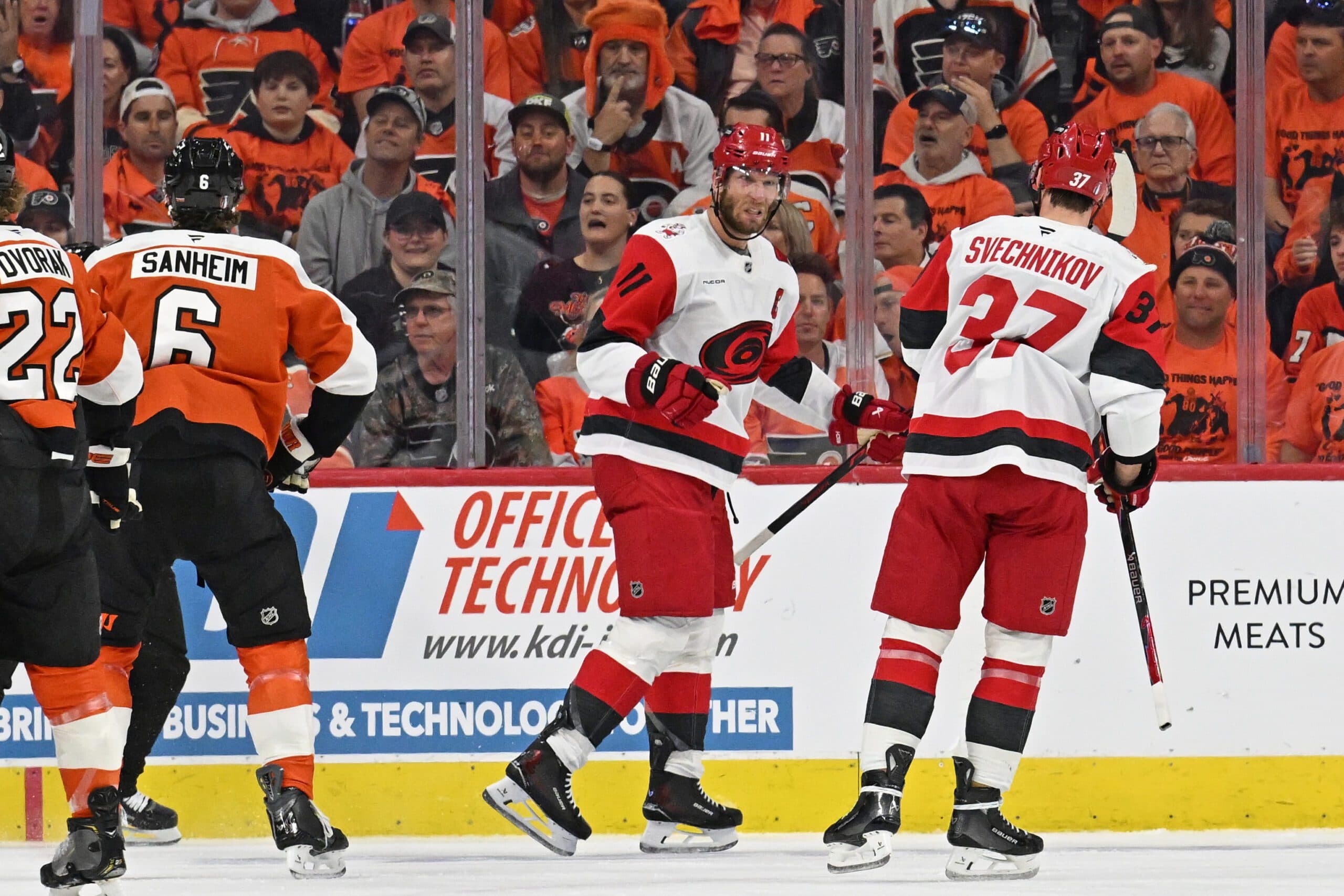
Staring down the barrel of a 3-0 series deficit following Thursday night’s 4-1 loss to the Carolina Hurricanes, the Philadelphia Flyers are nearing the end of their Cinderella run.
There is nothing to be ashamed of if you’re the Flyers, mind you, as playing in the second round was house money for GM Danny Briere’s club exiting a three-year rebuild. They made the playoffs for the first time since 2020; simply beating the Pittsburgh Penguins in Round 1 was enough of a mark to make this season a success.
A lot has gone into the struggles versus the Hurricanes in the second round, but here are three main observations as the biggest contributing factors.
Youth standing out – but not in a good way
The Flyers had 12 skaters making their postseason debuts in these playoffs – not all of whom were rookies. And the lack of experience in tight-checking games and in the face of adversity as the playoffs have gone on has been obvious.
The Flyers’ struggles (specifically offensively) started versus the Penguins in the first round. Philadelphia scored just five goals over the final three games to close out the series versus Pittsburgh, along with just one in the final five periods of hockey.
The Penguins adapted their style of play in Game 4, and the Flyers took time to adjust on the fly. Versus the Hurricanes in game 1, the relentlessness (which was the case in Game 3, too) of Carolina kept the Flyers on their heels far more often than not. Game 2 was an excellent showing for the Flyers (despite the overtime loss), but Game 3 once again showed a team that is young and learning how to deal with adversity.
Growing from losses is part of development – both for on the ice and for character – but it has been evident for many of the Flyers’ players.
Offense drying up
The Flyers’ offense has been operating at an anemic clip over the playoffs. Scoring just three goals in the series versus the Hurricanes, it has been a struggle for Rick Tocchet’s club to consistently put the puck in the back of the net.
The power play is an ongoing issue – as has been the case for several years – as the Flyers rank last among remaining playoff teams with a 9.1% efficiency. The Flyers would have had a real chance to be in the series lead (or at least have one win) versus Carolina had they been able to capitalize on the man advantage. More than anything, the need for a power-play quarterback has never been more evident.
Individually, far too many of the Flyers have gone dry. Travis Konecny, Christian Dvorak, Matvei Michkov and Tyson Foerster have all gone pointless versus the Hurricanes – simply not good enough for any team with winning aspirations. Couple that with the injuries to Noah Cates and Owen Tippett and the Flyers have had little help from the goal scoring department.
Frederik Andersen matches Dan Vladar
Dan Vladar was far and away the Flyers’ best player this season. In a lot of ways, you could make the case that goaltending was the biggest discrepancy between the Flyers and Penguins in the first round until the latter substituted Stuart Skinner for Arturs Silovs in game 4.
Per Money Puck, Vladar is ranked third among remaining playoff goaltenders in goals saved above expected per 60. Who is ranked first? Frederik Andersen. He has not had to be as busy as Vladar, but Andersen has been as efficient and rock-solid as one could hope when called upon.
Andersen’s play has shined a light – though it wasn’t exactly a secret – on the fact the Flyers were a little too reliant on goaltending to scrape out victories. There aren’t many goaltenders that have been able to outduel Vladar on any given night this season, but Andersen has done just that in three games during round two, albeit with a smaller workload.
_____