X-Factors for every women’s team at 2026 Olympics

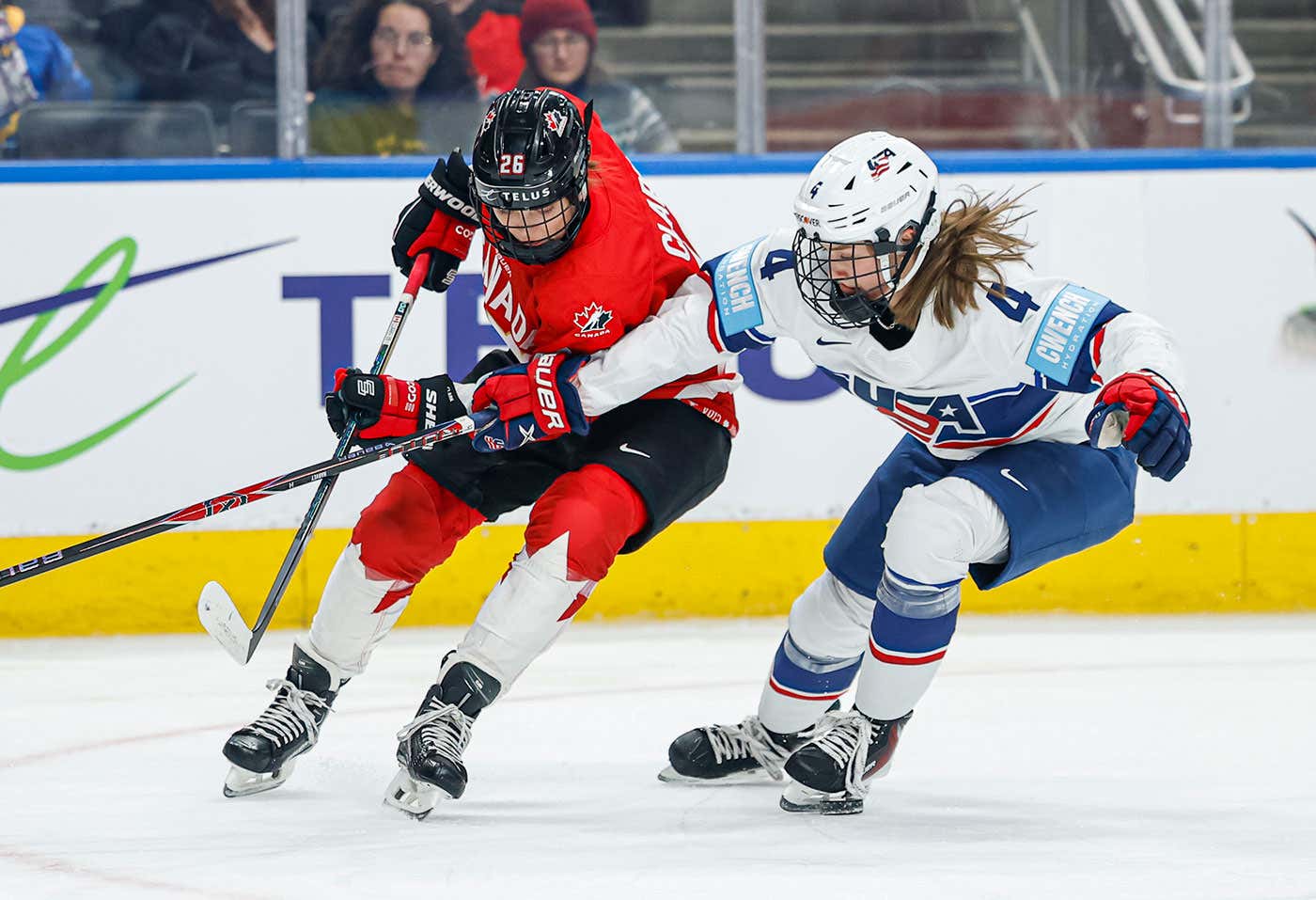
In what is widely considered the largest women’s hockey tournament in Winter Olympic history, many are excited to see which teams succeed and which players rise to the occasion.
We have seen many dominant performances over the years – Hayley Wickenheiser in 2006, Maddie Rooney in 2018, and Marie-Philip Poulin four years ago – the cream always seems to rise to the top on the big stage.
That said, there are always players who might not get the same amount of time in the spotlight as the superstars but still have a significant impact on the game. Today, we look at one player from each of the 10 teams competing in Milan who can be real difference makers for their countries.
Canada: Sophie Jaques
While Poulin, Sarah Fillier and Sarah Nurse are going to have be at their best if the Canadians want to bring another gold medal, they need players from the back end who will have to step up and play big minutes, especially in the later rounds of the tournament. Sophie Jaques can provide that and then some.
The Toronto native went from being a cast-off by Boston during the team’s inaugural season to one of the PWHL’s best blueliners with the Minnesota Frost. The defender’s play helped the team win back-to-back Walter Cups, with Jaques being a finalist of defender of the year last season.
Even on a Vancouver Goldeneyes team that has struggled for most of the first half of the season, Jaques has shown her ability as an effective two-way player, with massive offensive upside. The 28-year-old is entering her first-ever Olympics, but in a short tournament (on a smaller ice surface) her speed and awareness gives the ability to drive other teams mad.
Czechia: Natálie Mlýnková
This is by far the best team Czechia has ever assembled for an international tournament. From having the likes of PWHL stars Kristýna Kaltounková, Tereza Vanišová, and Aneta Tejralová, to talented college players like Adéla Šapovalivová and Andrea Trnková, this team is looking really good heading into Milan.
Among those from the pro ranks who can play a key role in the team’s success is Mlýnková. In her rookie season with the Montreal Victoire, she has provided secondary scoring on a team that has struggled to find it past their top line. She came to the PWHL after a stellar college career at Vermont and Minnesota, and has shown why she was taken in the second round in last year’s PWHL Draft.
The Zlin native’s speed and awareness make her a strong force when she’s with or around the puck. A constant producer on the international stage, Mlýnková will be important if Czechia wants to take home a medal.
Finland: Elisa Holopainen
Finland’s team brings many of the usual names who have represented the country for years on the world stage – Susanna Tapani, Sanni Ahola, Jenni Hiirikoski – but one player who can be the difference between a medal and the team returning empty-handed is Elisa Holopainen.
For years, Holopainen dominated the Auroraliiga, Finland’s top women’s league. Now, with Frölunda HC in the SDHL, she’s quickly becoming one of the best players in all of Europe. Last season, she was the league’s most valuable player, leading the team to its first-ever championship. She’s off to a great start again this season, posting 38 points in 34 games.
While players like Noora Tulus and Petra Nieminen have typically been Finland’s top scorers in international competition, Holopainen has shown that she can be a force offensively at times, with Suomi hoping she can push the team to another medal.
France: Alice Philbert
I know it might be cheap to pick a goaltender as one of the team’s most important players, but for a team like France competing in the Olympics for the first time, Alice Philbert will need to be sensational if the team wants any chance of success in Milan.
Thankfully for Les Bleus, the Quebec-born netminder has experience playing in some big games. It was just a few years ago that, playing under Olympians Caroline Ouellette and Julie Chu, Philbert led Concordia University to a U Sports championship. Then she went overseas to France, helping Wasquehal, a Division 4 men’s team, earn promotion to the country’s third-tier of pro hockey.
Philbert is going to be tested heavily by the other four teams in Group B, and getting out of the preliminary round might be a challenge, but if Philbert can stand on her head like she has earlier in her career, Frace could scare some teams.
Germany: Nina Jobst-Smith
Offense might not be Germany’s biggest strongsuit in this tournament. Yes, Laura Kluge can score, as the Welcke twins, Luisa and Lille, have proven they can produce on the international stage. However, with the caliber of play in Group B and what Träger der Adler will have to do if they want to steal a spot in the semifinals, defense will be important. That’s where Nina Jobst-Smith comes in.
The North Vancouver native has been an important player for the national team for several years. She’s shown how good she can be at Minnesota Duluth, and even in her small sample size with the Goldeneyes this year, she has the potential to be a real shutdown defender, while contributing on the offensive side as well.
Going up against Sweden and Japan’s best in the opening round, Jobst-Smith can hold off some of the upper echelon in the tournament to give Germany a chance in the quarterfinals.
Italy: Nadia Mattivi
While many are counting Italy out because they’re the host nation, they have plenty of players who know and understand the North American style of play. Along with nationalized players in Kristin Della Rovere, Kayle Tutino, and former Canadian Olympian Laura Fortino, there are a few Italian natives who could keep up in a best-on-best tournament.
Nadia Mattivi is one of the more underrated defenders in women’s hockey today. After five years at Boston University, two of which with her as captain of the Terriers, the Trento native has thrived with Luleå in Sweden. She has been an efficient two-way rearguard on one of the best teams in the SDHL over the past year and change, earning defender of the year honors in 2024-25, and is already off to a great start this season, posting 21 points in 20 games.
For a team that’s going to need scoring support from everywhere, Mattivi can certainly jump in on the offense, while being entrusted to hold off the opposition’s top stars.
Japan: Haruka Toko
It was four years ago that Toko led Japan with six points in Beijing, helping the team reach the quarterfinals. It was certainly one of her best outings with the national team, as the Japanese will look to her to help drive the offense, and help the team in finish in the top three in Group B.
Japan really missed Toko at last year’s IIHF Women’s World Championship, as an injury kept her off the roster. Her production so far with Linköping HC isn’t quite what it was two years ago, when she finished sixth in the SDHL with 43 points in 36 games. However, playing alongside talented players like Rui Ukita and Akane Shiga this month will certainly give the 28-year-old the ability to spread her wings and showcase the playmaking abilities that have made her a standout on Smile Japan.
Sweden: Hilda Svensson
I can’t understate how excited I am to see Svensson on the Olympic stage.
I remember her Women’s Worlds debut in 2023 when she was 16, as she almost dragged the Swedes to the semifinals. There’s something about her confidence that she’s carried throughout the years, consistently being recognized as the best under-18 player in the SDHL on a rather mediocre HV71 team. Yet, Svensson has thrived and is now tearing things up in the college ranks on this side of the pond.
On a strong Ohio State team, the freshman Svensson stands above the rest. With 15 goals and 44 points, she sits tied for fifth in the NCAA in scoring. If she can continue to be the strong playmaker that she has been at the WWC in recent years, Sweden has more than enough to take Group B.
Switzerland: Andrea Brändli
I’m going to be honest with everyone here… If Andrea Brändli doesn’t play out of her mind, I don’t see Switzerland having any success in Milan.
I know that sounds harsh, but look at their record over the past two Women’s Worlds – 2-10-0, with both of their wins coming in the fifth-place game. If the Swiss want that to change, Brändli has to come up clutch. Switzerland has historically given up tons of shots, leaving the Zurich native hung out to dry. However, she’s shown flashes of where she can keep things close against some of the top teams.
Having to play in such a tough pool can be harsh, especially on the goaltender. Yet, since Switzerland gets an automatic bye to the quarterfinals, Brändli just needs to pull one rabbit out of the hat to get her team to the final four.
United States: Caroline Harvey
Some say she’s the best defender outside of the PWHL. Some argue she might just be the best defender, period. Regardless of how highly you think of K.K. Harvey, she’s undeniably one of the most impactful players on any team heading into the Olympics.
Since her first Olympic experience four years ago, the Pelham, N.H., native’s game has become comparable to Cale Makar. Fast, talented, skilled and effective at both ends of the rink. She’s one of the toughest blueliners to get by, and when she has the puck on her stick, good luck stopping her from making the play she wants.
At Wisconsin this season, Harvey is tearing up the charts, challenging Team USA teammate and Minnesota star Abbey Murphy for the nation’s leading in points. On an insanely stacked U.S. roster, Harvey’s ability to make big plays in every situation could be the key reason the Americans win gold for the first time in eight years.