2026 NHL Trade Deadline preview: Pacific Division

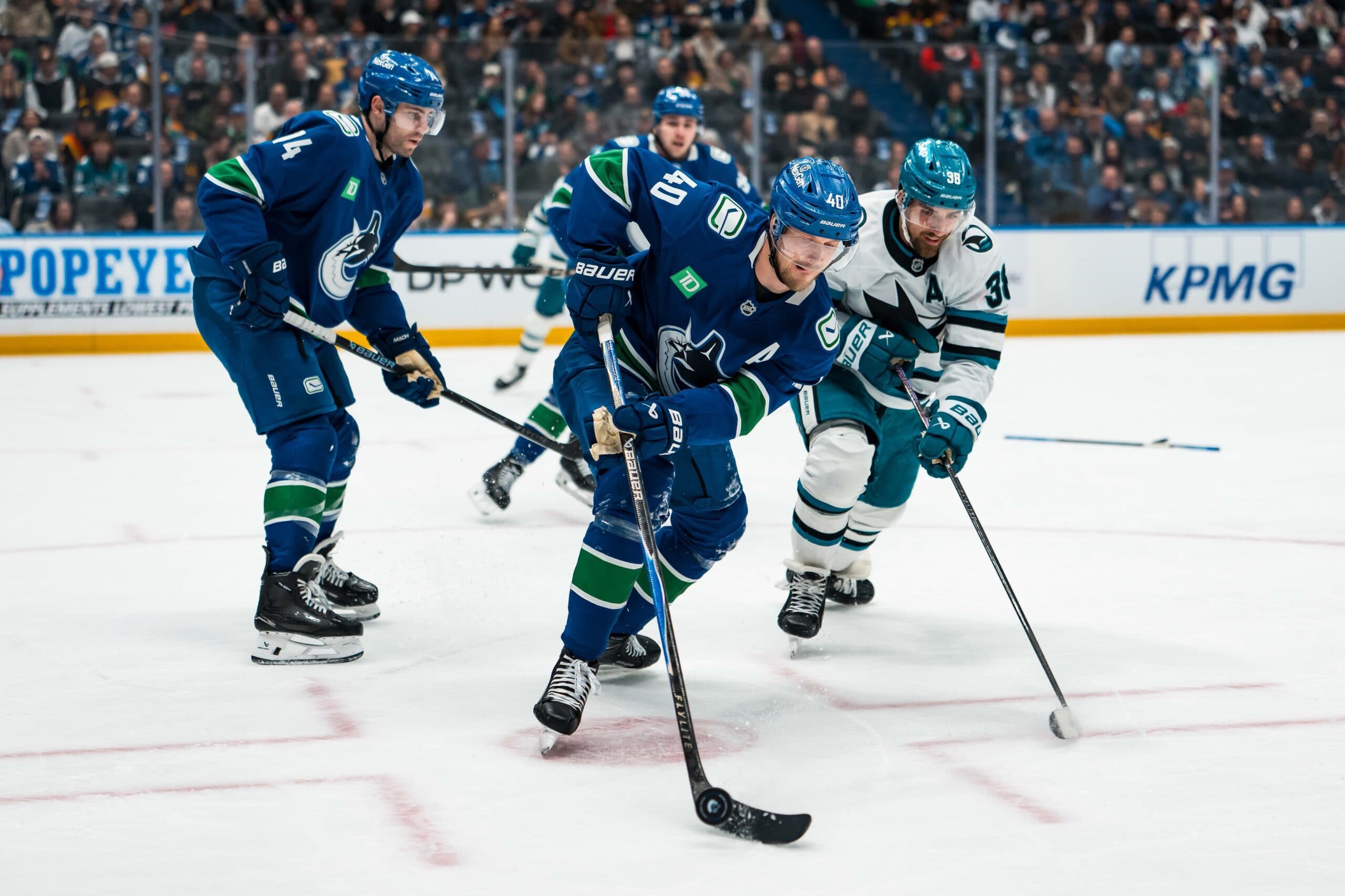
We’re a week away from the NHL Trade Deadline, which means it’s time for teams to figure out what their plans are for the rest of the season and decide which players they want to bring in or sell off before 3:00 p.m. ET March 6.
The standings have been airtight at various points of the season, so figuring out which teams should commit to buying and selling has never been harder. In fact, we only have a few confirmed sellers on the market at this point in time.
But have no fear, Daily Faceoff is here to clear the air… somewhat. This week, we’ll provide Trade Deadline previews for every team, division by division, and break down what their plans could be. For the buyers, we’ll look at their positions of need, the budget and assets they have to work with to acquire players and assess the best targets for them based on those factors. For the sellers, we’ll look at which players they could potentially move on from.
One important thing to clarify here: do not take these previews as gospel. While their status is determined based on the outlook of each team this season and the conversations surrounding them, the positions of need and best targets are determined analytically, with some input from reports regarding their wants and needs. These previews are more about what they SHOULD do, not what they WILL do, although it is still based in reality.
Also, all targets are determined based on the cap space available to the buying teams as well as any they may gain from potential assets they can move out. It does not account for the potential of salary retention or the players not on the market who could be moved to make a deal go through.
Today, we look at the Pacific Division, which contains the most true sellers, and also a lot of teams who probably shouldn’t buy but will anyways.
Anaheim Ducks
Deadline Status: Long-term buyer.
Positions of Need: Middle-six forward, top-four defenseman, power-play specialist, penalty killer.
Potential Assets: Three first-round picks, five seconds, three thirds in next three years; solid prospect pool; Pavel Mintyukov (D); Ryan Strome (C).
Projected Budget: $12,611,311 ($18,529,644 if Mintyukov and Strome are moved).
Best Target(s): Dougie Hamilton (D), Alex Laferriere (RW), Jared McCann (LW), Mackenzie Weegar (D).
The Ducks’ influx of high-end young talent and a complementary veteran core have finally given this group a chance to compete on a nightly basis. For the first time since 2018, they are poised to make the playoffs. Their spot is far from secured, as they sit just four points ahead of the closest non-playoff team in the Nashville Predators. But it doesn’t mean the Ducks shouldn’t look to buy. That said, they’re still a young team, so it’s more important to prioritize the long-term with their decisions.
Right now, the Ducks are in need of a middle-six forward. Ideally, they would push Ryan Poehling into the fourth-line role he is more suited for with his defense-first game. Anaheim could also use a top-four defenseman. Jacob Trouba has struggled in tough minutes and would work better further down the lineup. The Ducks could also improve their special teams, so going for players who fit multiple needs would be smart. They’ll have more than $12 million to work with, and could add an additional $5 million if they find a taker for Strome’s contract.
Up front, Laferriere and McCann would check a couple boxes. Both are still in the primes of their careers and would be good additions to this Ducks squad – though acquiring them would require pulling off a trade within the division, which is unlikely. On defense, Hamilton is the kind of veteran reclamation project Anaheim has zeroed in on the past with Chris Kreider and Trouba. The Ducks also have the cap space to take on his contract. If they want a longer-term option, Weegar would be another smart move for Anaheim.
Calgary Flames
Deadline Status: Scorched earth.
Potential Assets: Blake Coleman (LW), Nazem Kadri (C), Ryan Lomberg (LW), MacKenzie Weegar (D), Zach Whitecloud (D).
Flames management and ownership has tried their best to avoid it, but it’s inevitable: the Flames need to rebuild. They’ve already begun the process by trading Rasmus Andersson to the Golden Knights. But all signs point to Calgary moving more players by the end of next week. Lomberg is the Flames only pending UFA of note. But if the Flames move players with more term, they could get significant assets back.
Coleman and Kadri have already received plenty of interest and could both return a fair amount of picks or prospects. Weegar and the recently acquired Whitecloud could also fetch some assets if the Flames shop them. They have a couple excellent long-term pieces in Zayne Parekh and Dustin Wolf, but Calgary needs a couple higher-potential talents, especially at forward. Nailing this Trade Deadline (and the draft, of course) is key to their future.
Edmonton Oilers
Deadline Status: Buyers.
Positions of Need: Forward & defensive depth, penalty killers, dare I say goaltending.
Potential Assets: Two first-round picks, three seconds and three thirds in next three years; weak prospect pool; Andrew Mangiapane (LW).
Projected Budget: $912,833 ($4,512,833 if they move Mangiapane).
Best Target(s): Emil Andrae (D), Ryan O’Reilly (C), Jesper Wallstedt (G), Matias Maccelli (LW), Sam Montembeault (G), Zach Whitecloud (D).
It’s impressive how much the Oilers continue to take steps back from a roster construction standpoint. Two years ago, their forward depth was a driving part of their first Stanley Cup run. Now, any of their attempts to replicate it have not worked out, and they are back to relying on Connor McDavid and Leon Draisaitl to carry the load. Last year, Edmonton had a deep defense corps. But they took a step back in that regard this season, dealing Brett Kulak to upgrade their goaltending with Tristan Jarry… which has also proven to be an (at-best) lateral move.
Now, the Oilers again need support surrounding their elite core, but they lack the ability to do so. Their draft and prospect capital is solid but not plentiful, and they are tight to the salary cap. If they can move Mangiapane’s contract, Edmonton will have a bit more room to work with. But it still won’t be enough to solve every issue, unless they are only shopping in the bargain bin.
And then there’s the matter of if the Oilers should even go all-in this season in the first place. They’re a step behind the titans in the Central Division, and while they could find a way to sneak through a weak Pacific bracket and cause an upset in the Western Conference Final, it’s never a good sign when you lean too much on hope for success. It might not be the worst idea to pick their spots on smart long-term adds at this deadline, use this year to reset (and finally give McDavid and Draisaitl a break), and try to address all their problems in the summer.
Los Angeles Kings
Deadline Status: Buyers.
Positions of Need: Top-six forward (ideally a center), defensive depth, power play specialist.
Potential Assets: Three first-round picks, four seconds, two thirds in next three years; solid prospect pool; Alex Laferriere (RW).
Projected Budget: $2,109,405 ($6,209,405 if they move Laferriere).
Best Target(s): Ryan O’Reilly (C), Vincent Trocheck (C), Mario Ferraro (D), Jared McCann (LW), Zach Whitecloud (D).
The Kings have already established themselves as buyers after trading for Artemi Panarin. The trade created some excitement for Los Angeles, as it looked like they finally had another piece to generate offense. And then Kevin Fiala got hurt at the Olympics, and now Panarin just serves as an upgrade on Fiala. Now, the Kings are back to square one on upgrading their offense, have less cap space, and used their top prospect to acquire Panarin. They also need to improve their defense, as Cody Ceci and Joel Edmundson are not playing up to their salaries (I wonder who saw that coming… definitely not me).
The Kings have just more than $2 million in cap space to work with at the moment. If they don’t move anyone from the current roster, their best bet at improving their offense is buying low on high-upside players like Shane Wright. Actually, Wright is basically the only option forward-wise right now, unless they upgrade on the wings with someone like Bobby McMann. Defensive options are also limited to younger players who haven’t played in consistent top-four roles like Emil Andrae or Pavel Mintyukov.
However, Los Angeles may dangle Laferriere to create some cap space. If that’s the case, it opens up the Kings’ options a bit more. They could go for a center who can legitimately play top-six minutes like O’Reilly or Trocheck, or a winger with experience down the middle like McCann (assuming the Kraken would deal him to a playoff rival). On defense, there are some solid options like Ferraro and Whitecloud who are capable of pushing Ceci and Edmundson down the lineup.
San Jose Sharks
Deadline Status: Long-term buyers.
Positions of Need: Long-term upgrades, depth.
Potential Assets: Four first-round picks and two seconds in next three years; strong prospect pool.
Projected Budget: $19,789,999.
Best Target(s): Elias Pettersson (C), Robert Thomas (C), Conor Garland (RW), Jordan Kyrou (RW), MacKenzie Weegar (D).
The Sharks have surprised the hockey world, sticking around in the playoff conversation far longer than many expected. This is less a sign they are ready for the next step and more that Macklin Celebrini has already taken the next step and is dragging everyone with him. San Jose is currently five points out of a playoff spot, but they’re not out of it yet, as they also have two games in hand on the Kraken. Mike Grier has already rewarded this core with their success so far with the acquisition of Kiefer Sherwood, but it’s possible the Sharks may not be done yet.
However, San Jose should play their cards wisely and focus on building towards the long-term. No more pending UFAs like Sherwood. The Sharks should target players to add to their core, and those players would be the only ones who make sense to spend picks or prospects on to acquire. I’m talking the best of the best on the market, whether it’s more surefire bets like Thomas and Weegar or some high-upside gambles like Kyrou and Pettersson. San Jose has the budget to make it work and a ton of assets to work with. If the opportunity arises, they should take a swing. That said, they have loads of time with this core. They don’t need to force a move if it doesn’t make sense.
Seattle Kraken
Deadline Status: Buyers… I guess.
Positions of Need: Elite talent.
Potential Assets: Five first-round picks, five seconds, three thirds in next three years; good prospect pool; Shane Wright (C).
Projected Budget: $5,087,342 ($5,974,009 if they move Wright).
Best Target(s): None within budget.
The Kraken sure know how to get in their own way. Making the playoffs in their second season was a great story, but they’re still paying the price for it three years later. The result is a middling core who are too good to get elite talent in the draft, but too bad to compete for Stanley Cups. This season, they can’t even ship off pending UFAs to get picks and prospects, because they’re holding down a playoff spot and will lean more towards buying than selling. But it’s clear they’re lacking the elite talent to truly compete, so if they’re going to pretend they’re good, they may as well try and acquire that elite talent.
The good news for Seattle is they have the assets to make a move, with some prospects and a plethora of first and second-round picks. The bad news is they don’t have the budget. The market was already scarce in elite talent, and the only strong options left are at least $3 million more than what the Kraken have – and the contracts are too long term for the selling teams to retain. If you want to look at players within their budget, the best is… their own player in McCann.
It’s no surprise Seattle was trying hard for Panarin earlier this month. He’s the only player on the market with the elite talent they need and given he was a pending UFA, the New York Rangers were more than able to retain salary to a point where the Kraken could afford it. Now, finding a game-breaker looks like an option better explored in the summer, unless money is moved the other way.
Vancouver Canucks
Deadline Status: Scorched earth.
Potential Assets: Teddy Blueger (C), David Kampf (C), Evander Kane (LW), Tyler Myers (D), Elias Pettersson (C), Lukas Reichel (LW), Jake DeBrusk (LW), Conor Garland (RW), Brock Boeser (RW).
Let’s not beat around the bush here: the Canucks should be all-in on selling. They have yet to call what they’re doing a rebuild yet, but no team who trades a Norris Trophy defenseman is in a retool. It’s usually smart for teams to leave behind some veteran leadership to stabilize the next wave and avoid a spiral towards constant losing (see: the Buffalo Sabres since 2011). But Vancouver’s core has rotted in the aftermath of the feud between Pettersson and J.T. Miller, and it might just be best to throw the whole thing out and start from scratch.
The Canucks are already well positioned to get a top talent in this year’s draft. If they sell a good chunk of players over the next week, they’ll further cement themselves in the basement. That said, they should only rush to sell the pending UFAs in Blueger, Kampf and Kane. Vancouver can still explore trading any of their other players, but if no one is offering a good return for a particular player, just leave it until the summer. The Canucks can afford to dismantle this core, but they can’t afford to do it poorly. Otherwise, again, they’ll be the next Sabres.
Vegas Golden Knights
Deadline Status: Buyers.
Positions of Need: Forward for top nine (ideally center), goaltending.
Potential Assets: One first-round pick, two seconds and three thirds in next three years; weak prospect pool.
Projected Budget: -$2,801,072 ($3,098,928 if William Karlsson out for season).
Best Target(s): Mathieu Joseph (RW), Bobby McMann (LW), Jesper Wallstedt (G), Sam Montembeault (G), Nicholas Roy (C).
The Rasmus Andersson trade established the Golden Knights as buyers this year. But considering their history, we didn’t need the trade to know their plans. They’re running away with the Pacific Division and needed to make a big swing to join the arms race in the Central. But are they done? A lot depends on the status of Karlsson. If he’s out for the season, Vegas has some extra cash to work with. If he’s able to return, that money is gone, although it does solve one of the Golden Knights’ issues.
That issue is Vegas’ need for a forward in their top nine, ideally a center to replace Karlsson. Unfortunately, there aren’t a ton of options who would provide a big impact for the Golden Knights, or at least those that fit within their budget. Besides Joseph and McMann, the best option is actually a former Golden Knight in Nicolas Roy. Otherwise, Vegas will need the other team to retain salary to find a replacement for Karlsson.
But if anything, the Golden Knights’ should focus on improving their goaltending. Adin Hill has struggled in net when he’s not hurt. Akira Schmid has been solid when thrust in the starting role but still feels unproven. Carter Hart has not been worth the PR nightmare and has played like a mediocre goalie who missed the last two years. If Karlsson is out and the Golden Knights look to improve in net instead, they have the budget for a Montembeault or Wallstedt (although Vegas is lacking in picks and prospects to bring in the latter). Then again, these are the Golden Knights. They always pull off a trade at the 11th hour of the deadline which no one saw coming. Who’s to say they don’t somehow land Sergei Bobrovsky?
_____
SPONSORED BY bet365
Recently by Scott Maxwell
- 2026 NHL Trade Deadline preview: Metropolitan Division
- 2026 NHL Trade Deadline preview: Central Division
- 2026 NHL Trade Deadline preview: Atlantic Division
- Olympic hockey still misses Russia, even though its exclusion remains justified
- Sweden’s Olympic fate may be decided by their mismanagement of players