Olympic hockey still misses Russia, even though its exclusion remains justified

That sure was exciting, wasn’t it?
The 2026 Olympic men’s quarterfinals gifted hockey fans with an exciting batch of hockey games on Wednesday. While Slovakia‘s win over Germany was mostly forgettable, Czechia had Canada on the ropes for most of their matchup before Nick Suzuki’s tying goal and Mitch Marner’s game winner, Finland rallied from down 2-0 late in their game to beat Switzerland in overtime, and Quinn Hughes capped the third overtime game of the day when his goal lifted USA past Sweden.
When hockey fans talked about how they missed best-on-best hockey, it’s days like Wednesday that they were talking about. Watching some of the game’s best players perform for national pride and compete to be the best is some of the most special hockey to watch. But before Wednesday, the Olympic hockey product felt… lacking.
One of the biggest complaints exiting the preliminary round was the lack of high-intensity games like that. Yes, the group stage is essentially a mini regular season to determine seeding, and every team makes the playoffs anyway. But while a couple of the lower seeded teams had some interesting games, the powerhouses of this tournament had mostly walked through it.
The top teams like Canada and the United States weren’t really tested by the other teams in their groups, save for brief stretches of some games. Sweden and Finland got the test of playing each other and gave us the only instance of almost all-NHL action in the preliminary round. If not for Sweden’s disappointing play, they wouldn’t have even matched up in the quarterfinals against the Americans. The Olympics have picked up in the quarterfinals, but it feels like we’re missing out on a stronger product.
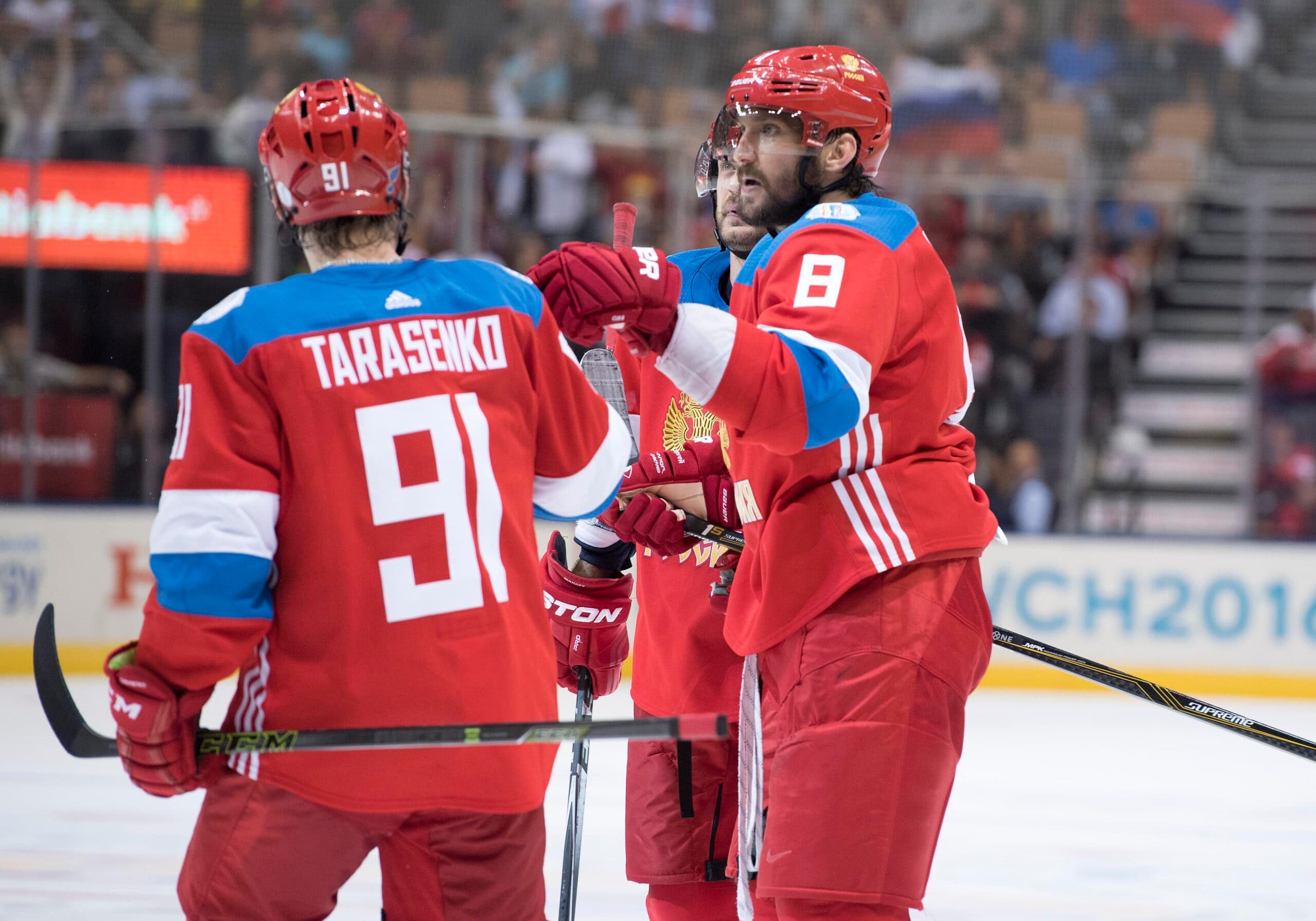
But to be fair, we are. There is one element of the previous instances of best-on-best Olympic action which has not returned to the 2026 games in Milan. After all, the currently-established Big Four is only called that because a certain fifth country has been unable to participate in recent years. A country which is also loaded with talented players and could be considered a superpower at the level of Canada or the United States, or at least mighty enough to put up a very good fight.
I’m talking about Russia.
Now let me address the elephant in the room and make one thing clear. I DO NOT condone Russia’s invasion of Ukraine and the actions of Vladimir Putin and his administration. The war is a horrific event and the fact we are now entering year five of it with no resolution sucks.
I also completely understand why, as a result of Russia’s actions, they have been banned from international competition. Putin has often used sports as a way to market his administration in a positive light, whether that was hosting the 2014 Winter Olympics, the 2018 World Cup, or a grand prix in Formula 1.
Putin also would do so through the Russian national teams, particularly hockey, with some players in favor of his administration. If you look at Alex Ovechkin’s Instagram page, his profile picture is not of him hoisting the Stanley Cup or something with his family, but of a photo with Putin. Now, considering the threatening aura of Putin’s administration, it’s tough to put the blame on the players when speaking out against the Russian prime minister could put them or their families at risk (look no further than Artemi Panarin’s leave of absence in 2021 or the mystery surround the death of Matvei Michkov’s father Andrei). But taking away their ability to play for their country on behalf of Putin feels like a happy middle ground.
Additionally, Russia’s inclusion during their current geopolitical state would likely chase away other countries. When the NHL tried to include Russia in last year’s 4 Nations Face-Off, Finland and Sweden threatened to back out, and their reasons for leaving are significantly more valid than Russia’s reasons for joining.
As long as Russia continues to invade Ukraine (and ideally as long as Putin is in office, but that’s optimistic), they SHOULD NOT be allowed to participate in international competition.
But from a sports perspective operating within a bubble removed from politics, the 2026 Winter Olympics are clearly missing Russia.
As it stands right now, the three-group, four-team preliminary round format basically ensures that only two of the four hockey superpowers are guaranteed to play each other. This year, that was Finland and Sweden, and while the game was one-sided in Finland’s favor, it did feel like it was at another level compared to the rest of the competition. Some other games have come close, whether that was Slovakia’s matchups with Finland and Sweden, or spurts of Canada’s group-stage games against Czechia and Switzerland (although both games still ended in blowouts).
It also ensures some relatively straightforward playoff matchups in the early rounds. The two superpowers with no other rival in their groups can cruise to top-two seeds, and then there’s a strong chance at least one of the two other teams in the same group also gets a bye to the quarterfinals. Hockey fans lucked out with Sweden’s struggles and the bracket working out to a Sweden and United States matchup in the quarterfinals, but otherwise everything leading up to Wednesday’s games was a dud.
A fifth superpower just adds a little bit more chaos. Suddenly, two of the three groups have at least one heavyweight matchup, while the country with the most points in the IIHF World Ranking system which determines the groups is (most likely) rewarded with an easy group. Not only that, but the chaos from the two heavyweight matchups guarantees some interesting matchups in the quarterfinals.
Just look back to previous best-on-best tournaments as an example. In 2014, we were guaranteed Russia against the United States and Canada against Finland in the preliminary round, with the former matchup giving us the infamous T.J. Sochi shootout. Also as a result, one team was not guaranteed a bye, and one of the bye teams had to play the superpower barring a qualifying-round upset. In the end, we got Finland and Russia in the quarterfinals, with the Finns knocking out the hosts.
In 2010, Canada and the United States were in Group A and Finland and Sweden were in Group C. The end result was Canada not getting a bye to the quarterfinals, and then when they got there, they had a matchup with the Russians, one which many considered to be the potential gold-medal matchup that year.
Had Russia been permitted to participate in the 2026 Olympics, Sweden would have actually moved to Group A with Canada, while Russia would be in Group C with the United States. Additionally, Czechia would have been in Group B with Finland, a matchup that could have been considered even with Aleksander Barkov out for the Finns. Each group would have had an entertaining matchup, and who knows how the playoff matchups would have unfolded in that scenario.
Russia’s inclusion at the Olympics would have also raised the floor of the non-superpower countries in the tournament. While France and Italy had their moments and competed better than most expected, they were still well below the performance level of the other teams in the tournament. France only qualified for the Olympics because of Russia’s omission from the tournament, making Italy the only low-end team, and they were unavoidable as the host country.
Russia returning to the Olympics also would have brought a couple more interesting stories. This tournament could have possibly been Alex Ovechkin and Evgeni Malkin’s Olympic sendoff alongside Sidney Crosby in one last tournament. If the games worked out to get a Canada-Russia matchup, we would have seen the three face off in international hockey one last time.
While Kirill Kaprizov, Igor Shesterkin and Ilya Sorokin participated in the 2018 Olympics, this tournament would have been the debut for Nikita Kucherov, Artemi Panarin and Andrei Vasilevskiy, all still at the height of their careers. By the time 2030 comes around, those players will be 36, 38 and 35, respectively. Even Kaprizov, Shesterkin and Sorokin will be 32, 34 and 34 in the next Olympics, so we’ve officially missed out on seeing these elite talents play together in their primes on the Olympic stage.
Now, there’s no guarantee Russia would be at the same level as Canada and the United States in this tournament. For starters, their center depth is far from the days of prime Evgeni Malkin and Pavel Datsyuk, as like Sweden, the KHL is terrible at developing centers because they often have to shift their top young talents to the wings to give them playing time, the most recent example being Ivan Demidov.
If you go off of NHL.com’s listing of Russian centers to play in the 2025-26 season, it consists of a 39-year-old Malkin, Marat Khusnutdinov, Yakov Trenin, Vladislav Namestnikov, Fedor Svechkov and Zakhar Bardakov. This doesn’t include Ivan Barbashev, Pavel Buchnevich and Dmitri Voronkov, who have played center in the past and could shift down the middle, but the Russians are lacking a truly elite center option like Canada, Finland and the United States have.
The lack of Russians also isn’t the sole reason to blame for a slightly declined product. Slovakia’s performance in this tournament has been a pleasant surprise, but their talent pool is a significant drop from where they were in the days of Zdeno Chara, Marian Gaborik, Jaroslav Halak and Marian Hossa. Czechia also isn’t the hockey powerhouse they used to be, as David Pastrnak, Martin Necas and Lukas Dostal are the few notable names on their roster. Finland is still in the hunt but could have been a serious contender with a healthy Aleksander Barkov. Even Sweden, while still good enough to compete with the big dogs, doesn’t have the offensive firepower they used to, especially down the middle.
But all those problems can’t be solved right now. Those require long-term investments into youth hockey programs and commitment to developing players the right way.
The Russian problem is, in theory, a much easier problem to solve. Obviously, the geopolitical nature of why they aren’t in the tournament is significantly complex, and it’s not as easy as just ending the war with Ukraine and re-instituting Russia in international competition. But technically, that is a problem that could be solved short term much more easily than the development of several hockey countries’ future stars.
And let’s be honest: Russia is not the only hockey superpower with a fascist leader. While Donald Trump and the United States have not committed atrocities like Russia’s invasion of Ukraine, they’ve certainly threatened to, on top of various other heinous acts in their own country like everything involving ICE. Are the United States ever going to be banned from the Olympics? Probably not.
Again, Russia SHOULD NOT be in the Olympics so long as Putin and his administration continue their war with Ukraine. All I’m trying to say is their players are dearly missed in this 2026 tournament, especially when this was likely their last shot of playing with their current core while they were in their prime. Considering the stark contrast between the quality of games in the quarterfinals on Wednesday and every other game beforehand, it’s obvious they need to return for the tournament to truly be at its best.
_____
PRESENTED BY DAILY FACEOFF’S OLYMPIC COVERAGE

Catch Every Goal from the 2026 Milan Games! The 2026 Milan Games are almost here, and the world’s best men’s and women’s hockey players are ready to battle for gold! The Nation Network is bringing you every game, every jaw-dropping save, and all the drama with live reaction streams and full recaps. Don’t miss a moment of Olympic hockey action—men’s, women’s, and everything in between—on the Daily Faceoff YouTube channel. Subscribe now and stay on top of every play!
_____
Recently by Scott Maxwell
- Olympic men’s hockey quarterfinal preview: United States vs. Sweden
- Olympic men’s hockey playoff preview: Sweden vs. Latvia
- Sweden’s Olympic fate may be decided by their mismanagement of players
- Finland is in tough without Barkov, but it can’t be an excuse for a poor performance
- 2026 Olympic men’s hockey team preview: Germany
- Olympic men’s hockey power rankings: USA’s roster mismanagement leaves Canada favorites entering tournament
- Casual hockey fan’s guide to the top 10 Olympic men’s hockey players
- Breaking down goaltending situations for all 12 Olympic men’s hockey teams