Breaking down goaltending situations for all 12 Olympic men’s hockey teams

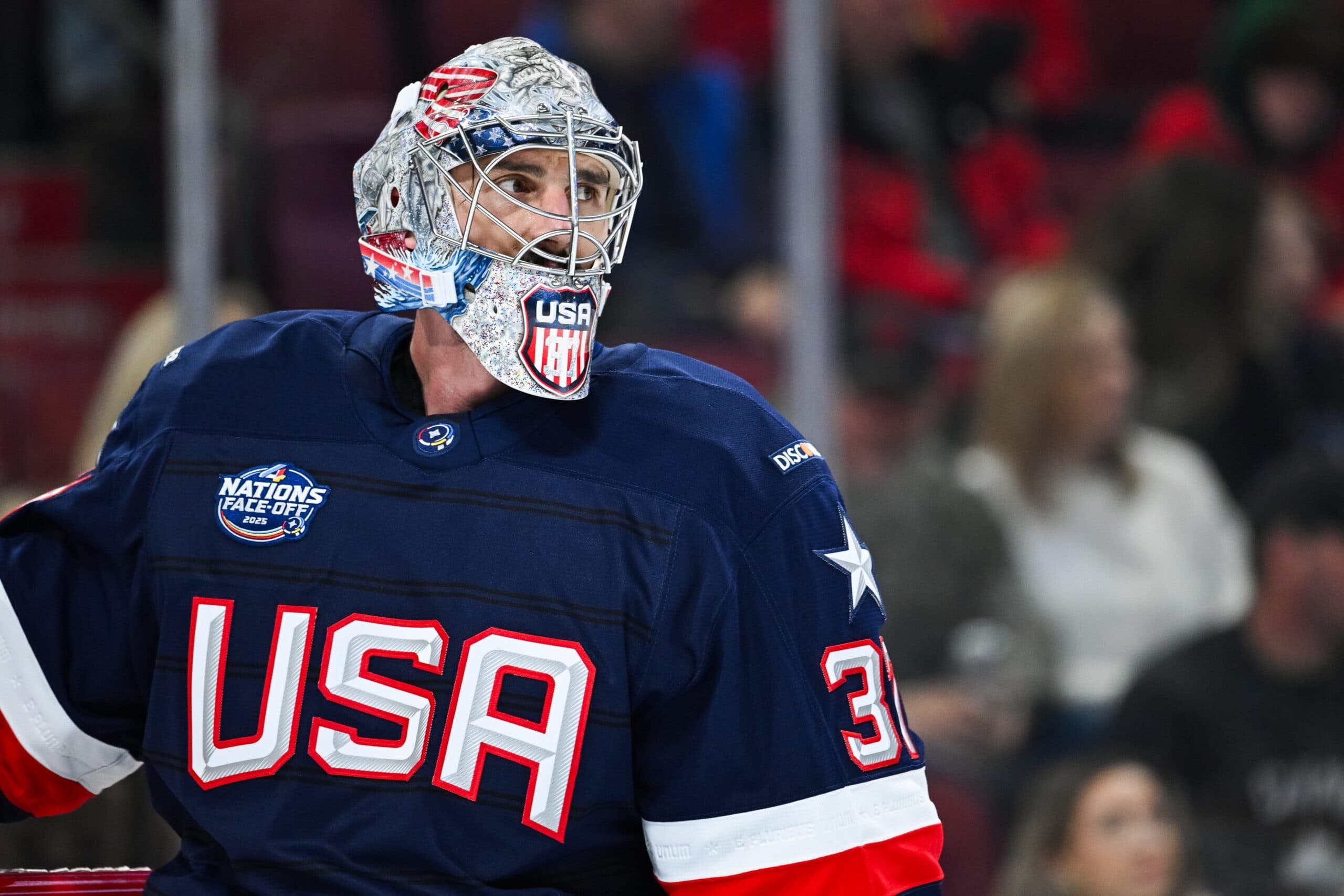
It should surprise no one that goaltending can make a huge difference at the Olympics. With teams playing anywhere between three and seven games, all it takes is a handful of good performances in net to propel a country farther into the tournament than originally thought possible or a handful of bad ones to sink a team’s chances.
Great goaltending is also important regardless of the country. Whether it’s Carey Price playing perfectly behind an already-strong 2014 Canadian roster to make them a no-doubt gold medal winner, or Dominik Hasek singlehandedly carrying the Czech Republic to gold in 1998, the net is a vital part to winning it all at the Olympics.
With the first best-on-best Olympic tournament in 12 years only days away, let’s look at the all 12 countries participating in the event and evaluate their goaltending situations going into the tournament. Of course, my familiarity beyond the NHL isn’t perfect, so for a few teams, I recruited the help of international hockey nerd and Daily Faceoff prospect analyst Steven Ellis to break them down.
Canada
Depth Chart: Jordan Binnington (St. Louis Blues), Logan Thompson (Washington Capitals), Darcy Kuemper (Los Angeles Kings)
Canada’s goaltending depth isn’t what it used to be, but Binnington is certainly the black sheep of this herd. It’s no surprise he’s on the roster considering his performance at the 4 Nations Face-Off, but with an .864 save percentage and -13.68 5v5 goals saved above expected, he’s been one of, if not the worst goalie in the NHL this season. And he may still get the first start, which comes against Canada’s most dangerous opponent in Group A in Czechia.
At the very least, Thompson and Kuemper make for great safety nets. They’re no Martin Brodeur or Carey Price, but Thompson and Kuemper have both been excellent for the past two seasons, with Thompson (.910 SV%, 49.05 5v5 GSAx) posting numbers that contend with the best of them. He should be the starter, but it’s not a guarantee. How loyal Canada is to Binnington may be the difference maker for them in this tournament.
Czechia
Depth Chart: Lukas Dostal (Anaheim Ducks), Karel Vejmelka (Utah Mammoth), Dan Vladar (Philadelphia Flyers)
The Czechs may not have a Hasek in the pipeline right now, but their depth chart is an underrated one, especially with how this season has gone. Dostal is the future in net for Czechia after breaking out the past two seasons (his 24.14 5v5 GSAx in that span is 15th in the league), so he’s the clear-cut starter, but should he falter, Vejmelka (.903 SV%, 11.2 5v5 GSAx) and Vladar (.904 SV%, 16.9 5v5 GSAx) can be reliable backups. It’s not the same high-end depth as the United States, but Czechia can go toe-to-toe with the likes of Canada, Finland and possibly Sweden with this group.
Denmark
Depth Chart: Frederik Andersen (Carolina Hurricanes), Frederik Dichow, Mads Sogaard (Ottawa Senators)
It’s a shame NHL players couldn’t make it to the 2022 Olympics in Beijing, because Andersen closer to his prime could have made a big impact for Denmark. However, the 36-year-old has dealt with injuries, and his inconsistent play over the past two seasons (.884 SV%, 6.61 5v5 GSAx) has many questioning if he can put together a strong performance in Milan. He’ll be the number one goalie to start the tournament, but if he falters, the Danes may shift to their loyal soldier in Dichow, who’s played 21 games for Denmark at the World Championship over the past five years. Sogaard’s struggles in the AHL this season (.889 SV%) mean he’ll only get a look if injuries bring about the situation.
Finland
Depth Chart: Juuse Saros (Nashville Predators), Kevin Lankinen (Vancouver Canucks), Joonas Korpisalo (Boston Bruins)
The Finnish crease is Saros’ to lose. While the 30-year-old has gone from an elite netminder to mediocre over the past three seasons (.899 SV%, -18.83 5v5 GSAx), he has too much upside to not be trusted with the starting gig, at least to open the tournament. Lankinen can manage that type of play for stretches, so maybe this tournament can be one of those, especially when he’s been solid this season behind a horrid Canucks squad (3.01 5v5 GSAx). An injury to Ukko-Pekka Luukkonen last week opened the door for Korpisalo to make the roster, but he won’t see the ice if Finland stays healthy.
France
Depth Chart: Antoine Keller (Washington Capitals), Julian Junca, Martin Neckar
It’ll be interesting to see how France splits their duties. On one hand, Capitals prospect Keller exelled at the World Championship and is definitely the goalie of the future. On the other hand. Junca has looked great this year in the top Slovak league and performed well in an earlier tune-up tournament with France. Neckar has a bright future, as well, but it feels like Keller should be the No. 1 when the games start to really matter. – Steven Ellis
Germany
Depth Chart: Philipp Grubauer (Seattle Kraken), Mathias Niederberger, Maximilian Franzreb
If Grubauer was entering the Olympics playing like he had the prior four seasons in the NHL (.892 SV%, -41.15 5v5 GSAx), there’d be plenty of concerns in the German crease, enough that Niederberger may have gotten a serious look as the starter. But Grubauer arrives for the tournament playing like one of the best goalies in the league this season (.916 SV%, 22.2 5v5 GSAx), so the Germans will need that upside if they want to make any noise. But if the old Grubauer returns, Niederberger has logged plenty of minutes with the Germans at the World Championship, so they won’t be afraid to go to him.
Italy
Depth Chart: Damian Clara (Anaheim Ducks), Davide Fadani, Gianluca Vallini
If the recent exhibition game against Germany is anything to go by, Clara should be the team’s No. 1. He performed well (albeit, the Germans didn’t have their NHLers), and he has typically played well for Italy internationally, mostly at the junior level. But he’s still young, while Fadani has proven himself internationally. He was Italy’s No. 1 goalie at the World Championship for the first time last year (over Clara). At the very least, we should see them split time. – Steven Ellis
Latvia
Depth Chart: Arturs Silovs (Pittsburgh Penguins), Elvis Merzlikins (Columbus Blue Jackets), Kristers Gudlevskis
It’s a tight race for the Latvian starting role. Merzlikins is the hotter option with his recent run of play (.922 SV%, 1.26 5v5 GSAx in his last six games), and he’s the more experienced option now in his seventh season. But Silovs has been the better goalie this season (4.82 5v5 GSAx vs. Merzlikins’ -0.61), and has proven to be a performer in the big moments, whether that’s the Canucks’ 2024 playoff run or the Abbotsford Canucks’ Calder Cup win in 2025, for which he was named MVP. Merzlikins’ playoff resume is quite small, but he has performed well when he has played with a .946 SV% in his two NHL playoff games. And then there’s Gudlevskis, whom many Canadians will remember for his play in the quarterfinal of the 2014 Olympics in Sochi. He will likely serve as the third goaltender, but that’s great experience to have in that role, especially for an underdog team like Latvia.
Slovakia
Depth Chart: Samuel Hlavaj (Minnesota Wild), Stanislav Škorvánek, Adam Gajan (Chicago Blackhawks)
Wild third-stringer Hlavaj is expected to hold down the fort this time around. Hlavaj had a solid first year in North America last season but has had a more difficult 2025-26 campaign. But that’s to be expected – Iowa simply isn’t a good team. That said, Hlavaj has proven time and time again he can steal games for the Slovaks, including his tremendous run at the Olympic qualifiers. If all else fails, Škorvánek has plenty of national team experience over the past few years, including a strong showing at the 2023 World Championship when he allowed just five goals in four games. Gajan, the Blackhawks prospect, will be along for the ride, but could be the No. 1 in four years. – Steven Ellis
Sweden
Depth Chart: Filip Gustavsson (Minnesota Wild), Jesper Wallstedt (Minnesota Wild), Jacob Markstrom (New Jersey Devils)
Unless the Swedes see a goalie’s experience as a bigger priority than how well they’re playing, the Swedish goaltending tandem will be the Wild’s goaltending tandem. And why wouldn’t it be? The Wild are second in the NHL in save percentage at .904, and among goalies with at least 20 games this season, Wallstedt and Gustavsson are fifth (.914) and 15th (.907) in SV%. While Wallstedt’s hot run gives him the better boxcar numbers, but Gustavsson has been much better under the hood (16.77 5v5 GSAx vs. Wallstedt’s 5.64) so that and the experience factor should give him the edge and more of the starts. Markstrom has struggled the last two seasons (.893 SV%, -9.88 5v5 GSAx), so it’s difficult seeing how he gets into the net unless Sweden wants the experience.
Switzerland
Depth Chart: Leonardo Genoni, Akira Schmid (Vegas Golden Knights), Reto Berra
The Switzerland goaltending situation is an interesting one, because they have two goaltenders with NHL experience in Schmid and Berra (76 games with the Calgary Flames, Colorado Avalanche, Florida Panthers and Anaheim Ducks from 2013 to 2018), and yet neither may be the starter. Genoni has played a lot of games for the Swiss in his career and performed really well for the team, with a .926 SV% in 89 games across various Olympics, World Championships and U-18/20 tournaments. He’s 38 years old, but maybe he has a bit more gas left in the tank. Schmid certainly has the capability to steal some games, and has been better (10.92 5v5 GSAx) than his save percentage would indicate (.895 SV%), but the surface level stats may be enough to lean the Swiss towards Genoni.
United States
Depth Chart: Connor Hellebuyck (Winnipeg Jets), Jake Oettinger (Dallas Stars), Jeremy Swayman (Boston Bruins)
The Americans’ goalie depth is second to none in this tournament. The only country that would rival the States in net is the Russians with the likes of Andrei Vasilevskiy, Igor Shesterkin, Ilya Sorokin and Sergei Bobrovsky, but with the country still banned from team competition at the international level, USA is the runaway favorite in net. Swayman likely won’t see a minute of ice time in Milan, and yet he’d be the starting goalie on just about every other team, with Canada and Sweden being the only countries up for debate.
Hellebuyck hasn’t been otherworldly this season (.900 SV%, 12.61 5v5 GSAx), but that’s largely due to the performance of the Jets and his injury. He’s held the title of one of, if not the best goaltender in the NHL for several seasons, and it’s not going away any time soon. His shaky playoff performances might cause some skepticism about whether he can perform as usual at the Olympics, but he was also excellent at 4 Nations with a .932 SV%, outside of a slot shot from Connor McDavid in overtime in the final.
When Hellebuyck was hurt, there was a case to be made for Oettinger getting the starting role at the Olympics, especially when his playoff performances have been much more consistent. But Oettinger has also seen a dip in his play this season as well (.897 SV%, 7.6 5v5 GSAx), so that argument is basically null at this point. If anything, there’s a stronger argument for Swayman (.903 SV%, 24.12 5v5 GSAx) to take the backup job over Oettinger, but a quick look at the rest of the American’s roster decisions will tell you they probably aren’t paying attention to the numbers anyways. They’ve been blessed with three elite goalies (plus even more left off the roster like Joey Daccord, Thatcher Demko, Dustin Wolf and Spencer Knight), so they can’t really go wrong either way.
_____
PRESENTED BY DAILY FACEOFF’S OLYMPIC COVERAGE

Catch Every Goal from the 2026 Milan Games! The 2026 Milan Games are almost here, and the world’s best men’s and women’s hockey players are ready to battle for gold! The Nation Network is bringing you every game, every jaw-dropping save, and all the drama with live reaction streams and full recaps. Don’t miss a moment of Olympic hockey action—men’s, women’s, and everything in between—on the Daily Faceoff YouTube channel. Subscribe now and stay on top of every play!
Recently by Scott Maxwell
- Which potential Western Conference sellers should blow it up at the 2026 Trade Deadline?
- Which potential Eastern Conference sellers should blow it up at the 2026 Trade Deadline?
- It’s do-or-die for the Leafs after nightmarish homestand
- The defensive defenseman has become the NHL’s newest market efficiency
- MacKinnon leads tight Hart race in Daily Faceoff’s 2025-26 midseason NHL awards
- 2026 Olympics: Five players who could break out in bigger roles