The 2026 Olympic All-Snub Team

What a fun problem to have.
Multiple teams competing in men’s hockey at the 2026 Milano Cortina Olympics have announced their finalized rosters, including Finland, Sweden and USA Friday. With the reveals comes second guessing and, in some cases, outright fury over players perceived to be snubbed.
It’s true that pretty much every nation seems to have made a wrong call or two, but if we zoom out for a second: we would’ve killed to be crashing out over snubs four years ago when the NHL pulled out of the Beijing Winter Games, right? Best-on-best Olympic hockey is back, arena construction permitting, so let’s embrace the fun of pounding the table over who should or shouldn’t have made his national team.
With that, I present the 2026 Olympic All-Snub team. I’m drawing only from Canada, Sweden and USA, because the other nine nations, even Finland, have thin enough NHL talent pools that it’s difficult to identify many if any truly egregious omissions.
FORWARDS
Connor Bedard, Canada
This snub spot could just as easily have gone to the hyper-accurate shooter Mark Scheifele or the reigning Conn Smythe Trophy winner in Sam Bennett, but I lean Bedard.
I understand why he didn’t make the team, and it wasn’t because of his injury; the Canada brass was miffed about Bedard shrugging off the 2025 World Championship after his Chicago Blackhawks missed the playoffs last year, I was told. I therefore never had him on my Canada roster projection. That said: the snub discussion is a subjective one, and I would’ve put him on the team if I had a say. Bedard is a defensive liability, yes, but he has found a way to maximize his electric release. He’s scoring at a 116-point pace this season. That’s a weapon who could’ve done major damage on a scoring line and/or the top power-play unit. I still believe Bedard has to be on the shortlist of emergency options if Canada loses one of its top scoring weapons.
Seth Jarvis, Canada
I considered excluding Jarvis from this list on the grounds he’s been out since mid-December with an upper-body injury that might’ve broken a tie when GM Doug Armstrong was making his final calls. But when Jarvis commented on the omission this week, he spoke as if he lost the spot on merit, not because of the injury, so we’ll take his word for it and call him a snub. Jarvis isn’t merely a superb two-way forward who could’ve fit nicely in the bottom six and reprised his 4 Nations role. Jarvis is also an elite scoring-chance generator for the Carolina Hurricanes. Per Natural Stat Trick, among 340 forwards who have logged at least 300 minutes at 5-on-5 this season, Jarvis cracks the top 20 in shots, scoring chances and expected goals per 60. It sounds like the injury to New York Islanders center Bo Horvat isn’t serious enough to cost him an Olympic spot, but if Jarvis gets healthy in time, he’s my first call for any injury replacement if I’m Armstrong.
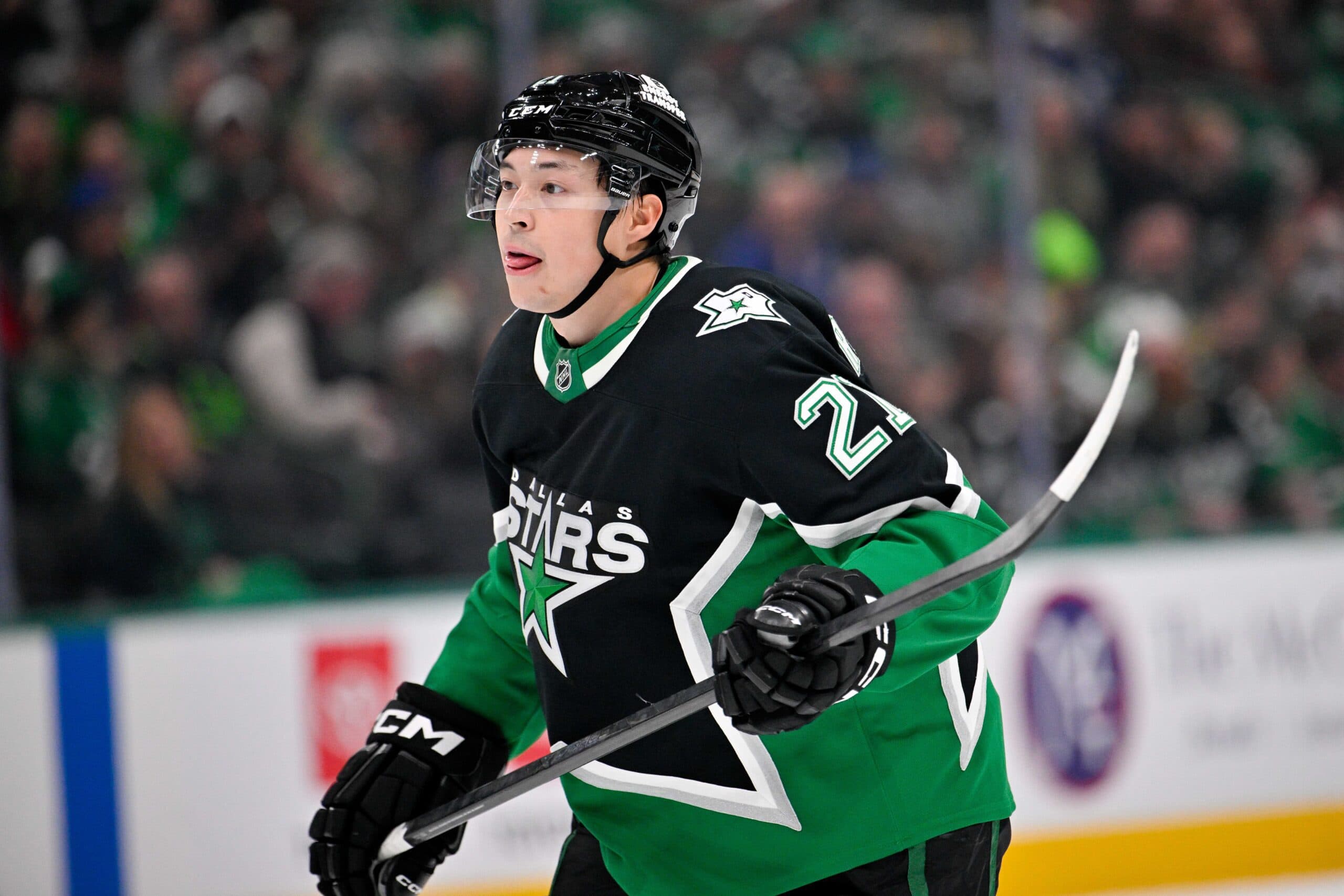
Jason Robertson, USA
For all the talk of Canada reacting to the Americans’ brawn and needing heavy artillery for the Olympics in the form of Tom Wilson: anyone paying attention can see it’s Team USA that was overly reactive in its roster construction as if preparing for Canada. It rounded out its forward group by bringing back checking-centric options such as Vincent Trocheck and Brock Nelson – and in the process left off the NHL’s eighth-leading scorer, who happens to lead all American players in points this season. Woof. Robertson is a potent offensive weapon and play driver. It seems the Americans are galaxy-braining the omission here, perhaps because of perceived soft play away from the puck and a lack of pure foot speed. Robertson sits below the 50th percentile in 20-22 mph bursts and 18-20 mph bursts, per NHL EDGE. But the numbers don’t lie; the man puts the puck in the net.
Truthfully: I’ve seen a bias against Robertson all the way back to his draft year of 2017, when some scouts told me stories about not liking the impression he made during the interview process. He just can’t seem to garner the respect he deserves as a star NHL player.
DEFENSEMEN
Adam Fox, USA
Poor Fox has gotten the Evan Bouchard treatment. Fox had a lackluster 4 Nations – in a four-game sample size – and a few bad highlights seem to have overshadowed a body of work that could land him in the Hall of Fame someday. Fox is a Norris Trophy winner and two-time finalist. He’s averaging a point per game this season for the New York Rangers. He and partner Vladislav Gavrikov have a 59.39 percent expected goal share at 5-on-5 together despite logging huge minutes against the other teams’ top players every night. The American brass ruled against Fox’s small frame and lack of physicality despite the fact he’s an elite shutdown defenseman, one of the best of his generation. Working against him was the fact Seth Jones simply had a tremendous last 11 months. He won a Stanley Cup with the Florida Panthers, brings breathtakingly good skating and has formed a strong play-driving duo with Niko Mikkola. Jones nudged Fox out because Jones’ 6-foot-4 frame was the probable tiebreaker.
Matthew Schaefer, Canada
I don’t care if he’s 18. Schaefer is, so far, the best 18-year-old defenseman the NHL has ever seen. He’s one of the eight best Canadian defenseman right now. Heck, he may be top-five. He’s a scintillating skater but has also proven highly capable of handling business in his own end of the ice while playing massive minutes. Even if he just made the team as the No. 8 guy, he would’ve been an electric option to unwrap if Canada needed an offensive jolt. Instead, they ran it back with, for instance, Colton Parayko, who had a scoring-chance share south of 40 percent at the 4 Nations. I recognize I’m contradicting the Fox argument there by invoking a small sample size – but Parayko also isn’t elite in his large sample size with the St. Louis Blues. Schaefer is better in pretty much every category aside from height and weight.
GOALTENDER
Mackenzie Blackwood, Canada
Jordan Binnington has been one of the NHL’s absolute worst goalies this season. Specifically: the second-worst according to MoneyPuck. Among 63 stoppers who have played 10 or more games, he sits 62nd in goals saved above expected per 60. Blackwood: fourth. He’s been Vezina-grade excellent for the powerhouse Colorado Avalanche this season. But Binnington wasn’t going to lose his spot after starting for a championship Canadian team at the 4 Nations and outduelling USA’s Connor Hellebuyck in the deciding overtime. Binnington also plays on Blues team that is vastly inferior to the Avs, and it may have worked against Blackwood that his battery mate Scott Wedgewood has been just as good this season. Did Canada decide both were products of their system?
Perfectly poetic example: Blackwood’s Avs destroyed Binnington’s Blues Friday, the day of the announcement, with Binnington surrendering six goals compared to one for Blackwood. But Binnington faced 43 shots in that game. Blackwood saw 13.
All-Snub Second Team
Forwards
Sam Bennett, Canada
Cole Caufield, USA
Mark Scheifele, Canada
Defensemen
Evan Bouchard, Canada
Mattias Ekholm, Sweden
Goaltender
Scott Wedgewood, Canada
Honorable mentions: Jakob Chychrun (Can), Linus Ullmark (Swe), Alex Tuch (USA), Emil Heineman (Swe), Hampus Lindholm (Swe), Jackson LaCombe (USA), Wyatt Johnston (Canada), Thatcher Demko (USA), Matthew Knies (USA), Joey Daccord (USA), Simon Edvinsson (Swe), William Eklund (Swe)
_____
POST SPONSORED BY bet365