NHL 27 Review: Frustratingly low-rent presentation overshadows gameplay improvements

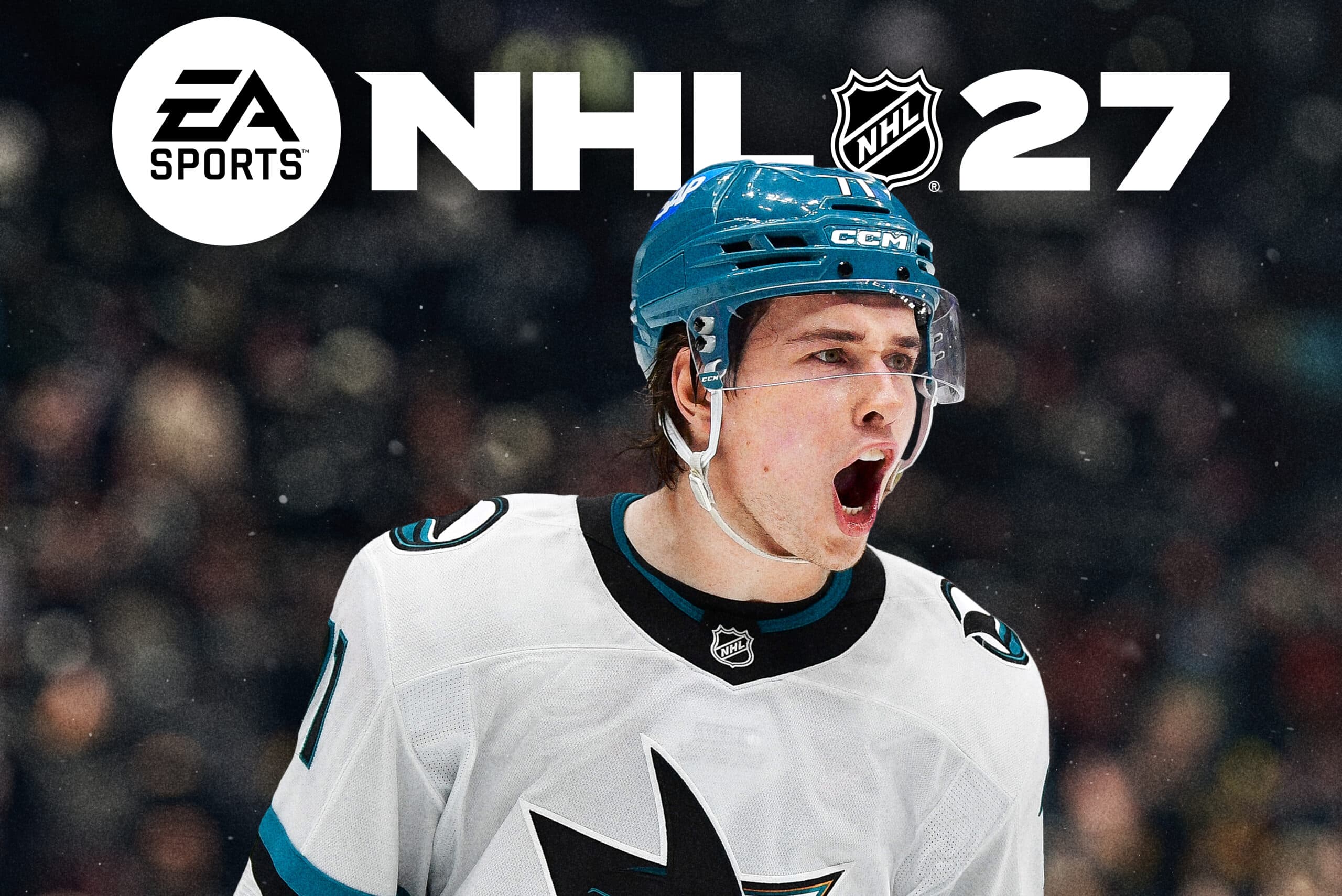
Rating: 5.5/10 – It’s not like it isn’t fun to play, but EA has fallen short of virtually every other mark in its quest to make the most authentic NHL video game possible.
The EA Sports NHL franchise is one of the longest-running and most iconic video game series from the Burnaby-based studio.
It’s now been 35 years since NHL Hockey first debuted for the Sega Genesis, and in the late 2000s and early 2010s, the series consistently drew strong reviews for each annual instalment and competed for industry recognition at the D.I.C.E Awards and E3.
It’s easy to see why the NHL series has always been so popular. Hockey is a fast, exciting game that naturally translates to the video game format. As the sport has changed in speed, physicality, and scoring frequency over the years, so too have its video game equivalents — and it’s usually been easy enough to change the gameplay sliders to reflect your preferred style.
EA Sports will officially release NHL 27 to the general public on Friday, although it’s already been available to Early Access subscribers since Sept. 4. EA was also kind enough to provide our editorial team with a few codes ahead of release, and we’ve had a good time fooling around with the new modes and features. Ultimately, it’s hard not to have fun playing a new hockey video game.
Unfortunately, NHL 27 is riddled with bizarrely low-rent presentation choices that steal the spotlight away from any gameplay refinements. During our testing sessions, we just kept noticing more and more glitches and flaws that overshadowed so many of the otherwise genuinely laudable improvements. In the end, those flaws were pretty much all we could think about. For a game with Macklin Celebrini as its spokesperson, it’s nowhere near as refined as its cover athlete.
First off, we have to talk about the face scans. It’s downright perplexing that a sports video game can look like this in 2026. EA made such a big deal out of the “Authentic Atmospheres” in this year’s game, but it seems considerably less thought went into making the players look similarly authentic. Even the loading screens, which aren’t beholden to real-time animations, are straight out of the uncanny valley — for example, this is supposed to be Leon Draisaitl:
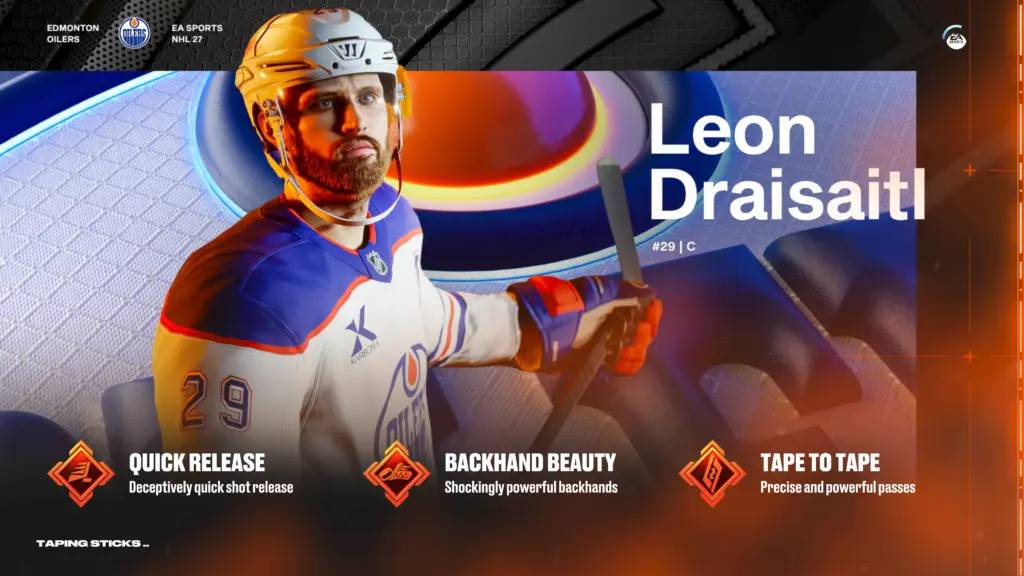
It shouldn’t be this hard to make the players actually look like themselves. In the NBA 2K series, LeBron looks like LeBron. In MLB The Show, Ohtani looks like Ohtani. But in NHL 27, the faces are wildly inconsistent, and even some star players look totally wrong. Some, like Sidney Crosby and Evgeni Malkin, are pretty spot-on. But for many others, EA seems to have had a fair amount of trouble figuring out their hair and facial expressions, leading to bizarrely off-kilter depictions that range from bodybuilder Santa Claus (Alex Ovechkin) to hillbilly scarecrow (Mason Lohrei) to, uh, whatever is going on with William Nylander and Sergei Bobrovsky.
As icky as it might be to say, it honestly feels like AI would’ve probably done a better job of making these faces. Unfortunately, the same cannot be said for NHL 27’s play-by-play commentary. New arrival John Buccigross has readily admitted to having his own voice recordings supplemented (and, in some cases, fully replaced) by generative artificial intelligence. As you might expect, this has resulted in countless preventable flaws in the game’s presentation.
Buccigross and Darren Pang have replaced James Cybulski and Cheryl Pounder as EA’s commentary team this year, and while both men bring energy and experience, the overall product sounds almost nothing like an actual game broadcast. If anything, it more closely resembles Nothing, Forever, the eerily liminal Seinfeld AI parody that went viral on Twitch during the COVID-19 pandemic. The computerized Buccigross and Pang will shout out lines seemingly at random, and often, they’ll repeat the same name with different pronunciations. “Brad Lambert” is occasionally articulated with a French accent. We distinctly heard Buccigross pronounce the name “Kesselring” with the L and R swapped. And, of course, Buccigross will invariably chime in with some form of this line after virtually every goal, regardless of whether it’s an exhibition game or the Stanley Cup Final: “That’s his first of the game!”
EA says it has improved gameplay in NHL 27 by introducing individual playbooks tailored around how each of the league’s 32 teams actually plays. In our experience, these didn’t have a particularly noticeable impact. Scoring goals and making plays in NHL 27 feels a lot like doing the same in the other recent instalments in the series. The authentic goal songs are a nice touch, although it appears EA ran into licensing issues for certain teams. For instance, the Calgary Flames have used “TNT” by AC/DC as their goal song for the better part of the last decade, but EA instead went with the presumably much cheaper “Righteous Smoke” by Monster Truck, which was Calgary’s goal song from 2013 to 2018 — and, honestly, that’s a better workaround than just going with something generic.
Unfortunately, the goal celebration animations are clunkier than ever. You’d think it’d be easier to animate a part of the game where the player no longer has any control over the action, but that doesn’t seem to be the case in NHL 27. Every single post-goal cutscene is rife with animation errors that look like they’re straight out of 989 Sports’ ill-fated NHL FaceOff 2003. Players mill around, skate directly through each other, and mechanically fist-bump their teammates on the bench as the crowd comes to … life?
If you’re sick of the L2/LT meta dominating competitive play, NHL 27 has finally made some much-needed adjustments. For years, players abused the vision control mechanic to seamlessly pivot away from hits and shield the puck. Now, you can no longer swivel down the ice with total impunity. More importantly, spamming L2 won’t grant artificial speed bursts or allow for physics-defying passes and shots. To win in NHL 27, you’ll have to rely on authentic hockey IQ rather than spinning like a dufus.
In response to considerable demand from die-hard fans, EA has introduced a new “Connected Franchise” mode in NHL 27, although it pales in comparison to the old “GM Connected” mode that was part of the game in the early 2010s. In our tests, Connected Franchise was plagued by bugs and didn’t stand up to much scrutiny. The mechanisms for trading and signing players had more than a few issues — for example, teams can make trades that put them under the salary floor, but they cannot make any subsequent trades or signings unless those get them back over the floor. It’s all a bit of a mess, and it just feels like an afterthought.
Hockey Ultimate Team, Franchise Mode, Be a Pro, and World of Chel are all back and largely unchanged from previous instalments, which is good for those who haven’t picked up a controller in a while but less so for the truly dedicated fans of the series. There really isn’t much in NHL 27 to justify the purchase price. At the end of the day, nearly $70 USD and $90 Canadian should get you a lot more than authentic jumbotrons and ChatGPT broadcasters.
Our verdict: NHL 27 isn’t a must-buy, and in a lot of respects, it feels like a step back for the series. You’d probably have just as much fun booting up your old copy of NHL 2K10 for the PS3. If nothing else, the commentary in that game is genuinely far better, and the graphics aren’t that far off. But if you really want the updated rosters, wait until it goes on sale around the holidays.
Recently by Mike Gould
- Sketching out how the Flames can (eventually) trade Jonathan Huberdeau
- Top NHL sophomore breakout candidates for 2026-27
- Projecting which NHL teams will send the most star prospects to the 2027 World Juniors
- Nemec, Eklund, and other breakout candidates joining new teams in 2026-27
- Why the Yzerplan failed in Detroit — and where the Red Wings go from here
- Grading the Brady Tkachuk trade: Sens lose captain to Florida, gain valuable retooling capital