Projecting the 2027 Hall of Fame Class: Pavelski, Kovalchuk and a crucial two-year window

Patrice Bergeron headlined the Hockey Hall of Fame’s six-person Class of 2026 last night in Toronto.
After a decade of first-ballot layups and intriguing holdovers, the upcoming two cycles in 2027 and 2028 will be a fascinating stretch for the Selection Committee. There is no Joe Thornton, Zdeno Chara, Hayley Wickenheiser, or Martin Brodeur arriving on the ballot.
The only near-lock of the next two years is Marc-Andre Fleury in 2028, the beloved goaltender with 575 career wins. That means the 18-person Committee’s upcoming decisions represent an open canvas to elect up to seven men and four women from the overlooked pool of candidates in the Player categories. Once 2029 arrives, a gauntlet of legends will flood the ballot.
Since the Hall’s nominations and voting are as secretive as electing a new pope, the public is left to speculate. Fortunately, it’s fun to speculate. So, as we did last year at this time, let’s explore the potential new members and project the Class of 2027. Consider this tiered list of candidates.
QUICK REFRESH ON THE PROCESS
- Players become eligible three years after their last season. Since Fleury, for example, last played in the 2024-25 season, he is first eligible for consideration in 2028.
- There is a maximum of seven inductees annually: four Male Players; two Female Players; and one Builder or Referee.
- Each of the 18 members of the Selection Committee can privately nominate one Player, Builder, and Referee by April 15; the Committee then has two months or so to research the nominated individuals.
- The Committee then meets in late June to vote via secret ballot of only those nominated in April; an individual needs 75% of the vote (i.e., 14 of 18 ‘Yes’ votes) to become a Hall of Famer.
- Rounds of run-off balloting are done to attempt to reach the annual category maximums.
FIRST-BALLOT WORTHY
Newly eligible players that are easy calls for induction immediately
Nobody?
In the Hall’s last nine cycles, a whopping 17 players have been elected in their first year of eligibility. This includes Bergeron, Thornton, Chara, Duncan Keith, Brianna Decker, Pavel Datsyuk, and Shea Weber in the last three classes alone. The last year without a first-ballot NHL player was 2019 but Wickenheiser kept the streak alive. In fact, every class since 2016 has featured at least one first-ballot headliner. Absent a slam dunk candidate in 2027, we could potentially see only three male players elected, mirroring 2016 and 2019.
INTRIGUING FIRST-TIMERS
Newly eligible players worthy of induction — it just might take a few years
Joe Pavelski
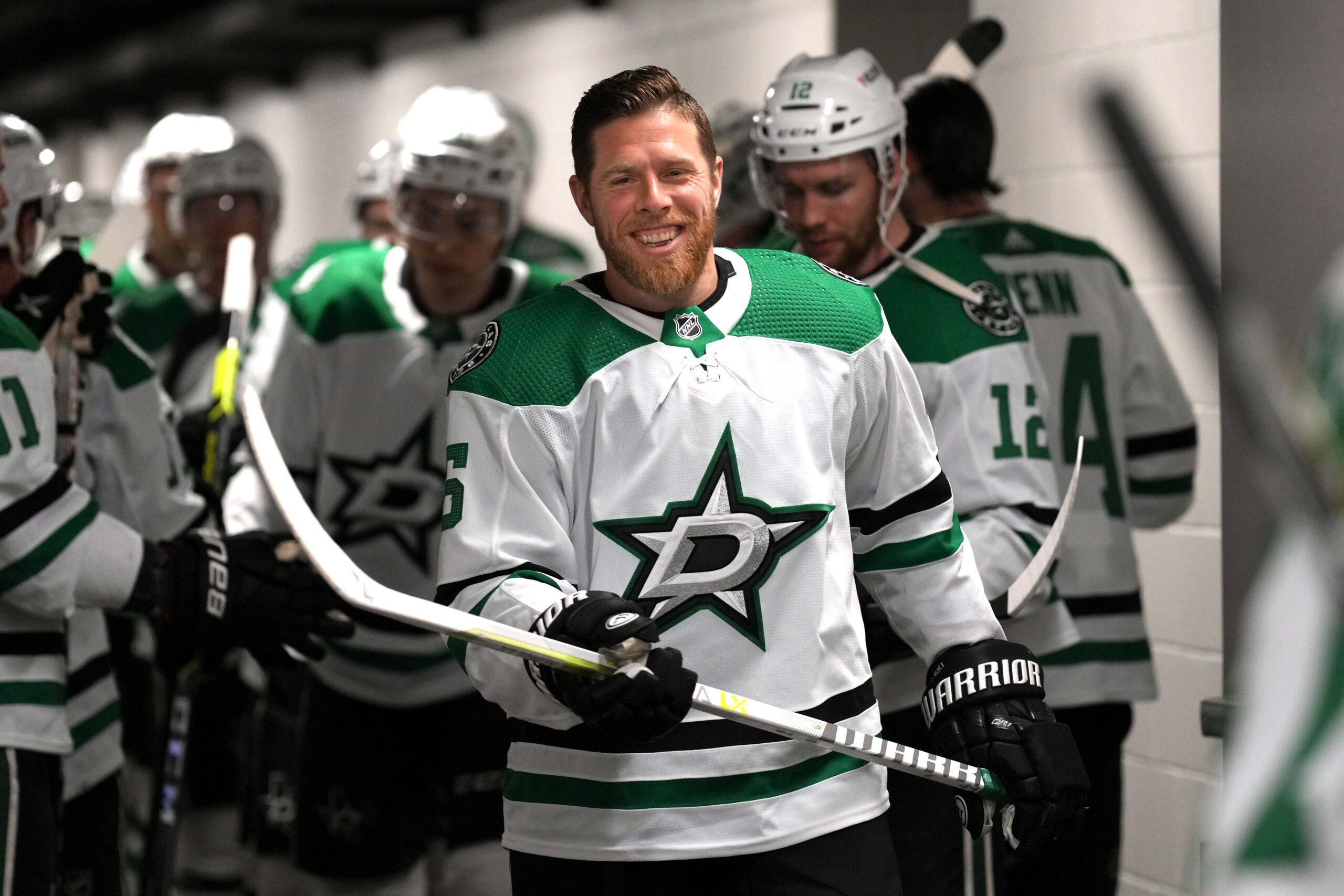
Swiss Army knife. Leader. Durable. Nice player. Hall of Famer? Players like Pavelski that debut late, do everything well, peak in low-offense eras and drive teams that fall just short are destined to be underrated. But make no mistake: Pavelski was an all-situations weapon that every GM craves. His career totals don’t pop. In a neutral era, however, they blossom to 535 goals (38th all-time) and 1,173 points. While he never lifted the Stanley Cup, Pavelski’s 74 playoff goals are more than Sidney Crosby’s and Steve Yzerman’s totals. Add elite defensive impact and faceoff prowess and Pavelski is quietly Anze Kopitar Lite. My Hall of Fame worthiness metric, PPS, gives Pavelski a score of 234 — the sixth-best eligible forward.
Ilya Kovalchuk
From his 2001 debut through his first return to Russia in 2013, no one scored more goals than Kovalchuk. Those 417 goals were scored during one of the lowest offensive periods in NHL history. Kovalchuk finished top-eight in goals eight times. That’s rarified air. For context: 600-goal scorers Mike Gartner, Mark Messier, Brendan Shanahan, Dave Andreychuk, and Dino Ciccarelli did that a combined eight times. The 2001 No. 1 pick added 174 goals in the KHL — a low-scoring league with a short schedule. In all, Kovalchuk scored 617 times across continents. He also won a Rocket Richard Trophy, 11 international medals including Olympic Gold and MVP, two World Championship golds, and three KHL titles.
Kovalchuk famously walked away from New Jersey Devils with 12 years and $77 million on his contract. That frustrated some people. But given so many high-profile trade demands this year alone, Kovalchuk’s shocking exit feels tame by comparison. Was he an opportunist and one-dimensional player? Sure. But the Hall is loaded with those. Kovalchuk’s PPS is +6 versus the standard on his NHL play alone without factoring parts of 10 seasons in Russia. It took the Selection Committee 16 years to elect countryman Alexander Mogilny. How long will it take for the Committee to agree on Kovalchuk?
ONLY A MATTER OF TIME
Candidates for the Hall’s current biggest omissions
Noora Räty & Shannon Szabados
There is only one female goalie in the Hall: Kim St-Pierre (2020). Räty or Szabados should be the second. Neither officially retired after exiting the crease, fading from the limelight versus taking a proper sendoff. Snubbed in June as a first-year candidate, Räty would be the first female European goalie elected. She won Best Goaltender at the World Championship a remarkable five times. She’s a two-time Olympic Bronze medalist, and the Finn’s 10 Olympic wins are a record.
Eligible since 2022, Szabados has a claim to best-ever goalie in her sport. Over three Olympics, she delivered a .959 save percentage and was twice named Best Goaltender. An unflappable trailblazer, Szabados faced men at the junior, college, and professional levels.
Sergei Gonchar
Gonchar’s exclusion remains puzzling. Not long ago, the Hall had a goaltending shortage, which it has addressed by inducting five goalies in seven cycles. Defensemen still lag behind. Only 27 post-expansion NHL defensemen have been elected versus 66 forwards and 18 goalies. When you consider their relative count on the ice, it’s a heavily under-represented position. Gonchar is no token choice, though.
When he retired in 2015, the slick, respected puck mover was ninth in era adjusted points (896) among defensemen. Over Gonchar’s 20-year career, he was second only to Nicklas Lidstrom in games, goals, assists and points. PPS has Gonchar at 281 — far ahead of all other eligible defenders — and above first-ballot picks Zdeno Chara (279), Duncan Keith (258), and Shea Weber (257). Gonchar won a Stanley Cup as a No. 1 defenseman, two Olympic medals, and earned Norris votes 10 times. Gonchar is an easy call to right a longtime wrong before a gauntlet of active defensemen hit the ballot in 2030 and beyond.
OTHER NOTABLE FIRST-TIMERS
Players without strong Hall of Fame cases that deserve shoutouts
Mark Giordano
Giordano, the 2019 Norris Trophy winner at 35, was an admired underdog. He rose to a level that garnered Norris votes six times. Analytics identify Giordano as one of the cap era’s premier shutdown defenders. Given his late start and short peak, Giordano falls well back of the high defenseman standard in PPS.
Zach Parise, Jeff Carter & Johnny Gaudreau
Both Parise and Carter are 400-goal club members that played more than 1,250 games. Each appropriately sits in the Hall of Very Good tier in PPS. Johnny Hockey, who tragically passed away at 31, had several elite seasons (fourth in Hart Trophy voting twice) and banked 743 points in 763 games.
Mélodie Daoust
Daoust, a creative playmaker, won three Olympic medals and delivered several clutch performances in a Team Canada sweater. She was MVP of the 2018 Olympics and Best Forward (12 points) at the 2021 Worlds. With a backlog of forwards with more senior-level caps, it’s unlikely Daoust gets a long look.
THE PEOPLE’S PICKS
Fans and media name drop these popular holdover candidates on the regular
Rod Brind’Amour
The Hall draws hard lines on the Player and Builder categories. Brind’Amour is the first to truly test these lines. If a public institution’s purpose is to tell the story of hockey and celebrate exceptional hockey lives, penalizing someone for getting there across two uniquely difficult paths misses the mark. Nominations for the Class of 2026 were due before ‘The Bod’ had coached the Carolina Hurricanes to the Stanley Cup. In 2027, that won’t be the case. Whatever shortfall is part of Brind’Amour’s playing career — and there is a shortfall — his coaching achievements bridge the gap. The Hall does not defend or comment on its selections, so call him a Player or Builder and reward a deserving hockey life. I’ve evolved on Brind’Amour’s case, and I hope the Selection Committee will soon too.
Curtis Joseph
Six deserving holdovers have been elected in my four years of advocacy for overlooked cases: Pierre Turgeon, Tom Barrasso (2023); Jeremy Roenick (2024); Alexander Mogilny, Jennifer Botterill (2025); Keith Tkachuk (2026). All but Botterill had some form of reputational stigma that had left them in purgatory. Yet, Joseph, a popular, scrappy, dynamic goaltender who starred in three cities and won the King Clancy Award, still waits. By PPS, he’s the #1 most overlooked goalie, his score of 322 crushing the standard. Absent a Vezina (five top-five finishes) or Stanley Cup (63 playoff wins), Joseph’s long and elite career remains unfairly lost in the shadows of legends Patrick Roy, Dominik Hasek, and Martin Brodeur.
More Female Players
- Forwards: Jenny Potter (USA); Karen Bye (USA); Meghan Agosta (Canada); Meghan Duggan (USA); Julie Chu (USA); Maria Rooth (Sweden); Cassie Campbell-Pascall (Canada); Amanda Kessel (USA)
- Defenders: Kacey Bellamy (USA); Monique Lamoureux (USA); Thérèse Brisson (Canada)
- Goaltenders: Florence Schelling (Switzerland)
I’ve grouped a dozen candidates above to make a point: players once among the very best in the world continue to wait. With only two women — Campbell-Pascall and Cammi Granato — on the Selection Committee, it’s unlikely there are more than a couple of nominees for the Female Player category annually. Yes, the women’s game has a relatively brief history and smaller pool of players. But the gender imbalance in terms of caliber has grown wider by the year.
On the men’s side, the Committee has elected many fringe candidates in the last decade. Meanwhile, there have only been two defenders and one goalie elected from the women’s game… in 16 years. With the growth of the PWHL and many millennials already retired or nearing the end, there will be even more backlog in 2030 and beyond. Take your pick from the group above — all are integral to hockey’s story.
Henrik Zetterberg
Zetterberg is among the most respected players waiting for a Hall call. His career totals look light: 337 goals, 960 points. But in a neutral era, that’s 1,069 points in 1,111 games — an exceptional pace for a player who also earned Selke Trophy votes on 10 occasions. A Triple Gold club member, Conn Smythe winner, and 2023 IIHF Hall of Famer, Zetterberg has a credible case for induction. PPS scores him at 237 in the Qualified tier, the #5 forward among Hall holdovers, comparable to Jonathan Toews.
THE HIPSTER’S PICKS
If you know, you know. With proper context, these candidates are worthy.
Patrik Elias
Elias was the best offensive player in a Devils’ core that made three Stanley Cup Finals in four years, winning twice. Offensively, Elias played at the worst possible time on the worst possible team for counting stats. In a neutral era, his stat line is much different: six 30-goal seasons; four 80-point seasons; career highs of 45 goals and 104 points; career totals of 464 goals and 1,144 points. All while leading the forward group of a defensive juggernaut that finished top 10 in goals against each of his first 15 seasons. Elias has a PPS score similar to two-way stars Bergeron and Kopitar. Elias is the third-biggest snub in PPS among forwards.
Peter Bondra
Bondra was in the wrong place at the wrong time to be an elite goal scorer. Had the Richard Trophy been created four years earlier, the explosive winger would have won the award twice. Every other eligible player to lead the NHL in goals twice is in the Hall of Fame. Bondra scored at a 44-goal pace per 82 games for a full decade, a long and lethal run with few sniping equals. Perhaps most impressive? In the 1,000-game club, Bondra ranks fifth in era adjusted goals-per-game (0.49) — just ahead of Wayne Gretzky.
John LeClair
LeClair’s outstanding prime asks a big question: how long do you have to dominate to be a Hall of Famer? Over a six-season window from 1995-2000, LeClair scored at a 48-goal pace in the Dead Puck Era. That same output scaled to Glenn Anderson’s prime? Seasons of 58, 65, 67, 77, 64, and 58 goals — that’s 389 goals in six seasons, or 65 per year. Outside of this period, LeClair’s career was light given a late start from the NCAA route and early finish (chronic injuries). But he also found time for heroics: two overtime winners in the 1993 Cup Final and an All-Star team spot in the 1996 World Cup title for USA.
PREVIOUSLY OVERLOOKED
Other holdovers that remain potential candidates
Ryan Getzlaf
Getzlaf checks many Hall of Fame boxes: elite play (runner-up to Crosby for Hart and Ross Trophies in 2013-14); team success (three best-on-best international titles); excellent playoff work (Stanley Cup, 120 points in 125 games); strong reputation (respected, two-way, No. 1 center).
Patrick Marleau
Marleau was never elite. Despite rarely missing a game, he only had a pair of 80-point seasons. But he was good enough to impact two Olympic gold-winning rosters and hung around to score 566 goals in the most games in NHL history (1,779). PPS says he’s borderline and right near the standard (+2.2), which feels right.
Eric Staal
In a neutral scoring era, Staal would have topped 500 goals and approached 1,200 points. But he never finished top 15 in Hart voting after his sophomore year and scored six postseason goals after turning 25. Staal is at 214 in PPS, a hair below the standard. Zetterberg (237), Getzlaf (228), Marleau (218), and Rick Nash (216) rank above him with equally compelling cases.
Old-timey choices
As part of a little-known balloting rule, should fewer players be selected than the maximum, the Committee will vote only on nominated candidates that have been eligible for 15-plus years. It’s why we get the odd throwback choice. In a light year for new candidates, the conditions are in place for a longtime holdover in 2027. It’s Cujo’s 15th year of eligibility.. just saying!
Defensive defensemen
My colleague Jeff Marek has long pushed for more defensive specialists, citing Jaccob Slavin as a future candidate. Only three post-expansion, stay-at-home types have been elected: Serge Savard, Rod Langway and Kevin Lowe. Savard won seven Cups on a defensive juggernaut. Langway won two Norris Trophies. Lowe won six Cups but his induction met a lot of backlash. Ideally, you’d like to see specialists get some Norris votes and/or best-on-best international nods to bolster their cases. Slavin at least upped his odds by adding an Olympic gold medal and Stanley Cup to his resume last season.
Marek’s suggestion got me thinking: Eric Desjardins. PPS has him as the No. 4 defensemen outside the Hall. Desjardins earned two Second-Team All-Star nods, won a Canada Cup at 22, has a Stanley Cup ring, and was a key force on many excellent Philadelphia Flyers‘ teams. An unheralded, two-way talent.
BUILDER CATEGORY
Bryan Murray
As a coach, executive, or both, Murray literally built five successful franchises: Washington Capitals (1981-90); Detroit Red Wings (1990-94); Florida Panthers (1994-2000); Mighty Ducks of Anaheim (2001-04); Ottawa Senators (2005-16). Murray had his fingerprints on the exact timelines where five separate cities unearthed major credibility. Sounds like a Hall of Fame builder.
Fran Rider
The Hall elected its first female Builder last year with Danièle Sauvageau. I’d recommend a second with Rider, a member of the IIHF Hall of Fame and Order of Canada. She’s widely considered the most impactful organizer in the evolution of modern women’s hockey, the sport’s key builder for an entire gender.
PREDICTED CLASS OF 2027
- Ryan Getzlaf (3rd year)
- Patrick Marleau (4th year)
- Henrik Zetterberg (6th year)
- Sergei Gonchar (10th year)
- Shannon Szabados (5th year)
- Meghan Duggan (7th year)
- Barry Trotz (Builder)
MY PICKS FOR CLASS OF 2027
- Patrik Elias (9th year)
- Sergei Gonchar (10th year)
- Rod Brind’Amour (14th year)
- Curtis Joseph (15th year)
- Noora Räty (2nd year)
- Shannon Szabados (5th year)
- Fran Rider (Builder)
All-time PPS leaderboards: Top 1,500 Forwards; Top 1,000 Defensemen; Top 400 Goaltenders
Data from Hockey-Reference; Elite Prospects
Recent Hall of Fame Content by Paul Pidutti
_____
POST SPONSORED BY bet365