Ranking the Western Conference’s biggest losers this summer

Last week we tackled the biggest losers of the off-season from the Eastern Conference. This week, we turn our attention to the West, tackling which teams had the most disappointing summer.
Let’s jump right into it.
Honorable mention: Dallas Stars
Much like the Buffalo Sabres last week, the Stars are probably a bit of a shocker making this list. But after being bounced in the first round versus the Minnesota Wild last post-season and not doing much of anything to add to the roster, GM Jim Nill’s summer has been a disappointing one.
The Stars are currently over the salary cap by a little more than $1.3 million, in large part due to bonus overages from last season. Tyler Seguin’s $9.85 million AAV comes off the books next summer, so there is a theoretical (financial) light at the end of the tunnel – though Jason Robertson signed just a one-year extension for $12 million, so that situation is far from resolved.
The financial restrictions prevented the Stars from upgrading, but that can’t be a viable excuse in the ultra-competitive Central Division. They had to cut bait with Maverik Bourque (and Ilya Lyubushkin) due to the aforementioned financial reasons; they had a deal in place to land Norris Trophy defenseman Zach Werenski from the Columbus Blue Jackets that was ultimately vetoed by the player. The end result was pure subtractions with no upgrades, failing to keep pace with their divisional compatriots.
It feels like the window could be closing on the Stars and Nill may have missed a crucial opportunity this summer to keep it open.
3: Los Angeles Kings
GM Ken Holland (much like his first summer as L.A. general manager in 2025) was fairly active this offseason. The problem is, much like last year, he added the wrong pieces.
Holland went on a shopping spree this past July. 1 and wound up with, while still fine players, arguably the oldest crop of Free Agent signings in NHL history. Signing forwards Erik Haula, Corey Perry and Mats Zuccarello along with defenseman Erik Gustafsson, the average age of the quartet is a whopping 37.
If we count 32 year old Scott Laughton, who was traded for last March and subsequently re-signed, and last year’s Free agent signings in forward Joel Armia (33) and defensemen Cody Ceci (32), Brian Dumoulin (34) and Joel Edmundson (33) there is a noticeably alarming trend of Holland targeting older, over the hill players.
For a team that exited a rebuild not so long ago, the Kings have rapidly become one of the oldest groups in the NHL and are entrenched in mediocrity. They may make the playoffs again as one of the last seeds, but as has been the case for the last five years, getting past the first round seems unlikely.
2: Edmonton Oilers
It is hard to consider a team a “loser” in any sense of the word when they have Connor McDavid and Leon Draisiaitl on its roster. But the clock is clearly ticking on the McDAvid-era – he’s two years away from being a UFA – and not much was done on the part of GM Stan Bowman to make us feel any more optimistic about this club than last year.
They moved off of defenseman Darnell Nurse to the San Jose Sharks and brought in defenders Shakir Mukhamadulin and Ryan Shea along with goaltenders Frederik Andersen and Devon Levi. While the defense could get better from addition by subtraction and under new head coach Mike Babcock, it feels like the goaltending situation is more shuffling deck chairs on the Titanic more than anything. After such a major step back last season and their captain not committing more than two years to the Oilers, the summer left a lot to be desired.
Then there is the Babcock hire, which is as controversial as it gets. If the season does go up in flames you can be sure a lot of the blame will be thrown at the feet of the Babcock hire – and the pitchforks will come for Bowman.
1: Anaheim Ducks
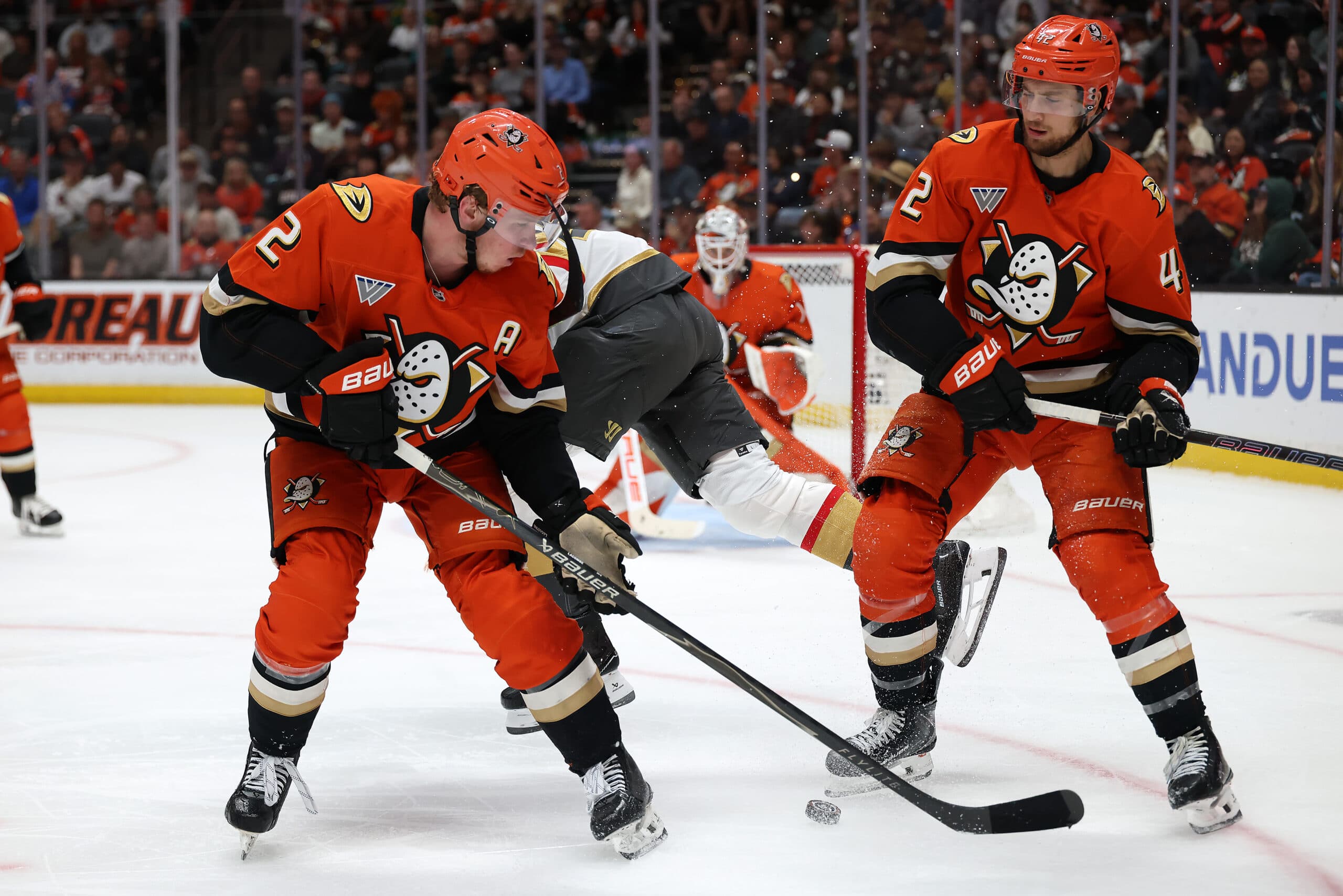
The summer isn’t over for the Ducks, but it has been a forgetful one for GM Pat Verbeek. The Philadelphia Flyers chucked a grenade across the country when they signed center Leo Carlsson to a five year, $90 million offersheet. After matching it, the $18 million AAV left the Ducks damaged financially with close to zero room for flexibility.
RFA forward Cutter Gauthier is still unsigned and, with just a little more than $9 million of cap space available, Verbeek will need to unload some money to get him locked down. Forwards Chris Kreider, Alex Killorn and Frank Vatrano are cap-dump candidates, though they all have trade protection to varying degrees. Verbeek may need to go bargain shopping for cheap free agents who are still available after he makes his moves, though it’ll surely result in an overall downgrade offensively.
The Ducks lost the entire right-side of their defense, as John Carlson, captain Radko Gudas and Jacob Trouba all walked away in Free Agency. They signed free agent Nick Jensen to compensate and will be relying on in-house talent to take step forwards, but already a less-than great defensive team last season that relied heavily on stellar goaltending, it is hard to be bullish on Anaheim in that department entering next season.
We will have to wait and see what Verbeek does over the next month, but it hasn’t been a good summer for the Ducks to this point.
PRESENTED BY THE DAILY FACEOFF NEWSLETTER