The five worst contracts signed in 2026 NHL Free Agency so far

Since free agency became such a publicized event on the NHL calendar, a tradition that has come along with it is watching general managers spill their wallets in an attempt to get the best players left on the market. The bidding war for a market mostly made up of middle-six forwards, No. 4 defensemen and tandem goaltenders can leave some players making too much money or signed for too long. In the case of some extensions handed out before July 1, teams simply outbid themselves.
While the rising cap has created a new dynamic in free agency, with teams having more cap space than ever to play with, it’s not a license to spend carelessly. Some contracts would be bad even two years ago, but an ever-growing cap means we’re bound to see some contracts with a bit of sticker shock. But that doesn’t mean we’ve escaped free agency without some glaring errors made by several teams.
As is tradition here at Daily Faceoff, we’re going to rank the five worst contracts signed in the 2026 offseason so far. We’re including extensions handed out prior to July 1, contracts for restricted free agents, and even offer sheets (since we’re actually getting those this summer). The only requirement for these deals is that they had to be inked after the signing team concluded play in the 2025-26 season – and that they’re bad.
All contract information comes courtesy of PuckPedia, while all analytical data comes courtesy of Evolving Hockey.
Before we start, let’s look at a few honourable mentions:
Sergei Bobrovsky ($7 million AAV x 3 years)/Darren Raddysh ($8.5 million AAV x 8 years), Toronto Maple Leafs – Bobrovsky and Raddysh’s contracts fall under the same umbrella for me with most of the Leafs’ offseason moves. Both contracts have the potential to succeed, and Toronto is bringing in two players who could make a difference if they live up to their resumes. But between Bobrovsky’s deteriorating play and age, and Raddysh’s small sample size and term, both contracts could blow up in the Leafs’ face. As such, they get an honorable mention.
Radko Gudas ($1.5 million AAV x 6 years), Florida Panthers – Is this contract bad? Under the current rules, no. Gudas is signed to a very good cap hit, and the second he becomes too old, he’ll likely just LTIRetire until the term is up. It’s a recent trend we saw two years ago with Chris Tanev and last year with Jake Allen, Yanni Gourde and Brad Marchand, and every time, I’ve called it out. It feels insane that teams are signing players into their late 30s and early 40s with the clear intention of not playing out the contracts, and the league is just okay with it. Just put in a rule where any 35+ contract or a deal which extends into a player’s 40s doesn’t give a team cap relief in the event of injury, and teams will stop with this stupid contract structure.
Boone Jenner ($5.75 million AAV x 4 years)/Alex Tuch ($10.5 million AAV x 8 years), Washington Capitals – Jenner made my Buyer Beware piece last week, and if Tuch hadn’t already signed his new contract prior to it, he would have also joined the list. Now that it’s all said and done, both players were overpaid by about as much as I expected them to be, and they’re locked up to a respective 37 and 38 years old with their deals. There’s a lot of risk that comes with these contracts, but the AAVs also lean towards the “sticker shock” portion of free agency, as they probably won’t look as bad in their final years as they feel like they are right now. Consider these contracts the caliber which would be horrendous in 2020 but are merely bad in 2026.
Every depth guy signed to term – In a rising cap world, how much a player is paid compared to their value is a drastically sliding scale. But term will always remain a constant. While the cap hits handed out to depth players varied from bad to crazy, the consistent problem was too much term. Why? Because depth guys should not get term. Anything longer than one or two years is too much. Yes, locking them up may ensure you save money on them down the road. But of the numerous depth players given three-plus years on their contracts, only three are under the age of 29 (Jack Drury, Beck Malenstyn and Zach Ostapchuk). These players are at best stagnating but likely getting worse, and all teams have done is lock up unessential players onto their rosters for several seasons, which are predicaments they don’t often see through without trips to the minors, numerous healthy scratches, or trades/buyouts. Do you really need A.J. Greer, Michael McCarron or Jeffrey Viel locked up for four-plus seasons?
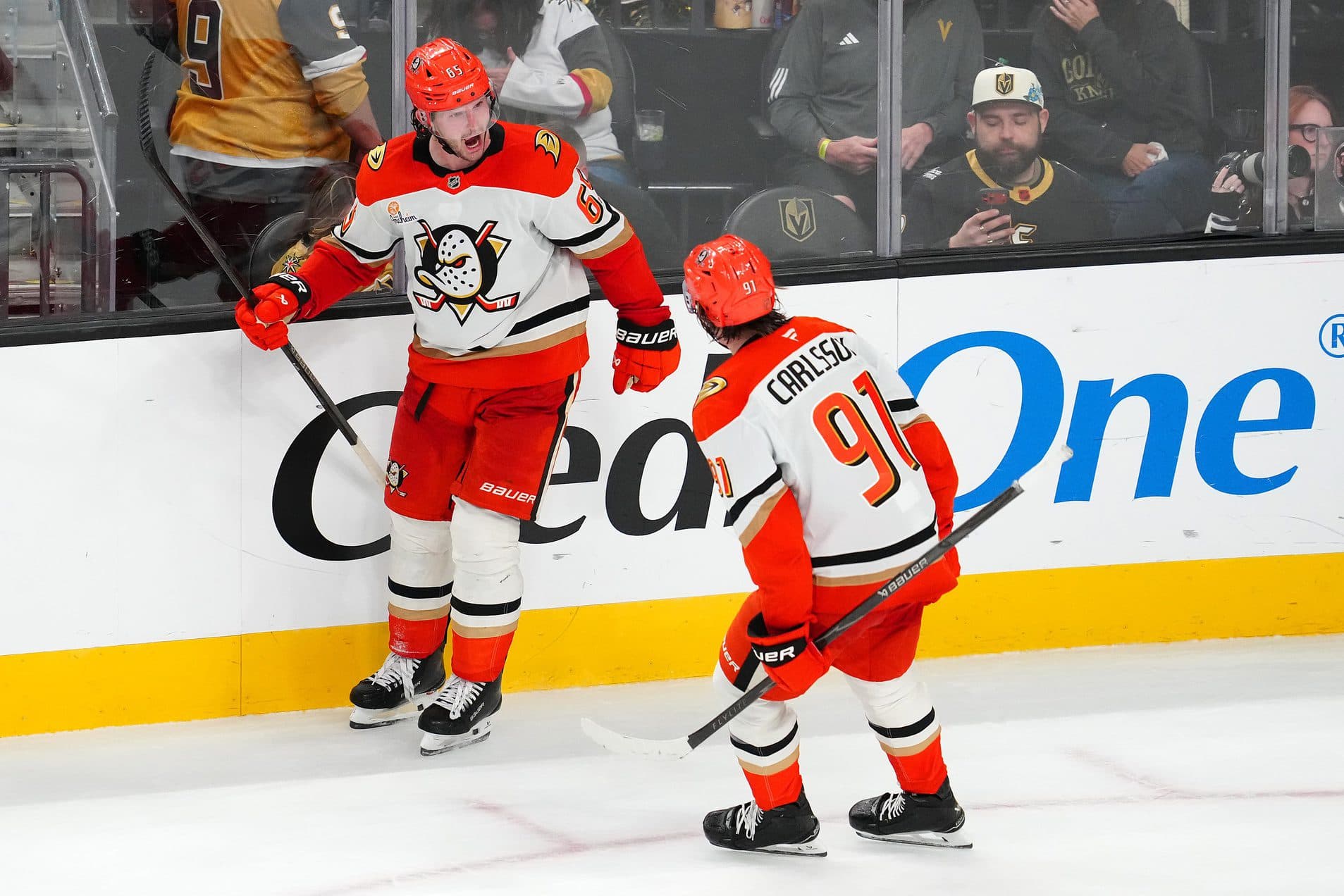
5. Leo Carlsson, Anaheim Ducks/Philadelphia Flyers
$18 million AAV x 5 years
From a player value perspective, this contract isn’t bad. Yes, Leo Carlsson being the highest-paid player for any stretch of his career seems extreme, especially in the early stages when his best season is just 67 points in 70 games. But his trajectory could see him be worth $18 million a year at some point in his contract, especially in a rising-cap world. He’s also the kind of talent teams sign to the dollar amount they have to and make sacrifices elsewhere in the lineup to make it work. It’s a well-done offer sheet by the Flyers, because even for a team like the Ducks who said they’d match any offer sheet, this is one which has made them think, especially since it only takes up one UFA season.
But the reason this is a bad contract for the Ducks is how this was an avoidable situation. Carlsson likely would have signed a reasonable contract before last season, but the Ducks have lowballed their top forward to the point where he felt compelled to sign this offer sheet to get their attention. And according to an agent poll published by the Athletic in April, Anaheim (and more specifically, Pat Verbeek) is the worst team to deal with, likely meaning this isn’t their first time playing hardball in negotiations. And of course there’s the impact it will have on negotiations with Cutter Gauthier, likely raising his price and damaging the Ducks’ salary cap picture more in the long term. It was all avoidable, and they are worse off as a result.
(And remember my rant about overpaying depth guys to term? I bet Anaheim could use the $4.25 million a year they just spent on A.J. Greer right now. Verbeek sure didn’t play hardball then.)
4. Dan Vladar, Philadelphia Flyers
$5.5 million AAV x 5 years
If we only look at last season, a $5.5-million cap hit is fair value for Vladar. He tied his career high in save percentage with .906, had a 25.24 5v5 goals saved above expected and played more than 30 games for the first time in his NHL career (with 52 games). It was a great season for him, and he provided the Flyers with some of the most stable goaltending they’ve had in years. By all means, Vladar deserves $5.5 million a year. But for a goaltender who had a career .894 SV% and -14.1 5v5 GSAx prior to last season, a $5.5 million AAV is also a significant gamble.
So why does Vladar crack the list while Bobrovsky and Raddysh were only honourable mentions for the same reasons? Because the risk was avoidable with Vladar’s contract. Bobrovsky or Raddysh needed to be committed to right now with their contracts up, so the risk was necessary (to an extent). But Vladar has one more season before his contract is up, so the Flyers had more time to lock him up. That sounds like the perfect situation for signing a goaltender who has had one good season and plenty of bad seasons. Let him play out the season, and if he struggles again, cut your losses. If he keeps up his play, extend him then. Philadelphia may have saved some money by signing the contract now, but the reward is not worth the risk.
3. Rasmus Andersson, Vegas Golden Knights
$8.5 million AAV x 7 years
I already went into depth about why Andersson would be a bad signing at the price tag he got with the Golden Knights when I brought him up in my Buyer Beware piece. If you need a recap: he was not as effective of a two-way defenseman as advertised, particularly in the playoffs when opposing teams feasted on his minutes with Noah Hanifin. Andersson’s value is solely based on how coaches view him and have deployed him, as opposed to how he actually performs in those minutes, and to no surprise, he’s now paid at that perceived value, one Vegas will probably regret (but knowing them, also move on from in two years).
The larger issue with Andersson’s contract is what the Golden Knights have done to acquire and now retain him. On their blueline alone, they included Zach Whitecloud (-0.041 5v5 regularized adjusted plus/minus expected goals against per 60 minutes in the past three seasons) in the trade to initially acquire Andersson from the Calgary Flames, and then this summer moved Kaeden Korczak (-0.188 5v5 RAPM xGA/60) to the Pittsburgh Penguins to create salary cap space to re-sign Andersson (who, by the way, has a 0.133 5v5 RAPM xGA/60). Add in how they also had to move RFA Pavel Dorofeyev to the New York Rangers, and Vegas stripped a lot from their team to retain a defenseman who brings inconsistent production and a sloppy defensive game to the table.
2. Jacob Trouba, San Jose Sharks
$8.25 million AAV x 4 years
Trouba was also on my Buyer Beware list due to how his defensive game has fallen off significantly in the past seven seasons and how the minutes he gets in spite of his struggles would convince other teams he is a minute-munching defenseman. However, even when I included him on that list, my expectations for an overpayment were in the $5-6 million range for four to six seasons. What I was not expecting was for him to somehow get a higher AAV than his previous contract’s, along with a fair amount of term. Yes, the Sharks need experience on their blueline, which to this point remains their biggest blemish. However, there were smarter options than Trouba.
Trouba’s overpayment is magnified by the Sharks’ other big move for their blueline: acquiring Darnell Nurse from the Edmonton Oilers. This now means the Sharks have allocated $17.5 million a year for the next four seasons to two defensemen in their 30s who are known for their inconsistent play at both ends of the ice. The Sharks have the cap space for it this season, as they still have $12,940,888 after all their moves. But that cap space will go away quickly when Macklin Celebrini and Will Smith’s contracts are up next season, and Michael Misa and Sam Dickinson the year after that (and Ivar Stenberg the year after that if we want to get carried away). The Ducks are providing us with a textbook example of how wasting cap space by overpaying veterans with term now can burn you when it’s time to pay your young talent. And of course, the Carlsson offer sheet may drive up the prices for Celebrini, Smith and co. San Jose may need $17.5 million in cap space before they know it.
1. Bowen Byram, Chicago Blackhawks
$12.5 million AAV x 6 years
I can’t remember the last time a contract has blown me away this much. We all knew it was coming when the Blackhawks traded the fourth-overall pick plus a second-round pick and Louis Crevier to acquire Byram, but it’s still surreal they actually gave him this much money. And all for a player whose career-best season is 42 points while bringing nothing to the table defensively (0.066 5v5 RAPM xGA/60). This has to be a Kurt Sauer/Jeff Finger situation. Did the Blackhawks see a defenseman who was selected fourth-overall in the late 2010s by the Colorado Avalanche and think they were getting Cale Makar? This contract is such a colossal overpayment, it feels like the only explanation.
Okay, I’ll try to play devils advocate for a minute. Kyle Davidson is entering his fifth season as GM of the Blackhawks, and currently has nothing to show for it. Chicago has finished second- or third-worst in the league in all four seasons of his tenure, including three seasons where they were supposed to see improvement after drafting Connor Bedard. Their young superstar is also probably impatient and would like to see the team take steps forward. They especially needed improvement on the blueline. Davidson probably had no thought towards the future with this move, because he might not even be the GM when the contract kicks in next year.
There are plenty of shortsighted reasons as to why the Blackhawks signed Byram for this much. But there had to be better options on the market to blow their assets and cap space on than him. This contract has the potential to not just hinder the Blackhawks’ development through Bedard’s prime years, but it may also go down as one of the worst contracts of all time.
_____
SPONSORED BY bet365
Recently by Scott Maxwell
- Buyer Beware: Which UFAs might get too much money and term this summer?
- The biggest bust selected at each top 20 NHL Draft spot
- Five lessons other NHL teams can learn from the Hurricanes
- Seven players who took major steps in the 2026 Stanley Cup Playoffs
- Five crucial stats to define the 2026 Stanley Cup Final