The 10 scariest coaches in NHL history

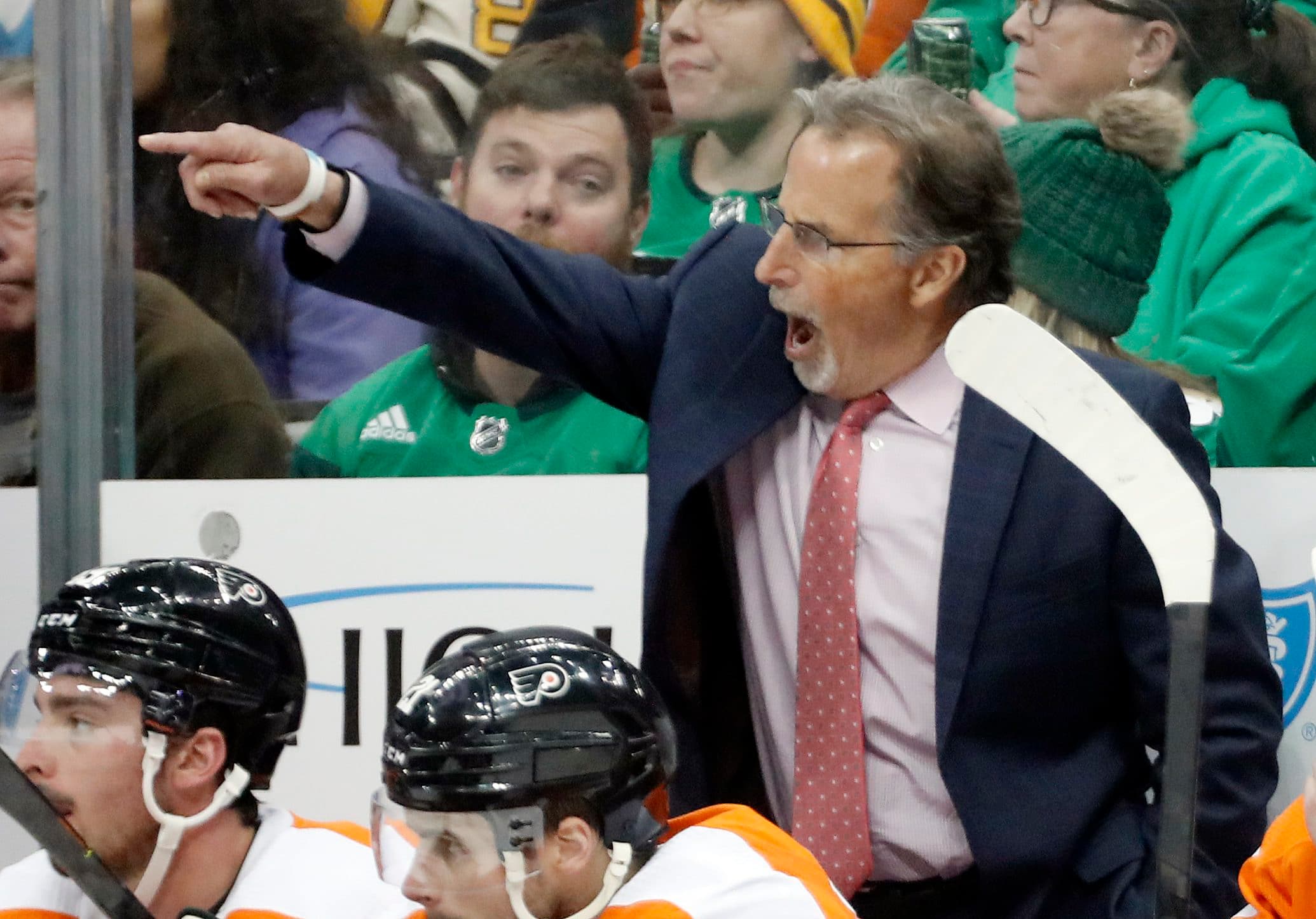
It’s the time of year in which we celebrate all things spooky, and that extends to the NHL, which hosts ‘Hockey Halloween,’ a staggered 10-game slate, on Saturday.
In honor of Oct. 31, let’s explore the scary side of the game and, this time, the bench bosses who strike fear into players.
Who are the scariest coaches of all time?
There are many ways to define ‘scary’ for a coach. The taskmaster and the fire-breather who bites players’ heads off are the more obvious archetypes, but the cerebral, tough-to-read minds can intimidate in their own ways. Who makes the cut?
Here are my picks for the 10 scariest NHL coaches ever.
10. Ken Hitchcock
Hitchcock didn’t really look or sound like a terrifying disciplinarian. He also wasn’t afraid to admit when he was intimidated; he reminisced to me that he was plenty scared of Ed Belfour when he came to the Dallas Stars. But Hitchcock knew how to motivate. He stayed connected to his younger players by trying to learn more about their interests and pop culture. He had extremely high standards and required his players to be well-rounded, most famously Mike Modano, whose transition into a 200-foot forward was crucial in elevating the Stars to Stanley Cup glory in 1998-99.
9. Herb Brooks
If we’re grading coaches on their entire bodies of work, Brooks would obviously rank much higher on the list. With a degree in psychology, he understood how to manipulate minds. He made it his mission to become an adversary of his players when coaching the 1980 ‘Miracle on Ice’ U.S. Olympic team, knowing that disliking him would galvanize them. He was demonstrative in his wrath when he needed to be, too. After the Americans beat the Soviets in 1980, they were celebrating like champions, signing a collection of hockey sticks on a table in the dressing room, when Brooks stormed in and swept the sticks to the floor in a rage, reminding the players they still had another game to win. They had to beat Finland to actually clinch the gold, which they did. Brooks only logged seven seasons as an NHL head coach, which were far less memorable than what he accomplished in Lake Placid, but this list wouldn’t be complete without him.
8. Rod Brind’Amour
The habit Brind’Amour most famously developed across his 20-season NHL career, punctuated by the 2005-06 Stanley Cup and a pair of Selke Trophies, was his borderline-maniacal commitment to fitness. The urban legends of ‘Rod the Bod’ grew by the year; you probably know the tale by now of the Michigan State Spartans padlocking the gym door to keep him from squeezing in extra pumps as a college player. And as a former NHL teammate once told me, Brind’Amour would do all the same workouts as him – but with a weight belt strapped around him. And that part of him has carried over coaching to the Carolina Hurricanes, naturally.
Ask the Canes players today, and they’ll tell you the ‘Rod the Bod’ reputation is overblown, that he has a soft side, that he’s not just a musclebound monster. That’s true, but it’s also true that Brind’Amour’s physical stature and warrior mentality are plenty intimidating – and that not every player who comes through Carolina can play the style he demands.


Cap Summary
Draft Picks
“Well, it’s imperative,” Brind’Amour said during the 2025-26 Stanley Cup Final. “I think every team’s in shape and works hard, but we, I don’t know if we take it to another level or not, I can’t really say. I just know that, I think Taylor Hall said it the best the other day when he said we worked really hard, but we do it with a smile on our face. I just think these guys get it, that they understand this is the way you have to do things, and it’s because it works. And so we take that real serious.”
7. Pat Burns
Burns didn’t take crap from anyone – probably because being a hockey coach wasn’t nearly as scary as his prior occupation. He spent 16 years as a police officer in Gatineau, Que., and he wasn’t handing out parking tickets. Burns worked as an undercover cop, infiltrating biker gangs and drug-dealing operations, even posing as a criminal in Kingston Penitentiary. While he wasn’t seasoned starting his head coaching career with a maximum degree of difficulty behind the Montreal Canadiens’ bench, his directness and life experience immediately commanded respect from his players.
6. Mike Babcock
It’s controversial to put Babcock on this list. But it would be intellectually dishonest not to, specifically because of the ethically icky things he’s done during his NHL career. That includes healthy scratching then-future Hall of Famer Modano, blocking him from ending his career with a milestone 1,500th game; having rookie Mitch Marner rank his Toronto Maple Leafs teammates by work ethic, then revealing his list to them, though Babcock insisted the incident played out differently; and allegedly demanding that Columbus Blue Jackets players show him the camera rolls on their phones. We don’t have to like any of his methods – that’s why he’s on the list. He operates in a moral gray area.
5. Terry O’Reilly
As a player, ‘The Tasmanian Devil’ was unpredictable, violent and protective of his Boston Bruins teammates, never more than one wild night at Madison Square Garden in 1979 when he jumped into the stands to defend Stan Jonathan after a New York Rangers fan smacked him in the face with a rolled up program. Behind the bench, O’Reilly was pretty much just as fiery as you’d imagine, animated, emotional and inspiring. He didn’t coach many years in the NHL, but his star burned brightly, especially in 1987-88, when he guided the Bruins to a Stanley Cup Final berth.
4. Scotty Bowman
Bowman is the G.O.A.T., the winningest coach of all time, one of the greatest minds the sport has ever known. He’s not a scary guy in his natural state, but it’s the silences, the poker face, the sense that he’s one step ahead of anyone in a room, that add to his mystique.
“I always laugh because Scotty can be a very talkative and great personality to anyone except while he’s coaching you,” Hall of Famer Brendan Shanahan told me in 2022. “I always knew where I stood with Scotty, because when I was in his good books, on the bench he would call out the centerman, right winger and ‘Shanny,’ and when I was sort of in the middle, it would be centerman, right wing and ‘Brendan,’ and then I used to hear him sometimes say the centerman, right wing and ‘him.’ And I always knew then, oh, I better start producing again.”
“When you were left alone and he didn’t say much to you at all, it made you wonder if you were OK, if you were doing well,” Kirk Maltby, another former Detroit Red Wing pupil, told me in 2022. But I think that’s what he wanted. He kept you on your toes. He wouldn’t talk to you a whole lot, so you’re like, ‘Man, am I in the good books, the bad books?’ So you just made sure you were ready to go and did your best and stayed focused every day.”
3. Darryl Sutter
I’ll never forget a conversation I had with Drew Doughty not long after the Los Angeles Kings moved on from Sutter, their two-time Stanley Cup champion bench boss, in 2017.
“Darryl’s an awesome coach, and I absolutely love him,” Doughty said for a Hockey News feature. “He’s awesome for me. He taught me a lot of things as well. But if there is a problem with the team, or if you had a problem with Darryl, you’d be intimidated to go knock on his door and say, ‘Hey Darryl, I don’t like this or I don’t like that.’ ”
Sutter had a certain separation between him and his players that made him tough to get close to and often made them miserable. By the end of his most recent NHL tenure with the Calgary Flames, many of his troops reported they “hated going to the rink” because he “built a culture of fear.”
Sutter also had the ability to get in a player’s head – his own or an opposing one – with a single comment. Remember when he planted the seed on Anaheim Ducks goaltender John Gibson after his performance helped Anaheim take a 3-2 series lead over L.A. in Round 2 of the 2013-14 playoffs?
“He’s the best goalie I’ve ever seen,” Sutter said after Game 5. “I can’t believe we got one by him tonight. A lot of pressure on him now. A lot of pressure on him.”
The Kings won Game 6, and Gibson ended up getting pulled in a Game 7 defeat to L.A. Not only was Sutter a tough coach, but he was much smarter than his man-of-few-words demeanor suggested.
2. John Tortorella
‘Torts’ expects peak fitness from his players and runs gruelling practices. He is the quintessential fire breather of his generation, emotional not just on the bench but especially when dealing with the media. His style can be very effective in quickly overhauling a team’s culture.
“Good players who actually play with him say, ‘Yeah, he’ll be hard but he’s honest with you, he’s a great guy.’ And I think [he’s been] exactly what I heard from other guys,” Vegas Golden Knights center Tomas Hertl told Daily Faceoff during the 2025-26 Stanley Cup Final. “He can be hard and will be honest. He’ll just tell you straight to your face, ‘Hey, you don’t play good enough, let’s go.’ When you play good, he plays you. He really brings out the best for us. He’s a great speaker in the locker room, he’s motivating you, and so far it [has been] a lot of fun because we [haven’t lost] many games.”
The style has a shelf life, however. Tortorella tends to lose a room quicker than milder-mannered coaches, and he is a hermit crab, having coached six NHL teams, with three of his tenures lasting three seasons or fewer.
1. Mike Keenan
No. 1 couldn’t be anyone but ‘Iron Mike,’ right? No coach in NHL history has ever been more proudly adversarial. Keenan clashed with his players deliberately to get reactions and results from them. He pulled goalies so frequently he earned the name ‘Captain Hook’. He influenced roster decisions even when he wasn’t the general manager, never more than in 1993-94, when he pushed GM Neil Smith to overhaul the Rangers at the Trade Deadline.
“Certain guys felt like they were maybe picked on, but I think he did it so across the board that it wasn’t glaring,” Rangers goalie Mike Richter told me in 2024. “I can’t tell you what was going through his head at every moment, but he would look at a player and say, ‘I’m gonna push every button I can and see how these guys react. We’re going into the most important time of year, and if I don’t like your reaction, I’m not going to put up with it.’ Some people react well to that, and some people don’t. His mind may have been made up on certain players, or opportunistically, ‘Hey, someone’s come up on the trading block, and I don’t care what I’m giving up. I’m getting this guy because I know him.’ ”
Keenan left a trail of wreckage in which former players told horror stories about his tactics, such as Brett Hull recounting that, while coaching the St. Louis Blues, Keenan benched Dale Hawerchuk for a game his dying grandmother was attending. Keenan also built winners a lot of the time, helped the Rangers end a 54-year Cup drought in 1994, and had a magnetism to him. Full disclosure: I experienced it first hand during my days at The Hockey News when Keenan joined our team as a podcaster. When he’d show up to the office and held court, people listened. When he asked you to work on something with him, you dropped what you were doing and complied before you even realized you were doing it. He was a natural leader. And, yes, he was scary!
_____
POST SPONSORED BY bet365
Recently by Matt Larkin
- EBUGs Unmasked: Inside the life of an emergency backup goalie
- 10 NHL players who experienced post-hype breakouts in salary cap era
- A disaster of a season is exactly what the Kings need
- 10 times an NHL team traded its star and made out just fine
- Are Leafs too messy – on the ice and behind the bench – to make playoffs?

