Why did Canada’s women’s roster go younger for 2026 Women’s World Championship?

After Megan Keller scored a dramatic overtime goal to give the United States the gold medal at the 2026 Winter Olympics, many north of the border quickly wondered what was next for the Canadian Women’s National Team.
After consecutive losses in major international tournaments, an embarrassing showing at the 2025 Rivalry Series, and eight straight defeats at the hands of their hated rivals, something had to change. It started with management: head coach Troy Ryan and general manager Gina Kingsbury stepped down, leading to the hiring of Hockey Hall of Famer Daniele Sauvageau as GM. The Olympic gold medal-winning coach then promoted Kori Cheverie to head coach.
With new voices in the front office, that has led to a sizeable shift in the group Hockey Canada will ice at the upcoming 2026 IIHF Women’s World Championship.
The Big Changes
The 25-player roster was released last week, and many of the big names are there – Sarah Fillier, Laura Stacey, Ann-Renee Desbiens, and Erin Ambrose, to name a few – but it’s the names that aren’t there, and the new ones that are, that are capturing the eyes of many around the game.
Now, Marie-Philip Poulin’s absence was expected, as Captain Clutch is out for the foreseeable future after undergoing knee surgery over the summer. However, veterans such as Sarah Nurse, Brianne Jenner, Jocelyne Larocque, Emerance Maschmeyer and Natalie Spooner will not be representing their country in Denmark next month. Nurse is apparently dealing with a back injury, while Maschmeyer and Spooner were unable to attend the team’s training camp.
In fact, just 13 players who were on Canada’s roster in Milan this past February will be competing at the Women’s Worlds. That has opened the door for many youngsters, with seven players set to make their world championship debut – four of which come from the NCAA ranks.
Defender Chloe Primerano is a key part of Hockey Canada’s youth movement. The 19-year-old played for Canada at the 2025 Worlds, but was surprisingly cut from the Olympic team. She’s joined by other college stars such as Caitlin Kraemer, Sara Manness and 18-year-old Rosalie Tremblay. This has brought the average age of Canada’s roster to under 26, the youngest lineup since the 2015 Women’s Worlds. On average, this team is over three years younger than the Canadian squad that came home from Italy with a silver medal.
Why the youth movement now?
Under the Ryan/Kingsbury administration, Canada was often criticized for favoring the veterans. Sure, players like Poulin, Stacey and Desbiens were worth giving a long leash to, but the elevated attention veterans like Nurse, Blayre Turnbull and the aging Jocelyne Larocque were getting ultimately hindered the team’s performance, especially against the U.S. Outside of Sarah Filler, few youngsters were given prominent roles by Ryan during best-on-best events.
While Canada kept trying to win with the old guard, USA Hockey saw a massive wave of talent emerge from the collegiate ranks. Since the 2022 Beijing Olympics, names like Caroline Harvey, Laila Edwards, Abbey Murphy and Hannah Bilka have become the focus of the Americans’ dominance, leading to gold medals in two of the past three Women’s Worlds. Harvey was outstanding at the Winter Games earlier this year, finishing tied with Keller for the tournament lead in scoring and earning MVP honors.
While Canada had greater championship experience compared to the younger American team, U.S. bench John Wroblewski utilized the team’s speed, tenacity and confidence to overwhelm their northern foes for the past couple of years. Yes, Canada had been able to keep it close at times, but the chinks in the armor of the red and white have become massive holes.
With that, Sauvageau elected to take a different route, giving many players who wouldn’t have been given a sniff by the previous regime a chance to play on one of hockey’s biggest stages. Rather than solely relying on the veterans to pull a rabbit out of a hat, youth who can match the Americans’ speed and energy are the focus on this year’s roster.
The Young Core
Primerano certainly has the skill and wheels that can match anyone in women’s hockey. The University of Minnesota star is extremely versatile and has vastly improved her defensive game over the years. Minnesota Duluth’s Caitlin Kraemer became a star with her dominant performance at the Under-18s and can be a solid secondary scoring threat. Sara Manness is coming off a dynamite freshman season at Clarkson, where she led the NCAA in goals (21) and tied for first in points (52) among first-year players. She’ll be one to watch with her speed and vision with the puck. On top of that, there’s a chance we might see Kraemer’s UMD teammate Eve Gascon get some game action. Drafted into the QMJHL years ago, the 23-year-old is one of the top prospects heading into the 2027 PWHL Draft, and for good reason. She’s been pegged by many to take the torch as starting goaltender when Desbiens and Maschmeyer are eventually phased out.
Then there’s Tremblay, the youngest player to dress for Canada since Poulin made her debut at the 2009 Women’s Worlds. She’s made an immediate impact in her rookie season at Wisconsin, scoring six goals and putting up nine points in just six contests. Just last January, she was on Canada’s U-18 roster. Now, she’ll face the best in the world in Denmark.
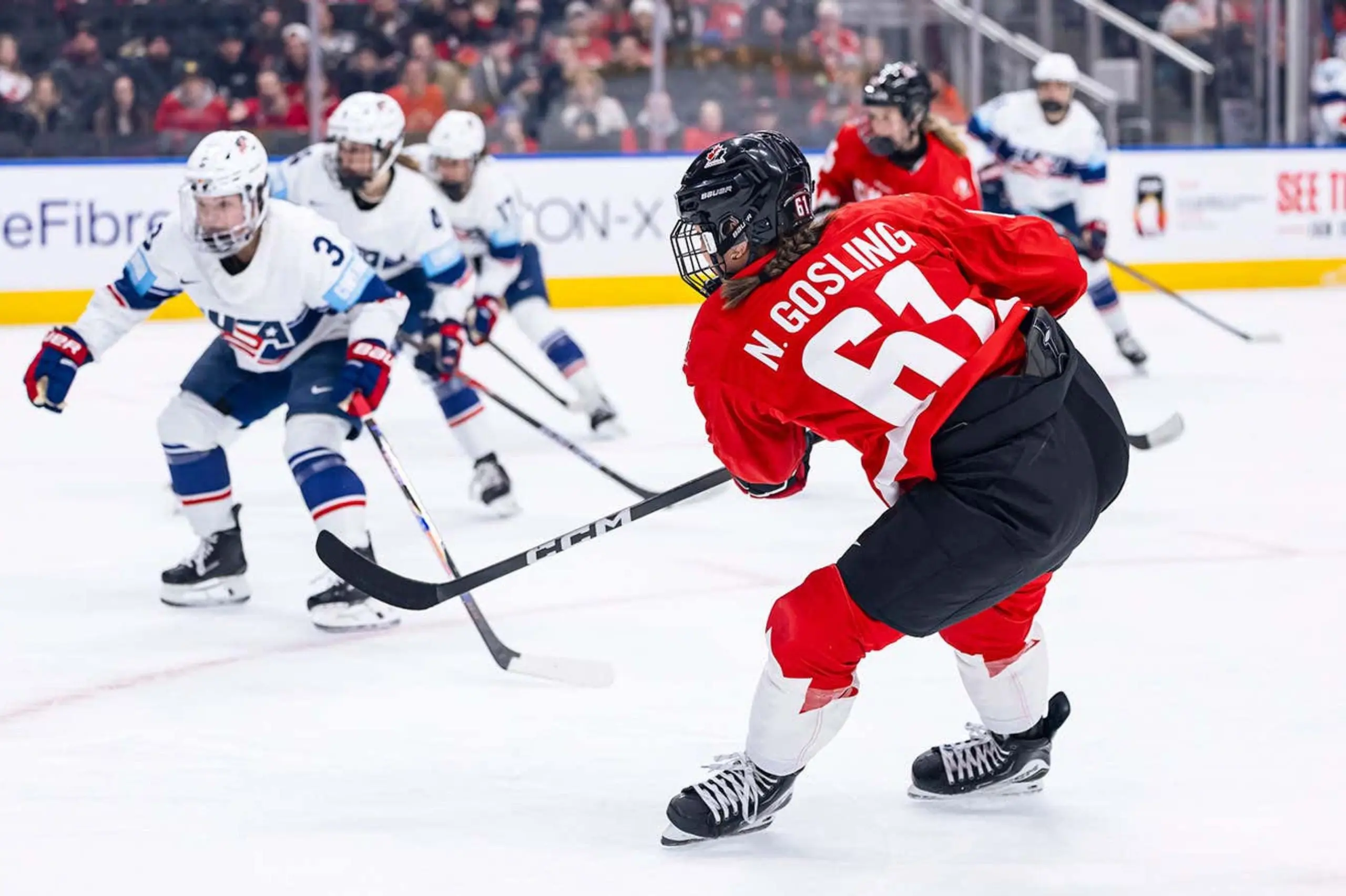
There are the rising stars in the PWHL expected to make an impact as well. Nicole Gosling might’ve played for Canada in their gold medal performance at the 2024 Women’s Worlds, but she hasn’t been on the team’s tournament roster since. Yet, after a year when she was a finalist for rookie of the year, the former Montreal Victoire blueliner has another shot at a medal with Canada. Sarah Wozniewicz, who has had very little experience with the senior national team, is coming off a promising rookie season with the Ottawa Charge. PWHL Hamilton goaltender Kayle Osborne, the third-string netminder for Canada at the Olympics, is one of the more underrated goaltenders in the PWHL and may be in line for some playing time next month.
All that to say, Canada needed a change in how they’ve been building their senior national team rosters. After trying the same thing over and over for the past couple of years and coming up short of their ultimate goal, the organization underwent a necessary overhaul and is giving the kids a chance to become national heroes at the Women’s Worlds.