The Canadian women’s Olympic hockey team needs an overhaul

Albert Einstein once said, “insanity is doing the same thing over and over again and expecting different results.”
Therefore, Hockey Canada’s approach to the women’s national team is insane.
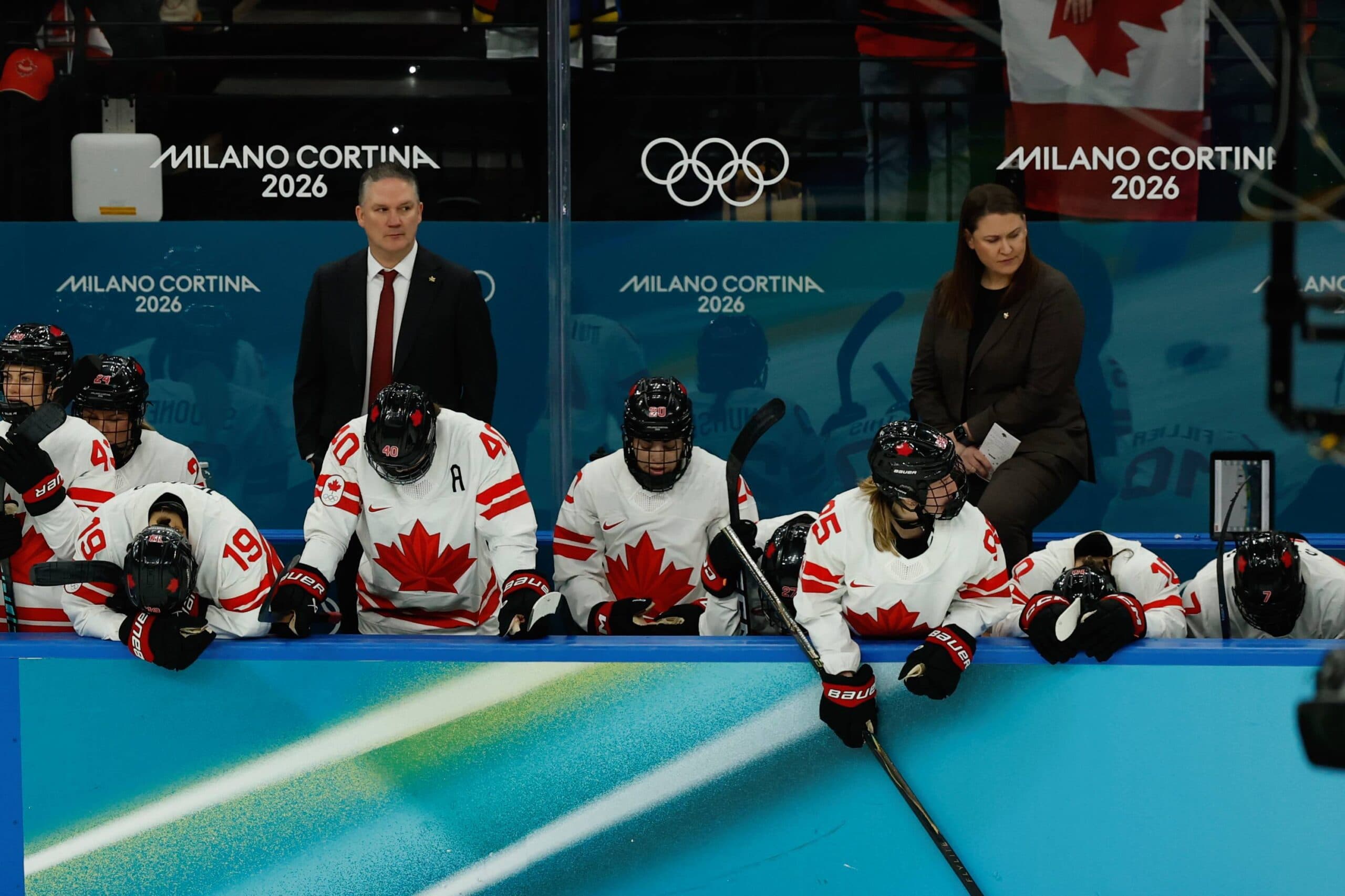
Canada is coming home from the 2026 Milano-Cortina Olympics with a silver medal after falling to the United States in the gold medal game on Thursday, not a welcoming result. It marked the Canadians’ eighth consecutive loss to their southern rivals.
This is the second time Canada has had such a losing skid against the Americans. The U.S. won eight games in a row heading into the 2002 Olympics in Salt Lake City. However, unlike 24 years ago, Canada couldn’t end the schneid on the world stage. This time, the Canadians gave up a 1-0 lead late in regulation, and the game went to overtime, where they lost 2-1.
Even with the gutsy effort, it didn’t take away from Canada’s series of poor performances against the now three-time Olympic champions. The last time they beat the U.S. was during the 2024-25 Rivalry Series. Canada has since lost both games against the Americans at the 2025 IIHF Women’s World Championship, as well as all four games of the Rivalry Series a couple of months ago. Not only did they lose, but the Canadians were destroyed, getting outscored 24-7, giving the U.S. all the momentum heading into the Olympics.
You would’ve thought the alarming debacle would’ve led general manager Gina Kingsbury and head coach Troy Ryan to make sizeable changes to the lineup. Instead, they stuck with the same core of veterans who had been carrying the team since Ryan was promoted to head coach… during the 2019-20 season. While those like Marie-Philip Poulin and Ann-Renee Desbiens remain easy choices, Canada brought back veterans like Jocelyne Larocque, Natalie Spooner and Blayre Turnbull, players well beyond their prime.
The unchanged roster certainly didn’t inspire confidence after they were humiliated in the first meeting with the U.S. in Milan, losing 5-0. It brought up concerns about whether the current regime and roster are capable of keeping up with the younger, faster, and stronger American squad.
For reference, Canada had 16 players from the team that won gold in Beijing on this year’s roster. Team USA? 11. The average age of the Canadian roster in Milan was just under 30, while the U.S., filled with a number of talented college stars, had an average age of under 26.
So, what does Hockey Canada need to change to get its women’s team back on top?
New Management
The first thing that needs to change is the duo that has run this ship into the Bermuda Triangle. Sure, at one point, Ryan led a (younger) Canadian team back to prominence. Under his guidance, the team won its first major tournament since the 2014 Olympics in 2021, and the following year, he coached Canada to Olympic gold. In his time as head coach of the national team, the team has won three world championships. However, Ryan’s favoritism toward veteran players is starting to hurt the team’s performance.
While keeping players like Poulin and Laura Stacey near the top of the lineup makes sense, giving some, like Natalie Spooner and Sarah Nurse, second-line minutes, while players like Kristin O’Neill and Julia Gosling perform at a higher rate in lesser roles, is absurd. The fact that 37-year-old Larocque was playing almost 18 minutes per game, while Kati Tabin, a reliable, stay-at-home defender with the Montreal Victoire, was one of two players to play under 60 minutes total in Milan, was head-scratching.
Along with Ryan, Kingsbury needs to be removed from her post. The two have been picking the squad since the lead-up to the 2024 Women’s Worlds, with Kingsbury being the director of Hockey Operations for the national team since the disaster that was the 2019 WWC.
Some of the roster choices the duo made for these Olympics were puzzling on multiple fronts. Along with Ryan’s roster deployment, they decided to keep Larocque, whose age was exposed during the Rivlary Series and the world championship last spring, on the roster. This, while solid defenders in Micah Zandee-Hart and Mae Batherson, or younger, arguably better players in Kendall Cooper and Chloe Primerano, stayed home.
I harken back to Spooner and Nurse. Outside of an impressive showing during the inaugural PWHL season, both players have struggled to produce at the international stage in recent memory. Sure, they’re marketable and very popular players in the room, but you don’t win gold medals via a popularity contest. Those two alone combined for three points in Milan, while O’Neill, Gosling, Sarah Fillier and Daryl Watts all had five points or more, with Watts leading all forwards in the tournament with eight points.
If the 23 players that Ryan and Kingsbury brought to Italy were the best they thought the country had, it’s time Hockey Canada gets a different set of eyes.
Better Development
All 23 of Canada’s players came from the PWHL. On the U.S. side, seven players from their roster came from the NCAA ranks and were arguably their best players. Wisconsin Badger Caroline Harvey was named the tournament MVP, while her teammate Laila Edwards finished tied for third in scoring with eight points. Abbey Murphy, Joy Dunne, and Tessa Janecke are among the other notable names who will carry the American flag for years to come.
From Canada’s perspective, there are quite a few players cutting their teeth in the college ranks who haven’t received a fair shake on the world stage, thanks to the current regime’s active lean toward veteran players. I mentioned Primerano earlier, the all-time leading Canadian scorer at the IIHF Under-18 Women’s World Championship. She might need some more development on her defensive game, but her speed and skill would’ve kept up with the high-flying Americans better than some of Canada’s blueliners.
However, outside of her, Eve Gascon and Caitlin Kraemer, there aren’t nearly as many grade-A prospects who could fill in on the national team right now compared to what the Americans have been touting over the past few seasons.
USA Hockey has figured out a system that takes top-end players and molds them into prospects the senior team can use as soon as they are sophomores in college, if not sooner. Hockey Canada has been banking on the big-name vets to carry the load, which might only last them for a couple more years. This should put pressure on HC to improve and invest more in its development model for girls’ hockey, giving prospective athletes the tools to thrive at higher levels of the game and, one day, become crucial parts of the senior national program.
Canada is no longer the superpower it once was in women’s hockey. The U.S. has caught back up and, once again, surpassed them. If this hockey-crazed nation doesn’t change its ways, it might have to get used to settling for being second-best for years to come.