2026 NHL Draft Rankings: McKenna leads pre-U-18 World Championship top 75

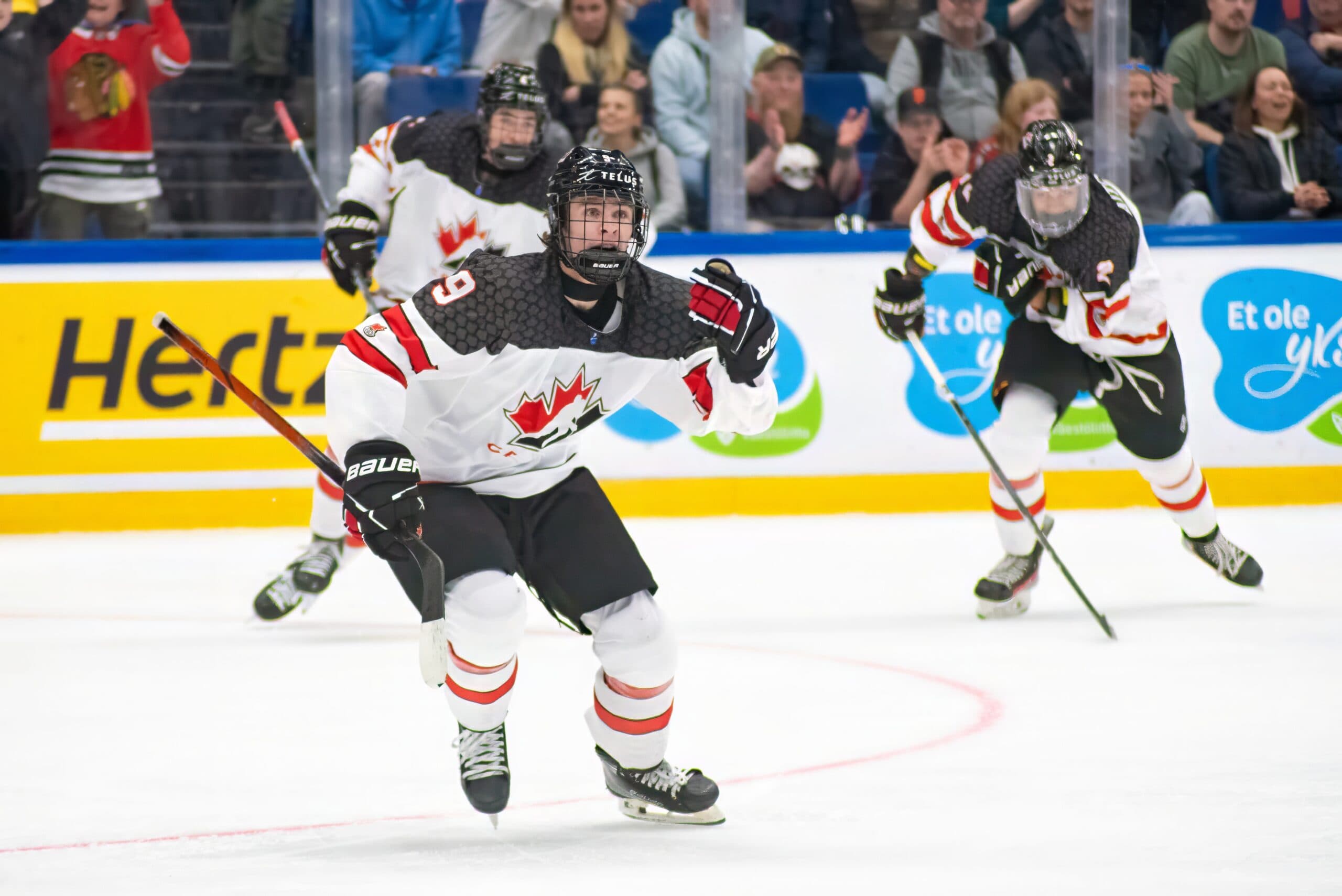
The 2026 Under-18 World Championship is the last chance for most of the game’s top prospects to showcase what they’re capable of ahead of the NHL Draft.
Like usual, some of the draft’s top players won’t be there. Gavin McKenna and Ivar Stenberg, for example, have already aged out. Others are still busy playing in their respective leagues’ playoffs. That’s part of the issue of the timing of the tournament, which will take place from April 22 to May 2, 2026 in Trenčín and Bratislava, Slovakia.
There’s no better scouting event than this. Sure, there might be better talent at the Hlinka Gretzky Cup in April, when players aren’t busy with their domestic league schedules. But for the players, it’s crucial – it can really help their draft stocks.
Gavin McKenna is back on top after falling to second in our previous rankings following the World Juniors. His torrid pace to close out the season at Penn State definitely helped his case. It’s still not a done deal that he’ll go first, especially with many scouts preferring the overall well-rounded play style of Ivar Stenberg.
But that’s what makes this fun, right?
With the final major international scouting event coming up shortly, here’s a look at the top 75 prospects for the 2026 NHL Draft right now:
1. Gavin McKenna, LW (Penn State University, NCAA)
Yep, he’s back. McKenna finished his NCAA (career?) freshman season with 15 goals and 51 points in just 35 games. So the early concerns about his production were absolutely demolished down the stretch. Sure, an eight-point game against Ohio State inflated his numbers, but he was downright dominant at times with Penn State after the World Juniors. McKenna is the most exciting player in this draft class, bar none. He’s skilled, he thinks the game at a true difference-making level, and he plays with a lot of confidence. There’s still the “He’s not big” crowd, and he can lack a bit of intensity away from the puck. But give him a reliable two-way center to work with and he’ll be a star.
2. Ivar Stenberg, LW (Frolunda, SHL)
The floor is absolutely bonkers for Stenberg. There truly isn’t an area he struggles with. He’s incredible with the puck, has a fantastic shot and might have the second-best hockey sense of anyone in the draft behind McKenna. Stenberg’s production fell as the season wore on, but he still had one of the best seasons by a U-19 player in recent SHL history. Add in an excellent gold-medal performance with Sweden at the World Juniors, and it’s hard not to fall in love with his game. Stenberg’s ceiling might not be as high as McKenna’s from an offensive production standpoint. But if you’re looking for someone who excels in more facets of the game, Stenberg is your guy.
3. Chase Reid, RHD (Soo Greyhounds, OHL)
Many scouts have Reid as the top blueliner off the board. I still think it’s close between him and Verhoeff, but I’m giving Reid the advantage right now. He was excellent at the World Juniors, stood out at the OHL USA Prospects Challenge and plays with as much confidence as any defender you’ll find. He’s a great skater, has a solid 6-foot-2 frame and is always involved at both ends of the ice. Reid’s name has been mentioned by a few scouts as a legitimate No. 1 pick thanks to his outstanding puck skills and competitive nature. You can argue that the OHL isn’t as strong as it once was because the older competition jumped to the NCAA early. But I 1,000 percent believe Reid will be one of the best defenders in college once he joins Michigan State.
4. Keaton Verhoeff, RHD (University of North Dakota, NCAA)
Verhoeff jumped from the WHL to the NCAA this year, a move that was well-received by the scouting world. He was productive while playing anywhere in the 16-20 minute range on one of the top teams in the country – a tough gig for any defenseman. Verhoeff doesn’t have many bad games – the floor is still quite solid. He takes up a ton of space at 6-foot-4 and is willing to hit you hard while also making many high-end passes in the offensive zone. Scouts wish he’d add a bit more speed to be a true top-pairing defender, though, but there’s time for him to figure that out. I’ll also add this: yeah, his Frozen Four performance wasn’t great. But the ceiling is still very, very high for such a young dude. I commend him for going to college early, and I think he’ll be much more comfortable next year.
5. Carson Carels, LHD (Prince George Cougars, WHL)
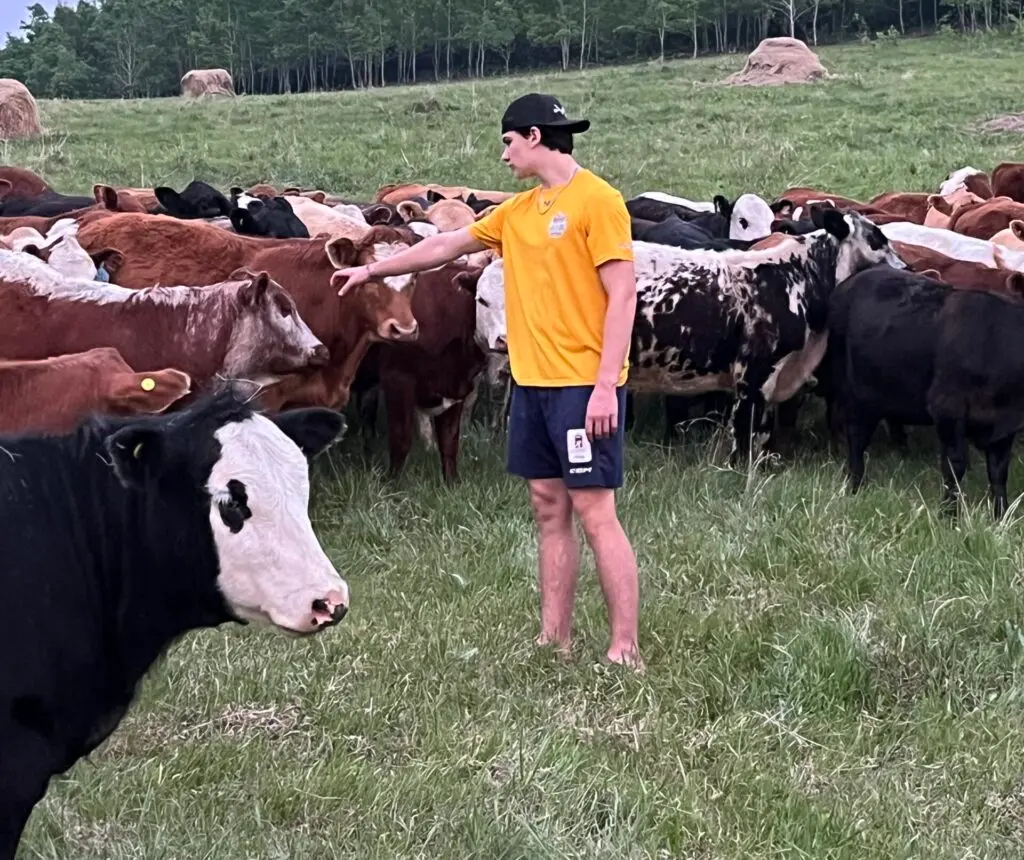
Some people have really discounted Carels this year for some reason. Big mistake. Carels was not only one of the best young defenders in the WHL, but he was one of the best defenders in the entire CHL, period. He’s built like a tank – he’s a farm kid who raises hundreds of cattle. Carels’ defensive awareness, two-way skill, strong physique and high-end hockey sense make him truly high-end. I liked him at points during the World Juniors, and I think he really has the skillset to be a top-pairing defender.
6. Caleb Malhotra, C (Brantford Bulldogs, OHL)
Malhotra’s steady, smart play has helped him emerge as the No. 1 center for this draft. It’s not a great group down the middle, but Malhotra looks like a future top-six threat. He has been an a huge part of Brantford’s success this year, which included a couple of standout performances in a four-game sweep over Sudbury earlier this month. Malhotra battles hard at both ends, giving opponents little time to make quick, heads-up decisions with the puck. Will he have the natural play-driving ability to excel offensively in the NHL? That’s where scouts let their minds wander. Some time at Boston University will allow him to play more key minutes. I wouldn’t be surprised to see Malhotra go in the top five due to the lack of other high-end options available.
7. Alberts Šmits, LHD (EHC München, DEL)
Šmits was a big part of Latvia’s World Junior and Olympic teams this season. The 6-foot-3 blueliner moves well for his size and makes so much happen with the puck. It’s always nice seeing an 18-year-old who plays with a ton of confidence on the power play. He also has plenty of pro experience under his belt, highlighted by a strong first half with Jukurit in the Finnish Liiga. He was loaned out to München to close out the campaign and has recently lit up the playoffs after watching his ice time stabilize in the 17-18 minute range. I really, really like Šmits’ game.
8. Daxon Rudolph, RHD (Prince Albert Raiders, WHL)
Rudolph’s hockey sense is off the charts. He doesn’t try to do more than he’s capable of and force plays for the sake of making them. Instead, he plays to his strengths, which happens to be quite a few elements. He has a booming shot, makes great breakout passes and can knock guys down. Rudolph’s two-way game is intriguing, as is his ability to get himself out of trouble consistently with and without the puck. I think we’re likely talking about a future top-four defender who can quarterback the man advantage, and he’ll make a team very happy in the latter half of the top 10.
9. Viggo Björck, C (Djurgardens, SHL)
While his numbers will be nothing to lose your mind over, the fact that Björck played on the first line – often skating in more than 20 minutes a night – as a 17-year-old in one of the top leagues in the world is bonkers. Björck was electric at the World Juniors, showing a high-end blend of hockey sense and raw skill. He might be a bit small, but it hasn’t hindered him too much against men, and he has been downright dominant against his own age group. Björck is a human highlight reel, and he’s a tremendous passer who will use his quick hands to get the puck into dangerous areas.
10. Ryan Lin, RHD (Vancouver Giants, WHL)
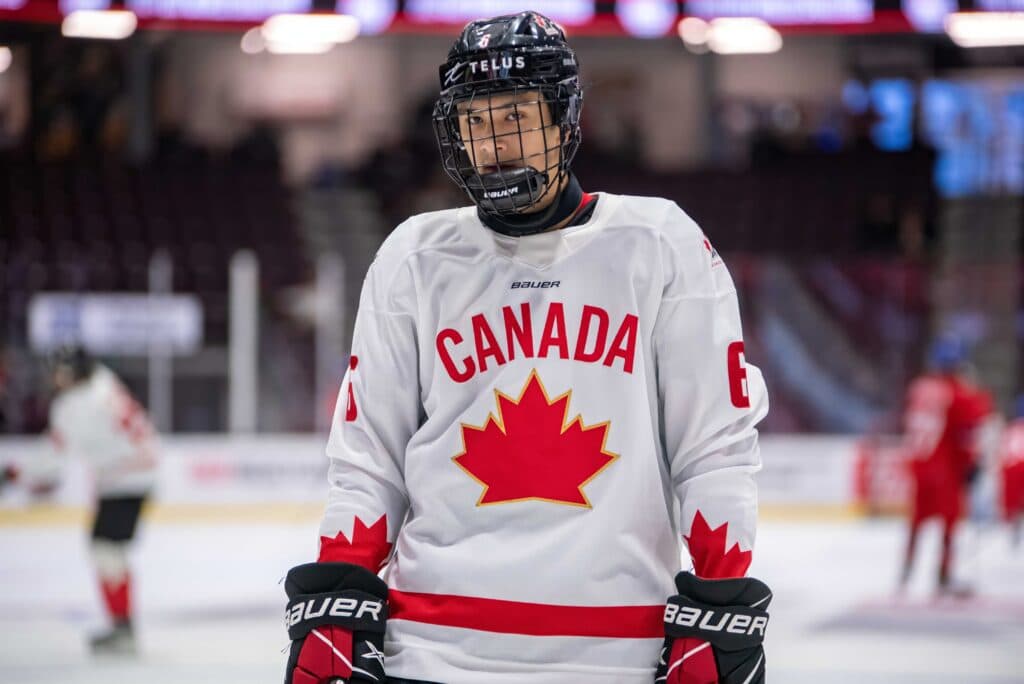
Many wondered if Lin would choose the NCAA route this season – instead, he had a big season with the Vancouver Giants, where he registered more than 50 points for the second consecutive campaign. He’s now committed to the University of Denver, where he should immediately slip into a top-four spot and play a similar two-way role that Hobey Baker finalist Eric Pohlkamp possessed this year. While Lin is small, he’s definitely one of the most skilled defenders in this class. His decision-making is near the top, and he has the skating to burn guys. You put those together and it’s easy to understand why Lin has the puck so often. Teams seem to be softening up to smaller blueliners – they should be all-in on Lin.
11. Tynan Lawrence, C (Boston University, NCAA)
Lawrence’s move to the NCAA was a highly applauded one – he was decimating the USHL after returning from injury. The move might have positive long-term effects on his development, but the numbers were definitely concerning. For as much Lawrence loves to dominate the physical game, he looked invisible a little too often on a team that didn’t have a ton going for them. The good news? He really found his game near the end of the season and should play a leading role with BU next year. There’s still a lot to love about his game and I wouldn’t be surprised if he’s taken closer to fifth. But his stock has definitely fallen overall, with some scouts questioning if he has top-six potential.
12. Ethan Belchetz, LW (Windsor Spitfires, OHL)
Belchetz broke his left clavicle back in March, ending his season early. It was a shame, because he had really started to push himself up draft boards to the point where it felt like he was going to be a top-10 pick. Belchetz has never lacked confidence – and you have to have loads of it when you’re the Tasmanian Devil on skates. He plays with so much power, which allows him to carve through the middle of the ice with little regard for human life. An injury wasn’t the only reason he slipped, though – some scouts worry that he doesn’t have any high-end traits beyond his size.
13. Oscar Hemming, LW (Boston College, NCAA)
After missing the first half of the season due to a contract dispute with his Finnish club, Hemming came out swinging with Boston College. He had a pair of assists in just his second game and even had a nice four-point run during a three-game stretch. But after finishing with just two points in his final 11 games, it was a difficult end for a guy many scouts still really like. At his best, the 6-foot-4 forward is an absolute menace who can beat you with size, speed and skill. The raw potential is there, but he was forced to play some heavy catch-up to make up for lost time. I think a full year of college will do him wonders, and I still see some top-six potential.
14. Liam Ruck, RW (Medicine Hat Tigers, WHL)
Medicine Hat lost a lot of offense with the departures of Gavin McKenna and Cayden Lindstrom, among others, but Ruck made up for it. He loves to shoot from anywhere and does an excellent job of getting the puck where it needs to be. He led all draft eligibles with 45 goals, and that’s good for seventh in the country. Ruck is extremely dangerous around the net with a variety of quality shot choices at his disposal. His chemistry with his twin, Markus, was obvious from the get-go. It feels like it’s going to be difficult to select both together without some funky trade magic – that’s the downside of their incredible second-half play.
15. Adam Novotný, LW (Peterborough Petes, OHL)
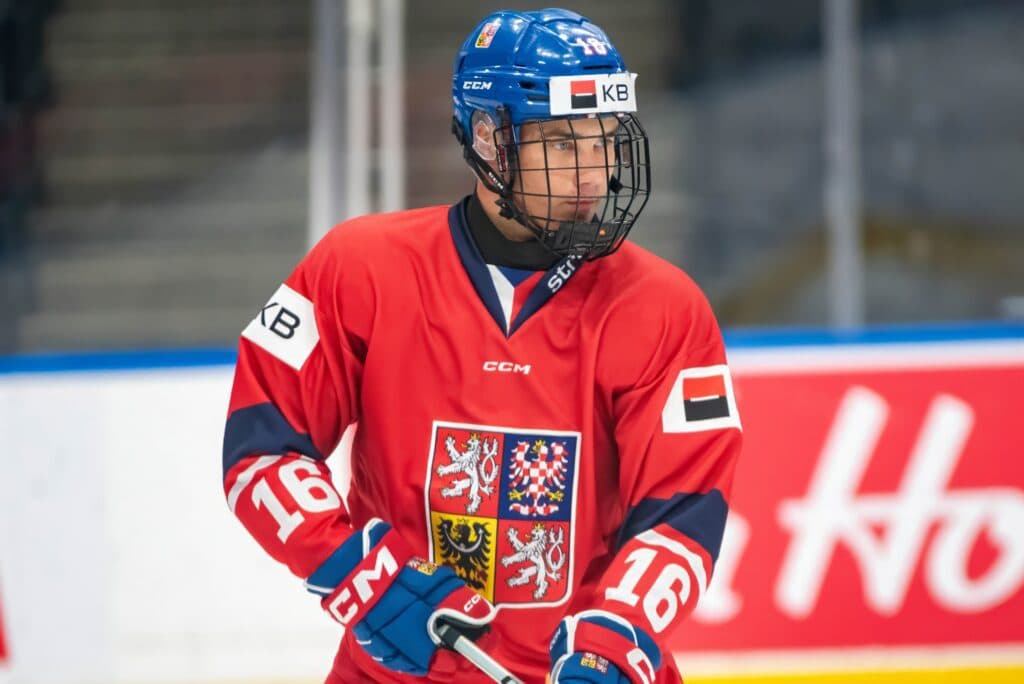
The more I watch Novotny, the more I like him. He’s a rugged forward with an excellent shot – something we saw plenty of times with Peterborough. I was shocked he didn’t score more at the World Juniors because he continuously found himself in scoring lanes, creating quality looks. It was clear that once Novotný figured out the North American lifestyle, he would be fine. He surpassed the 30-goal mark as an OHL rookie with Peterborough and easily finished as the Petes’ No. 1 scorer. Novotný loves to get the puck on net by any means necessary, and he’s a strong skater, too. I like his two-way work – he’s a full-time team player. There’s heavy top-six potential here.
16. Xavier Villeneuve, LHD (Blainville-Boisbriand Armada, QMJHL)
Just because Villeneuve will go lower due to his smaller 5-foot-11 frame doesn’t mean I’ll discount him. Villeneuve was one of the best defensemen at the 2025 U-18 World Championship, helping Canada win gold. He had 62 points last season in the Q and would have surpassed that this year if he hadn’t missed about 25 games due to injury. Villeneuve can drive the play from the point and is as good as anyone in this draft class on the man advantage. I loved him at the CHL USA Prospects Challenge in particular – it felt like he was playing with a boatload of confidence. His play in the Q playoffs has been really promising, too.
17. Oliver Suvanto, C (Tappara, Finland U-20)
Suvanto spent most of the season playing against men in Tappara, where he has shown he can play a reliable two-way game. Recently, we’ve seen him play heavy minutes with the U-20 squad, and while offense has been tough to come by, he still found ways to impact the game away from the offensive zone. I really like his play away from the puck, and I thought he looked solid at the World Juniors in a variety of roles. I think we’re talking about a big, middle-six guy here, but I want him to find another gear, offensively.
18. Markus Ruck, C (Medicine Hat Tigers, WHL)
Markus’ twin, Liam, is getting most of the love from scouts for his play-driving and goal-scoring abilities. But Markus is a special playmaker – he works as hard as anyone you’ll find in junior hockey. He loves to do the dirty work to make plays happen, no matter whom he’s looking for on the ice. Ruck has obvious chemistry with his brother but can also dazzle on his own. He has quickly established himself as one of the biggest risers for the draft, so don’t be surprised if he’s taken in the top 20. I would still like to see both brothers apart from each other, but the raw talent is definitely there.
19. Nikita Klepov, RW (Saginaw Spirit, OHL)
Teams love productive wingers, and Klepov meets every requirement. The projected first-round pick is a tremendous playmaker and maybe one of the best in the CHL. But he’s also a stout shooter and wasn’t far off from reaching the 40-point barrier. It was surprising, given he only put up 31 points in the USHL the year prior. The Michigan State University commit plays with a ton of finesse, but he’s physically strong, too. He’s just an OK skater, but Klepov should still go high because magic tends to happen when he’s in control of the puck on the attack.
20. Elton Hermansson, RW (Modo, Sweden U-20)
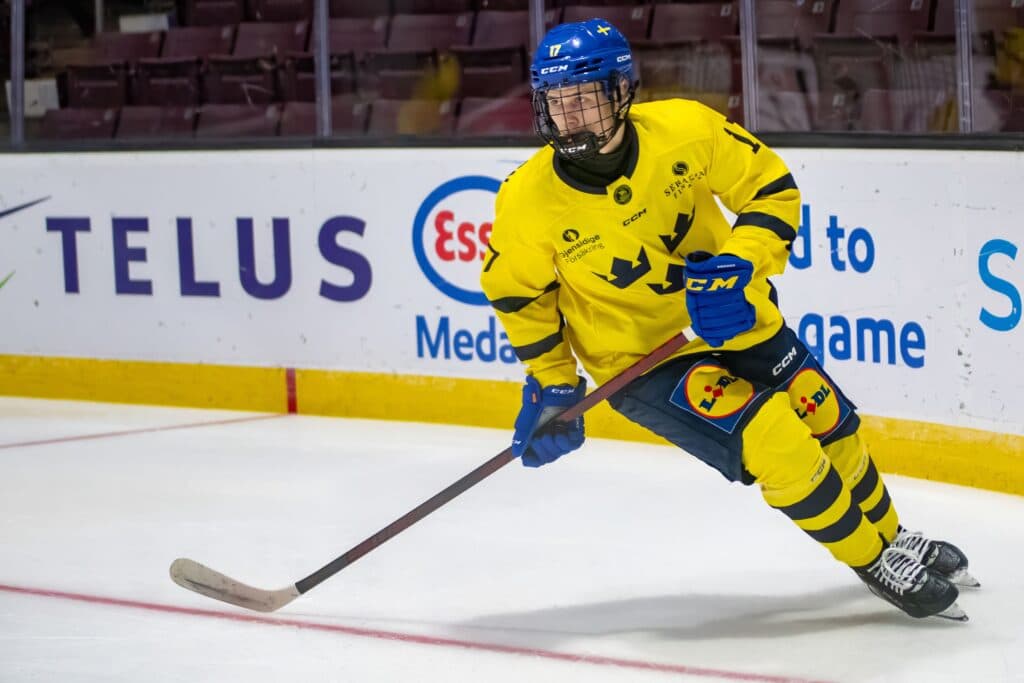
Hermansson loves generating offense. He put up solid numbers in the second-tier Swedish league this year and has scored at a goal-per-game pace with the U-18 national team. From an offensive standpoint, there’s a lot to love, especially on the power play. His game away from the puck is just “OK” at best. It feels like he isn’t as impactful as he needs to be when he’s not piling shots on net. I want to see some more urgency when attacking opponents to regain possession. The good news: he’s best at the hardest thing to do in hockey, which is score goals. But when that’s the primary trait, scouts want to see a bit more to feel more confident.
21. J.P. Hurlbert, LW (Kamloops Blazers, WHL)
No CHL rookie was as lethal as Hurlbert, who recorded 42 goals and 97 points with Kamloops. He’s an exceptionally skilled forward who, at one point, was so far ahead in the WHL scoring race that nobody was in the same area code. The University of Michigan commit has a great one-touch shot that he routinely unleashes on the power play. He’s also an exceptionally smart puck-mover who has very little difficulty getting it where it needs to be against players his own age. My two pre-season concerns – his play away from the puck and his lack of high-end speed – remain issues. But overall, he’s a safe bet for the first round.
22. Malte Gustafsson, LHD (HV71, Sweden U-20)
If teams are looking for a blueliner with a larger frame, Gustafsson could go higher. I’m just not fully convinced he’s more than a big body. Gustafsson is a 6-foot-4 defender who played well in the SHL, despite having little to show for it on the scoresheet. His skating is good for his size, allowing him to play a very mobile game. Gustafsson rarely struggles to get the puck out of his zone. A lack of flash and high-end offensive instinct likely won’t help his draft projection, but there’s still a ton to like about the way he defends and takes up space.
23. Juho Piiparinen, RHD (Tappara, Liiga)
Piiparinen is a smart defender who doesn’t make many mistakes with the puck. He’s good when he keeps things simple, but he can also rush the puck up the ice and lower the boom when needed. Piiparinen has played decent hockey against men, and his international action has been solid, too. Piiparinen isn’t flashy, but he’s calm and collected in his own zone and is generally reliable defensively. I was hoping to see him put up more offense this season, but his game is more about shutting opponents down with his mobility. He’ll make a good fit alongside someone more offensively minded.
24. Wyatt Cullen, LW (USNTDP)
Cullen continues to rise up the ranks thanks to his strong play with the USA Hockey National Team Development Program. Injuries prevented the son of long-time NHLer Matt Cullen from starting the year on time, but he has been a point-per-game player ever since. The speedy, two-way center has saved his best hockey for major showcase events, which obviously gets scouts excited. Cullen isn’t a future No. 1 center, but he can be a reliable, smart two-way guy with the potential to be a No. 2/3. I might like him more than others, but I think the floor is high enough to slot him here.
25. William Håkansson, LHD (Lulea, SHL)
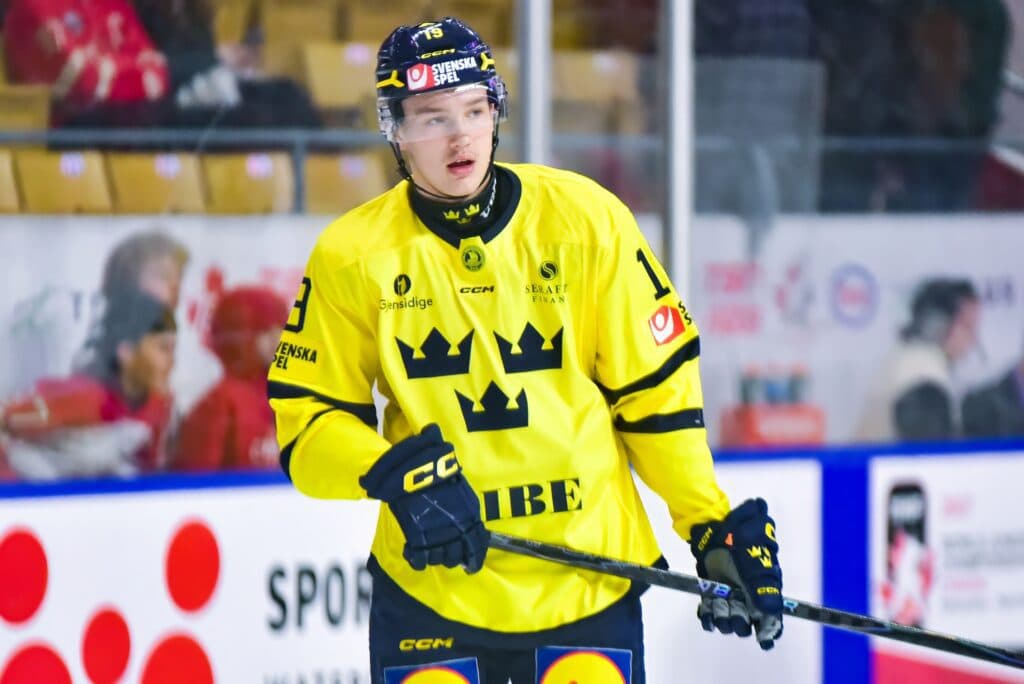
Håkansson didn’t get a ton of ice time at the World Juniors, but we saw exactly what he’s capable of – raw defensive energy. There’s absolutely no flash to his game. Instead, he uses his big 6-foot-4, 207-pound frame to flatten opponents while being a pain in the rear end defensively. He’s quite mobile for his frame, too. Håkansson’s lack of offensive awareness won’t help his draft stock, but I absolutely could see him becoming a solid shutdown defender in the NHL. He’d go higher if he could shoot or make passes like Alberts Šmits.
26. Alexander Command, C (Orebro, Sweden U-20)
Despite his last name, Command doesn’t demand too much attention. Instead, he’s a smart, solid two-way center who makes everyone around him better. He doesn’t seem to have many off shifts, and that’s because he’s effective away from the puck, too. He reminds me a bit of Milton Gastrin – someone who can contribute offensively but also will win faceoffs, block shots and make moves with intent. I’ve liked him internationally, and he has played quite well against his own age group. I think he’s more of a third-liner in the NHL, but one who shouldn’t have many issues being effective.
27. Mathis Preston, RW (Vancouver Giants, WHL)
Once viewed as a potential top-10 pick, Preston left scouts wanting more in Spokane, and then he got injured shortly after joining Vancouver. Still, there’s a ton to like about his game, and he could end up being an excellent value pickup here. Preston does a good job of getting to the middle of the ice to redirect chances and take space away. I’ve liked him more in the showcase events (Hlinka, CHL USA Prospects Challenge), which shows he can rise to the occasion when needed. If Preston indeed joins Canada for the U-18s, look for him to be leaned on as a difference-maker – and hopefully boost his value. For now, scouts seem a bit mixed, given he’s undersized and not dominant enough offensively.
28. Ilia Morozov, C (Miami University, NCAA)
Morozov was the youngest player in college hockey, but you couldn’t tell with how often Miami relied on him this year. At 6-foot-3 and over 200 pounds, he’s a big center who commands respect. He put up solid numbers on a team that didn’t have a ton of big-time firepower to work with. I also like his confidence and the way he’s always looking to make a pass, even through traffic. Morozov doesn’t have as much offensive upside as some others around this point, like Mathis Preston or Marcus Nordmark. But Morozov’s game away from the puck, mixed in with his overall power, intrigues me.
29. Marcus Nordmark, LW (Djurgarden, Sweden U-20)
Nordmark blends high-end skill and hockey sense to create high-quality chances in the offensive zone. He routinely picks apart opponents in his own age group and has been truly dominant internationally. But scouts are worried that he’s a ghost defensively and that if he doesn’t dominate offensively, he won’t be good enough to crack the NHL. So he’s polarizing, which isn’t surprising for a 17-year-old with so much room to grow. Is he legit? Scouts aren’t sure yet.
30. Egor Shilov, C (Victoriaville Tigres, QMJHL)
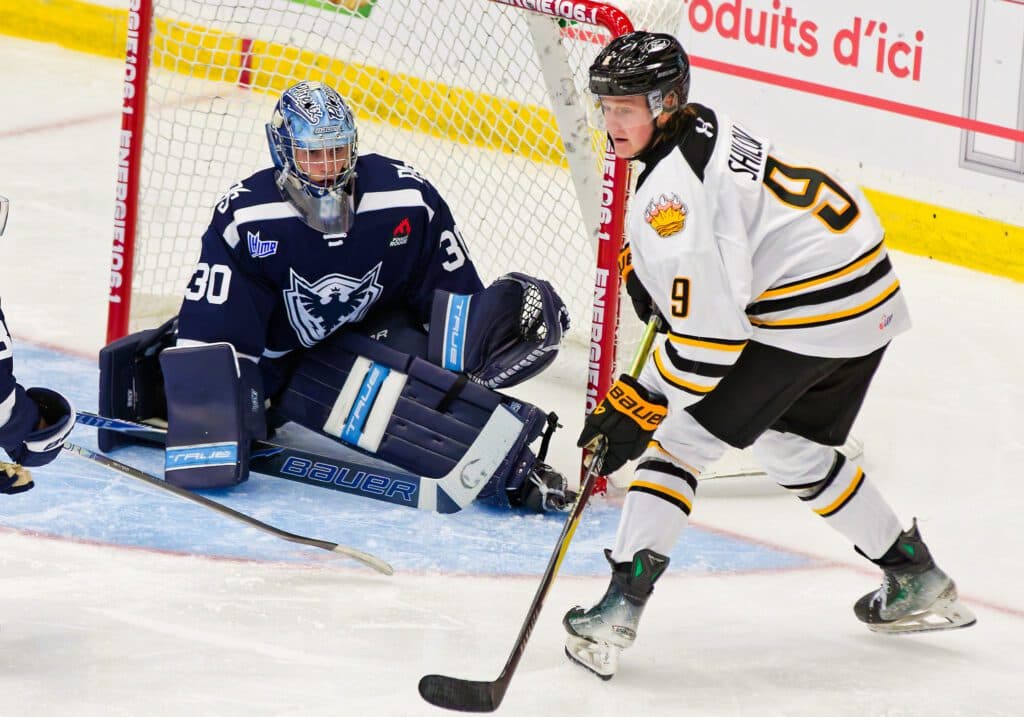
Shilov was one of the QMJHL’s most proficient offensive generators this year. The Tigres finished second last in the West and were ultimately bounced in four games in the playoffs. But Shilov finished the season with 32 goals and 82 points while showing instant chemistry with fellow Russian draft prospect Alexei Vlasov (80 points). Nobody else came close to even reaching 50, so Shilov was exceptionally important. He dominates the puck game, and he’s as skilled as you’ll find in the CHL. There’s no lack of talent here – but he can get caught watching the puck far too often and simply lacks the pace to thrive at the next level. That’ll be a big sticking point for scouts this year.
31. Maddox Dagenais, C (Quebec Remparts, QMJHL)
Dagenais has had a strong playoff run with Quebec, which will definitely help his draft stock. The son of former NHLer Pierre Dagenais managed to register a point-per-game in 62 outings with Quebec, while often leading the team’s offensive push. He has an NHL caliber-frame at 6-foot-4 and 196 pounds, and he’s extremely reliable at both ends of the ice. Dagenais isn’t flashy, but he’s smart, toolsy and plays with a ton of power. At times, he’s able to dominate the puck better than most other big forwards in this draft class. Dagenais’ hockey IQ is impressive, and he’s a good skater for his size. I think he could be a good middle-six guy.
32. Tomas Chrenko, C (HK Nitra, Slovakia)
Chrenko’s international numbers have been excellent. Between his play at the U-18s last year and the World Juniors this season, no draft-eligible Slovak comes close to being as effective at blasting pucks past goaltenders. He also put up 31 points in 44 games in the top Slovak league this year, and while it’s a little lower on the totem pole among European leagues, he still played anywhere from 13 to 20 minutes a night against pros. He’s not big, and some scouts wonder if he’d be better on the wing in the NHL. But as a pure shooter, especially on the power play, there’s a lot to love. Chrenko needs to round his game out a bit more to convince me he’ll be an NHLer, but the talent is definitely there.
33. Ryan Roobroeck, LW (Niagara IceDogs, OHL)
Roobroeck’s combination of size (6-foot-4, 216 pounds) and goal-scoring prowess (99 goals in 176 regular season games over three years) makes him incredibly intriguing. And at one point, he felt like a safe bet to go in the top 10. You don’t find many forwards who can command a play like he can at his absolute best, especially after producing at a high level throughout most of his career. But for a guy his size, he often lacks the intensity required to be a true difference-maker. Few players with Roobroeck’s level of talent fall asleep as frequently on plays, and it’s a shame. At the very least, Roobroeck should be able to excel on the power play, and he’s good as a net-front presence. But scouts are worried about his work ethic on the ice, hence the fall to this spot. Regardless, I think there’s still some significant upside here.
34. Tobias Trejbal, G (Youngstown Phantoms, USHL)
Trejbal is the near-consensus top goalie in this draft class. His numbers with the Phantoms have been excellent, and being 6-foot-4 doesn’t hurt, either. The stats don’t lie: the busier Trejbal is, the better he plays. His ability to stay calm and composed under pressure is impressive, and he has quick hands and quicker feet. Trejbal’s athleticism has gotten scouts talking, and his big frame makes him an easy project for a team willing to be patient with the UMass commit. I’ve been impressed with just about all of my viewings of his this year and feel confident he’ll be the first goalie off the board this year.
35. Victor Plante, LW (USNTDP)
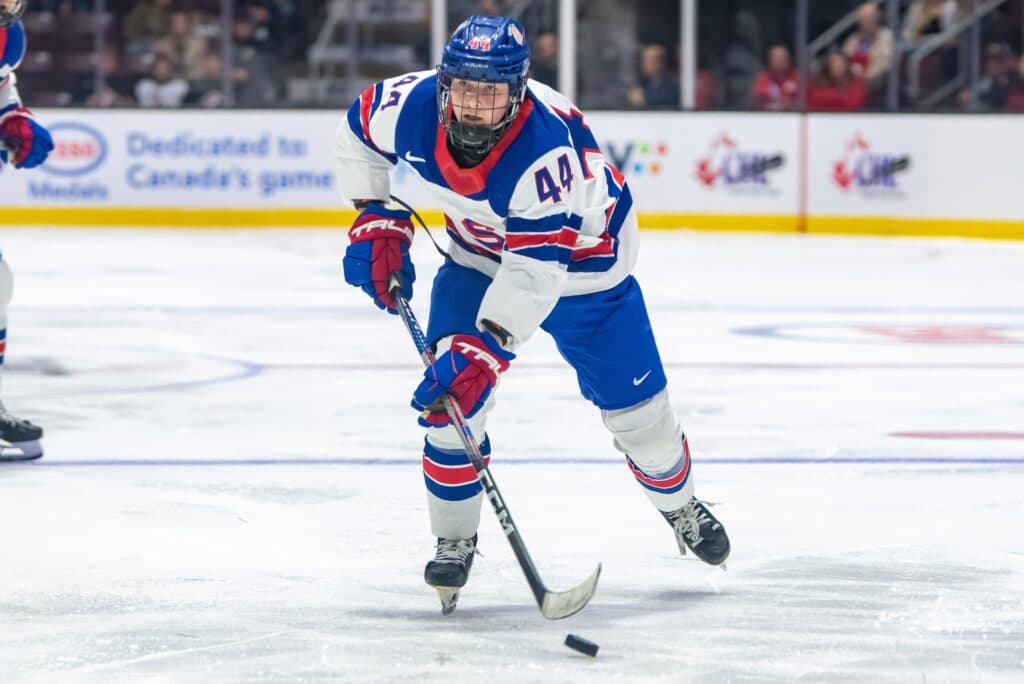
Plante was one of my favorite prospects in the first half of the season, and I feel like he’s bound to have a big role at the U-18s. He’s a bit undersized, but Plante processes the game at such a high level. His brothers were two of the best playmakers in the NCAA this year – and Victor is set to join the family party at the University of Minnesota-Duluth next year, too. The two-way threat is a bit undersized, but he makes up for it by being consistently engaged in the offensive zone. He never stops moving, and while he’s not going to take his speed to Formula 1, he’ll often force opponents into giving the puck away by always applying pressure. Plante doesn’t have many glaring flaws, but he doesn’t truly excel anywhere, either.
36. Adam Gojler, RHD (Trencin, Slovakia)
I know I’m higher on Goljer than most, but I’m a real believer. He’s raw, but that’s fine because there’s some solid upside. At 6-foot-3, he has size. He also plays with a ton of confidence, allowing him to consistently attack and defend strongly against older competition in the top Slovak league. Playing close to 20 minutes a night against men is no small feat for a 17-year-old, no matter the league. I like his gap control, his proficiency as a passer, and the pure power he plays with. I think he can get a bit antsy and make mistakes with his defensive reads under pressure, and his foot speed needs work. But there’s raw talent there.
37. Nikita Shcherbakov, LHD (Toros Neftekamsk, VHL)
There’s bit a bit of variance in Shcherbakov’s ranking publicly. I think he’ll either go late first or early second. The 6-foot-5 defender started the year in the KHL but has primarily played in the second-tier Russian league since the end of September. He’s strong, but he moves well – which is important for a guy his size. Shcherbakov has definitely grown on me a bit over the past few months, especially after watching him play well against his own age group. His game lacks high-end thinking, and he’ll likely slot in as a third-pairing defender. But he should be a reliable one at that. If he can add some extra offensive juice, I’d be more excited about him, but not every defender needs to be a wizard with the puck – especially when they’re defensively sound like Shcherbakov.
38. Niklas Aaram-Olsen, LW (Orebro, Sweden U-20)
Aaram-Olsen always shines internationally, typically playing a big role for Norway across all age groups. He’s a pure goal-scorer, and he often can be found dominating his own age group. I love him on the power play, where it feels like he does a good job of cycling the puck and then firing quick one-timers. Against men, though. Aaram-Olsen has left a lot to be desired, and scouts have knocked him for having a lack of high-end tools outside of his shot. If he can play with more pace and learn to dominate play through the middle, he could be a good snag. I like the upside, even if some scouts aren’t as convinced.
39. Jack Hextall, C (Youngstown Phantoms, USHL)
Hextall had multi-point efforts in nearly all my viewings this year, both internationally and domestically, with Youngstown. He was no stranger to dominant performances, showcasing a dynamic skill set with an endless motor. That’s what I love about his game – he won’t be a high-end producer in the NHL, but he can play a variety of roles while being effective. He has a good shot, but he’s even better as a set-up guy. On the power play, he doesn’t waste much time blasting shots past goalies. I also think he got better physically as the season wore on. I think he’ll be a solid support guy at the next level.
40. Simas Ignatavicius, RW (Geneve-Servette, NL)
We don’t typically see many prospects coming out of the top league in Switzerland. But the Lithuanian-born winger has drawn a ton of attention from scouts this year. He’s a 6-foot-3 forward having a solid season in Switzerland’s top league and has been downright dominant internationally. Ignatavicius is so versatile, finding so many different ways to impact the play both with and without the puck. He’s good defensively, has a great shot release, has obvious muscle and is incredibly skilled, too. Is Ignatavicius notable because he’s a big dude playing pro hockey? Or is there something truly here? That’s the question.
41. Adam Valentini, C (University of Michigan, NCAA)
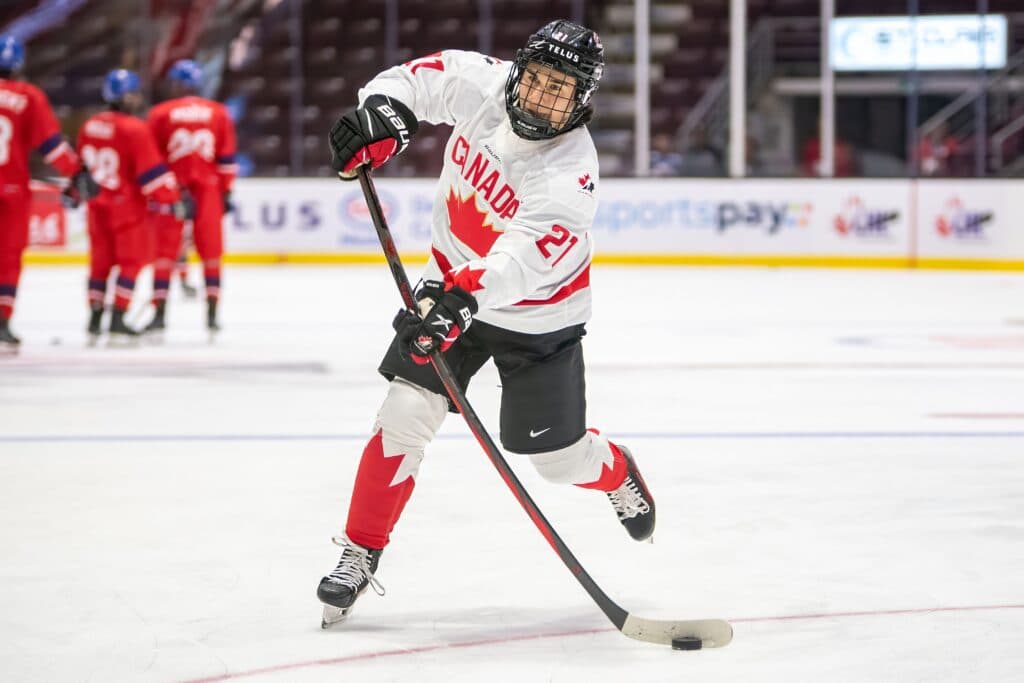
From a pure skill perspective, Valentini is tremendous. Valentini is so energetic that he can chase the whole game without losing much pace. He can be a bit of a pain in the ass around the net because you can almost never keep up with his footwork. I like how his game has progressed in college, but he needs to add more muscle. With the puck, though, Valentini brings so much to the table. I’m not worried about his ability to create damage with the puck on his stick. But is he versatile enough? Is he too small? Always bet high on skill.
42. Giorgos Pantelas, RHD (Brandon Wheat Kings, WHL)
Pantels was one of the WHL’s most electric defenders earlier in the season but ultimately quieted down with just two assists in his final 15 games between the regular season and the playoffs. At one point, a 50-point pace looked possible, but he only finished with 37. Still, there’s enough to like as a second-round pick. I like how Pantelas never stops moving, has incredible confidence with the puck and sacrifices his body for a play. Pantelas is the type of player who won’t let you down defensively and will continue to improve offensively. He’s a project, by all accounts, but one worth taking a chance on.
43. Alessandro Di Iorio, C (Sarnia Sting, OHL)
Di Iorio missed the start of the OHL season and was forced to play a bit of catch-up. He finished the season with underwhelming numbers, but Sarnia wasn’t exactly an offensive hotbed. Even when he’s not putting pucks in the net, Di Iorio is always driving the play, making responsible decisions with the puck, and seems to make everyone around him better. Di Iorio does an excellent job of carrying the puck through the middle of the ice, showcasing his high-end playmaking and his quick release. While he has fallen out of the first round for me and for many others, I still think he’s smart and toolsy enough to find a role in the NHL. A good showing at the U-18s could be beneficial.
44. Casey Mutryn, C (USNTDP)
Mutryn is one of my favorite American-born prospects this season. I like his physicality and work ethic and think that could allow him to be a decent third-liner. He’s smart, battles hard and has the ability to find chemistry with just about everyone. Although I don’t think his ceiling is that high, I feel confident Mutryn will be an NHLer. Most likely as a third- or fourth-liner who can grind it out and win most of his battles, but he’ll be a good one at that. He’s the type of guy every team wants come playoff time.
45. Pierce Mbuyi, LW (Owen Sound Attack, OHL)
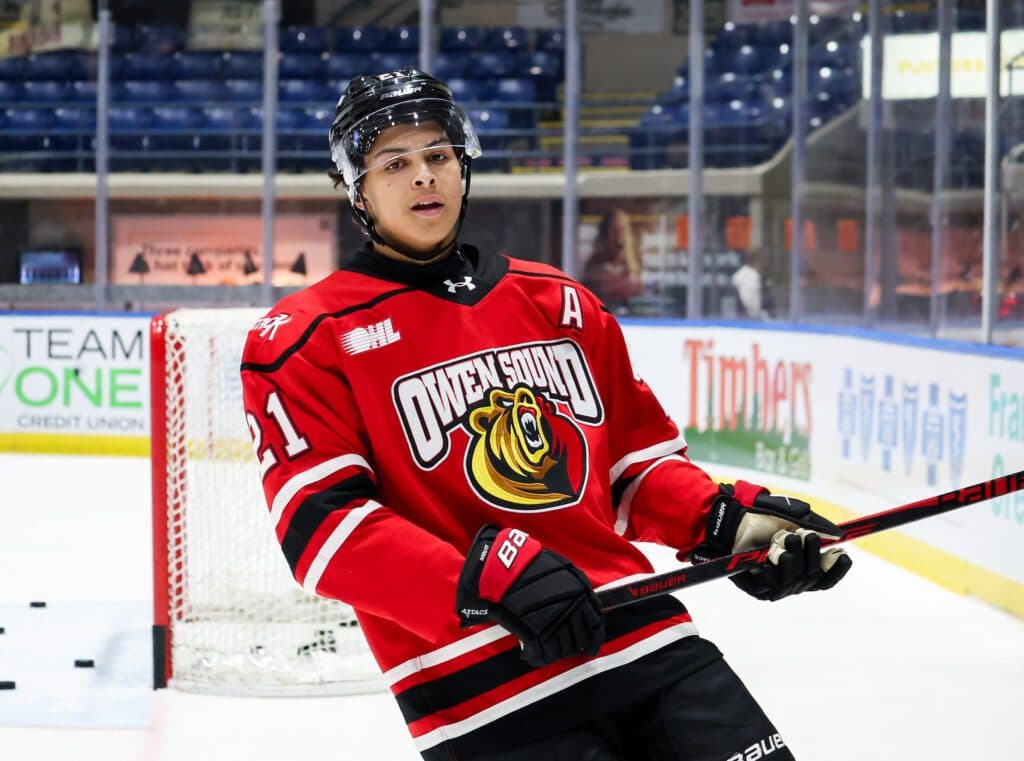
Mbuyi has grown a bit over the past year, eliminating the “he’s way too small” conversation. He still hasn’t bulked up by any means, but he plays an aggressive game and isn’t afraid to battle much bigger competition. The Penn State commit loves creating chances on the breakaway, and he rarely loses a 1-on-1 battle in the offensive zone. I’d like to see some improved game-to-game consistency, and I feel like he can shoot more. But the talent is definitely there, and he’s already very multi-faceted. The numbers are solid, too.
46. Tommy Bleyl, RHD (Moncton Wildcats, QMJHL)
Bleyl feels like the type of guy the general public loves significantly more than NHL Central Scouting. Personally, there’s a lot to love. He’s a highly skilled two-way defender who came out of nowhere to register 81 points as a QMJHL rookie. He’s exceptionally crafty, skates very well, and doesn’t let bigger competition bother him. Bleyl plays a calm, collected game defensively while consistently getting himself into scoring lanes in the other zone. Right now, he needs to get stronger – he gets pushed around too often, especially in front of the net. But his mobility and raw hockey sense are definitely there. I’m interested to see if he can keep the numbers flowing at Michigan State.
47. Oscar Holmertz, C (Linköping HC, Sweden U-20)
Holmetz has played at just about every level possible in Sweden this year, including the SHL. He didn’t get much ice time with the big club, but it felt like spending time playing against pro forced him to add another level of urgency to his game whenever he got sent back to junior. He put up good numbers with Linköping’s U-20 squad and has been a reliable two-way threat internationally. I think he’s most impactful as a support guy you can rely on to kill plays in the D-zone, but I’m not sure he’s skilled enough to have a profound role at the next level. There’s third-line center potential here, though.
48. Jaxon Cover, RW (London Knights, OHL)
London had a down year by the team’s standards, especially after consecutive league titles. But Cover quickly established himself as one of the most intriguing prospects, finishing the regular season with 20 goals and 52 points. Cover is one of the most raw prospects in the draft, having only started playing ice hockey at the age of 13. So the fact that he has been so productive with the puck and so dangerous without it has really excited scouts. He’s so quick, using his speed to force turnovers and break into scoring lanes. He’s creative, and as long as he continues to work on the smaller details in his game, he’ll be a solid prospect.
49. Ben Macbeath, LHD (Calgary Hitmen, WHL)
Macbeath came out of nowhere this year, registering 51 points in 67 games as a WHL rookie. The 6-foot-2 defender blends size, skill and mobility together to become an absolute force with the puck. Some scouts think the ceiling is high enough to take him in the first round. I’m not there yet because it feels like he can be a bit too passive with his decision-making at times. But as Calgary fought its way to make the playoffs, Macbeath was easily one of its most important players. I think he has a bright future with the potential to be an impact second-pairing defender.
50. Axel Elofsson, RHD (Orebro, Sweden U-20)
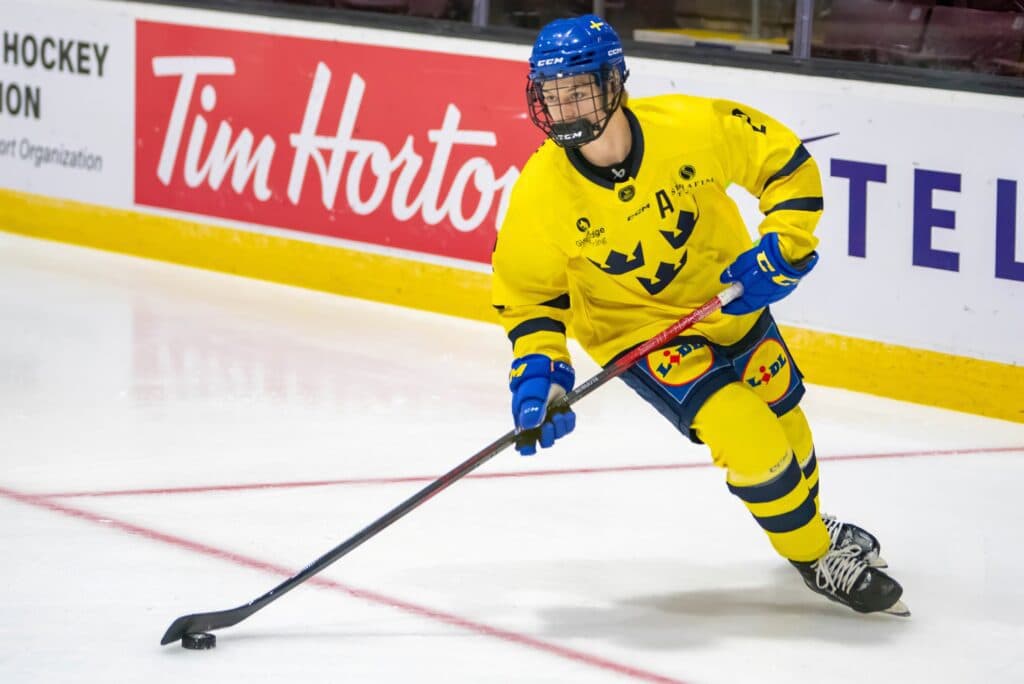
Elofsson has intrigued me for a few years now. He’s truly one of the most fascinating puck-movers in this draft class – he reminds me of Lane Hutson, but without the elite-level skating and hockey sense. But with the puck, Elofsson is outstanding. The numbers have been incredible in both domestic and international competition. When he’s at his best, he can lead the power play and create quality chances through traffic. He’s very elusive with the puck overall. Defensively, though, he needs work, and he’s undersized at 5-foot-11. Still, I’d take a chance on him because the upside is high.
51. Charlie Morrison, LHD (Quebec Ramparts, QMJHL)
There isn’t much to Morrison’s offensive game worth getting excited about. Instead, he has built a profile based on being the toughest dude around. He’s a strong skater who isn’t afraid of anything. He played big minutes right away with Quebec as a rookie, showing solid reliability in his own zone. He won’t wow anyone with his puck skills, but he consistently makes himself difficult to play against while keeping his game simple overall. I wouldn’t be surprised to see him go as high as early in the second round.
52. Lars Steiner, RW (Rouyn-Noranda Huskies, QMJHL)
Steiner was once seen as a potential first-round pick. I could see him going higher than 52nd, but I’m not sure scouts love him as much as they used to. He was excellent on the power play at the World Juniors, but scouts wanted to see him do a bit more at 5-on-5. A shoulder injury prior to the WJC really seemed to slow him down – he’s taking a ton of shots still but missing a bit of the velocity that made him so lethal. Offensively, Steiner has proven he’s capable of causing damage, and he has the team’s love. He’s on the smaller side, and I’m not sure he’ll be enough of a game-breaker to overcome that. But I appreciate that Steiner typically plays with a boatload of energy. Interestingly enough, Steiner signed a multi-year deal to play with HC Davos starting next season, meaning he’ll go up against men (potentially in a second-line role) instead of continuing against junior players.
53. Brooks Rogowski, C (Oshawa Generals, OHL)
I’ve really liked my viewings of Rogowski, one of the best “big dudes” in the draft this year. At 6-foot-7, he’s obviously got size. But I also appreciated how well he hustled at both ends, chasing pucks and breaking up plays. He’s a smart forward who uses his big frame to win battles, but he also has a good shot and isn’t afraid to launch it from anywhere in an attempt to surprise the goaltender. Rogowski won’t be a big-time offensive threat, but as a supporting player, he has a ton of tools to make himself useful.
54. Ryder Cali, C (North Bay Battalion, OHL)
I liked Cali in Jr. A last year – putting up more than 50 points as a 16-year-old in the OJHL is no small feat, even if the competition has diminished over time. But I was hoping to see more from him offensively in North Bay this year. Cali is built like a tank, though, and he puts a ton of power into every shift, with and without the puck. I can see him becoming a solid bottom-six forward if he can improve his playmaking. I considered ranking him lower, but I know some scouts really like him as a long-term project. With an NHL frame and solid hockey sense, there’s something here.
55. Gleb Pugachyov, RW (Chaika Nizhny Novgorod, MHL)
Pugachyov turned some heads with his play with the Russian U-17 team last year, and then impressed scouts with some early season KHL action this year. If you’re looking for flash, you won’t find it here. But Pugachyov is a big, 6-foot-3 forward who played well against men even in limited action. He can physically dominate his own age group, and he has done so this year without getting himself into too much trouble. Pugachyov plays a solid two-way game and won’t stop moving, even if he doesn’t have high-end top speed yet. I think he’ll go higher than this, but I don’t think his offensive game will translate to the NHL outside of a third-line role. Still, scouts really like him, and I think there’s a lot of runway here.
56. Chase Harrington, LW (Spokane Chiefs, WHL)
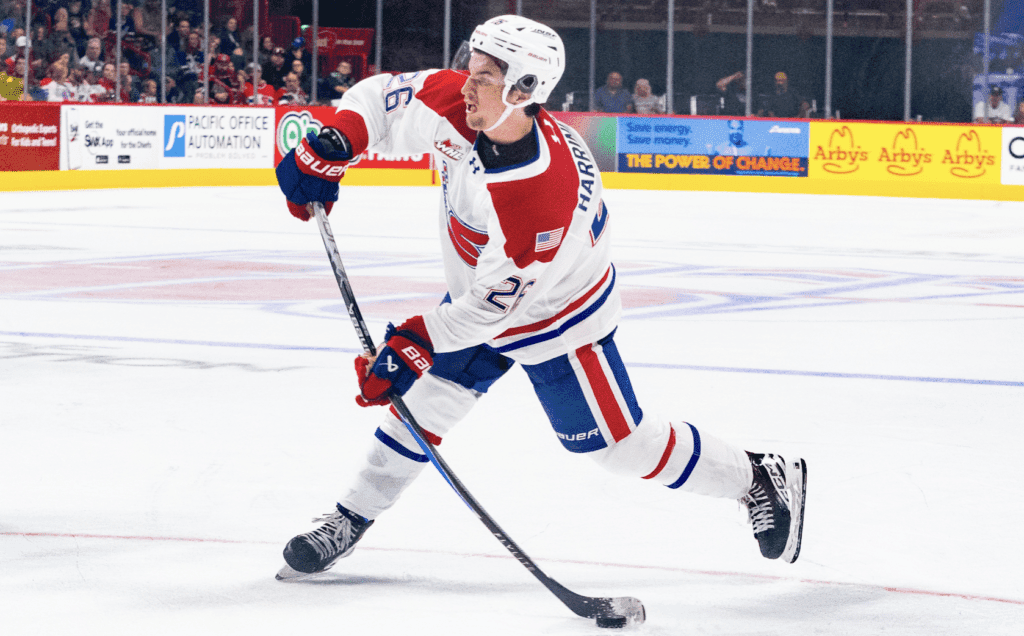
Harrington has been a bubble prospect for me for a while, but I do appreciate his game. He’s built like a rocket launcher – he wants to send you flying any time he can. Harrington is no slouch offensively, either, putting up 56 points in 61 games on a Spokane team that often struggled to generate consistent scoring chances. He’s very dangerous around the net, and he’s flashy, too. I think there’s a clear path forward for him as an energy forward in the NHL who could step up into a bigger role if needed.
57. Timofei Runtso, LHD (Victoria Royals, WHL)
Runtso was passed over in 2025, but that won’t happen again in June. Runtso wasn’t on anyone’s radar a year ago while playing with the NAHL’s St. Cloud Norsemen. He played around 15-17 minutes a night early on in the season but is now playing north of 20 routinely. Runtso recently had a strong showing at the WHL Prospects Game, which definitely helped his stock. The Royals defender has actually been one of the bigger risers in recent months, to the point where a second-round selection is looking much more likely. Runtso’s offensive game continues to improve, and I think it’s because he’s shown a greater willingness to be aggressive on the attack. He’s fearless, and you notice him (positively) nearly every time he hits the ice.
58. Brady Knowling, G (USNTDP)
Knowling had a good season with the USNTDP this year, and even made his World Junior debut. The Boston University goaltender has a big 6-foot-5 frame, but he’s quick for his size, too. The Toronto-born goaltender is the No. 1-ranked North American goaltender according to NHL Central Scouting, with scouts noting that he commands the crease without giving up too many costly rebounds. Not every scout is fully sold on him, especially with passive hands that often lag behind when he moves crease-to-crease. But stylistically, he has as close to a perfect stance as any goaltending coach would hope for, and the size doesn’t hurt, either.
59. Lavr Gashilov, C (Yekaterinburg, MHL)
Gashilov was the most productive draft-eligible prospect in the MHL by a country mile. The puck seems to be glued to him – and he’s an excellent playmaker, to boot. His speed is impressive, and he’s a solid 200-foot player. By all accounts, he has the base to become a true difference-maker – but he seems allergic to physical play, which is difficult to watch out of a 6-foot-2 forward. His shot needs work, too, but that can be fixed at the next level.
60. Matias Vanhanen, LW (Everett Silvertips, WHL)
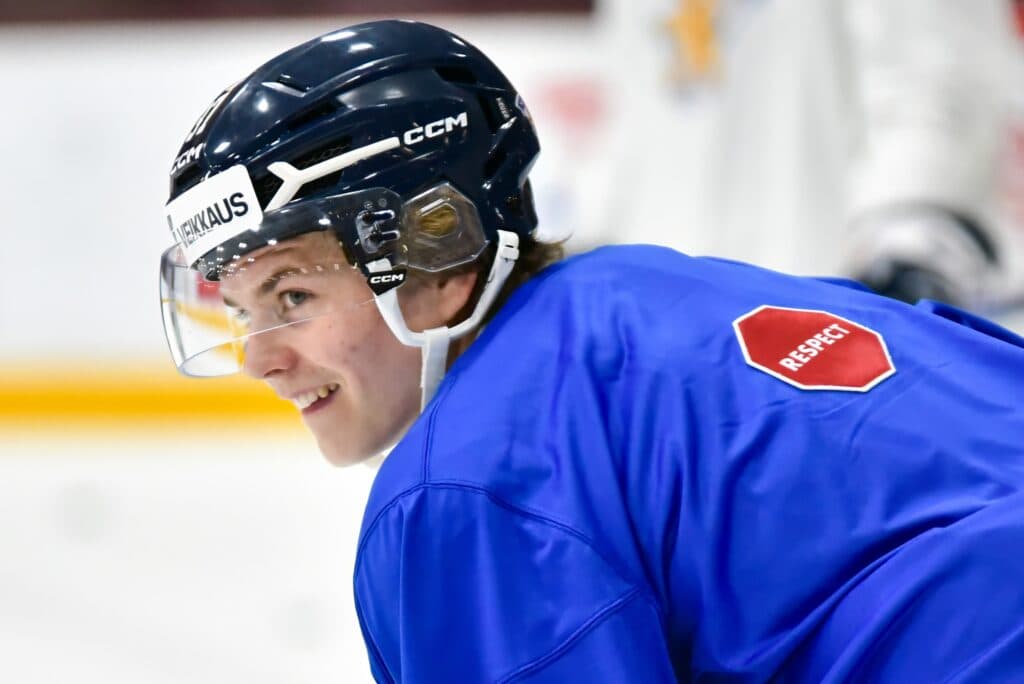
Vanhanen found instant chemistry with fellow Finn Julius Miettinen, and the pair couldn’t stop producing. Vanhanen was one of the WHL’s premier setup guys, showing excellent heads-up hockey sense every time he hit the ice. If it wasn’t for him, Everett’s offense would be significantly less lethal – Vanhanen seemed to be the primary play-producer. There’s no question he’ll get drafted in his second year of eligibility, but scouts aren’t completely sure what type of player he’ll be at the next level. He lacks any sort of physical play, and he’s not all too quick, either. But, man, his puck play is truly remarkable.
61. Vladimír Dravecký, RHD (Brantford Bulldogs, OHL)
There have been some viewings where Dravecký has gotten lost in Brantford’s pure depth. Other times, he’s been my favorite defender. He can be a bit hot-and-cold, but I think there’s tons of upside here. He seems to play better the more he skates, and he defends the rush well. There isn’t anything spectacular about Dravecký’s game, but he’s stable at both ends and doesn’t take many unnecessary risks. I think Dravecký will be a safe pick, but one who probably tops out as a third-pair, defensively responsible option.
62. Jakub Vaněček, LHD (Tri-City Americans, WHL)
Vaněček has hovered around this mark for most of the season for me. I like how he’s always moving thanks to a non-stop motor and good overall footwork. He beats opponents by taking their space away and forcing them to the perimeter. Vaněček isn’t too shabby with the puck, although his decision-making needs a bit of work. I like his two-way game and I think he’ll force his way into a bottom-pairing situation one day.
63. Luke Schairer, RHD (USNTDP)
I’m still not 100 percent sure how I feel bout Schairer. He has the ideal size for a defender at 6-foot-3 and nearly 200 pounds. He does a good job of breaking up plays and keeping the puck away from the net. But that’s really all he seems to do – the two-way game just simply isn’t there right now. I just want to see his game evolve in a way that makes him more dynamic and dangerous. I think he’ll be an NHLer, especially since he’s a good skater. But he just doesn’t wow me like I was hoping he would after watching him excel with the U-17 team.
64. Adam Nemec, LW (Sudbury Wolves, OHL)
I’m still not sure what to think about Nemec. On one hand, he’s a solid two-way forward who started to find his game in the latter stages of the season. Sudbury was swept in four games during the playoffs, but Nemec was easily the team’s top player. On the other hand, I’m not sure what type of player he’ll be in the NHL. He could be used in defensive roles, and he has some obvious hockey sense. I’m not sure he’s great at anything, though, and that could hold him back. Still, I think he should be at least a third-round pick.
65. Thomas Vandenberg, C (Ottawa 67s, OHL)
Vandenberg is one of the youngest players in the draft, having been born about a week before the Sept. 15 cutoff date. But scouts really like the undersized center because he thinks the game at such a high level. He’s not a god skater and he struggles physically, but he makes up for it with quick, heads-up breakout passes and stout defensive play. I love how many individual stick battles he tends to win. Fortunately, skating is one of the easiest fundamentals to fix, and if he can add a bit more speed, he could reasonably become a decent fourth-liner in the NHL.
66. Mikey Berchild, LW (USNTDP)
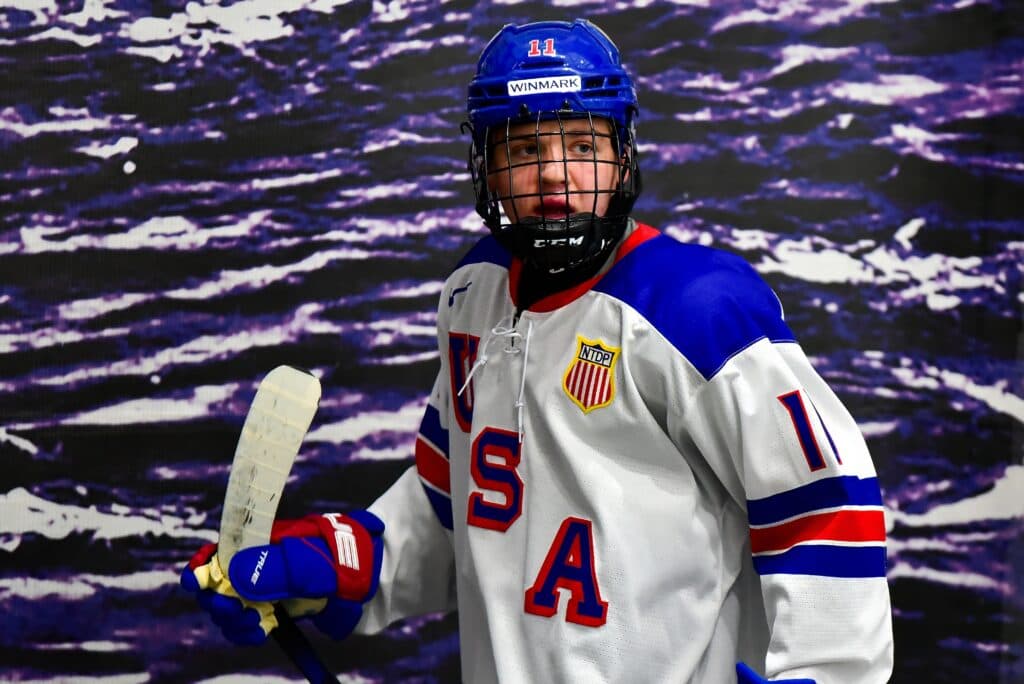
Berchild is small but mighty, especially when it comes to his shot. The University of Denver commit is skilled, battles hard along the boards and wins most individual battles. But at 5-foot-9, it’ll be hard to get himself higher on draft boards. If he can spend the next few years bulking up, he might be able to outplay the size concerns. I want to see him keep getting pucks on net because when he’s on his game, he can be so lethal. Game-to-game consistency and play reads remain an issue here. I think teams will like him if he’s their third or fourth pick in the draft, though.
67. Landon Nycz, LHD (UMass, NCAA)
When watching Nycz, his mobility is the first thing that stands out. The former Waterloo Black Hawks prospect isn’t going to wow you with his offense – three points in 34 games won’t excite you all too much. His ice time has fluctuated quite a bit this year – he frequently played fewer than 10 minutes a night but also skated in as high as 19-20 on multiple occasions. Defensively, he’s solid, but it felt like he was often sheltered from tougher opponents. In flashes, Nycz has the athletic ability to be a difference-maker. I do wonder if he should have spent another year in the USHL before making the move to college. But I still think the basis is there for him to be a decent prospect down the line.
68. Beckham Edwards, C (Sarnia Sting, OHL)
I was hoping to see a bit more offense from him – he matched his 45-point regular season from his rookie campaign. He was known as a highly touted goal scorer during his minor hockey career, but it didn’t come as easily this year as Sarnia struggled as a whole. I like how physically strong he is, and he’s good as a support player. I just wish he found another level to his game, and maybe the U-18s can help prove he can be a good two-way support center.
69. Tomáš Galvas, LHD (Bílí Tygři Liberec, Czechia)
Galvas was an absolute force at the World Juniors, having perhaps the strongest showing of any draft-eligible prospect. The 19-year-old finished with nine points in seven games en route to a silver medal – his third piece of hardware in three years. Beyond that, Galvas looked great playing against men in the top Czech pro league, too. Galvas is as good a skater as you’ll find at this tournament, using his quick footwork to pivot on a dime. He also makes quick, accurate backhand passes that seem to throw off opponents quite frequently. He’s been passed over twice before (he’s small at 5-foot-10), so it’ll be interesting if teams deem his talent too good to ignore at this point.
70. Egor Barabanov, LW (Saginaw Spirit, OHL)
One of the more notable re-entry prospects, Barabanov was an absolute delight to watch in Saginaw this year. Barabanov plays with a boatload of skill. He has quick hands and is always scanning for passing lanes, but he knows when he needs to shoot the puck himself, too. Barabanov does a solid job of exploiting open space, and he’s getting better defensively, too. He has always had talent, but the results are finally starting to follow – and it’s hard not to adore the nastiness in his game, either.
71. Braidy Wassilyn, RW (London Knights, OHL)
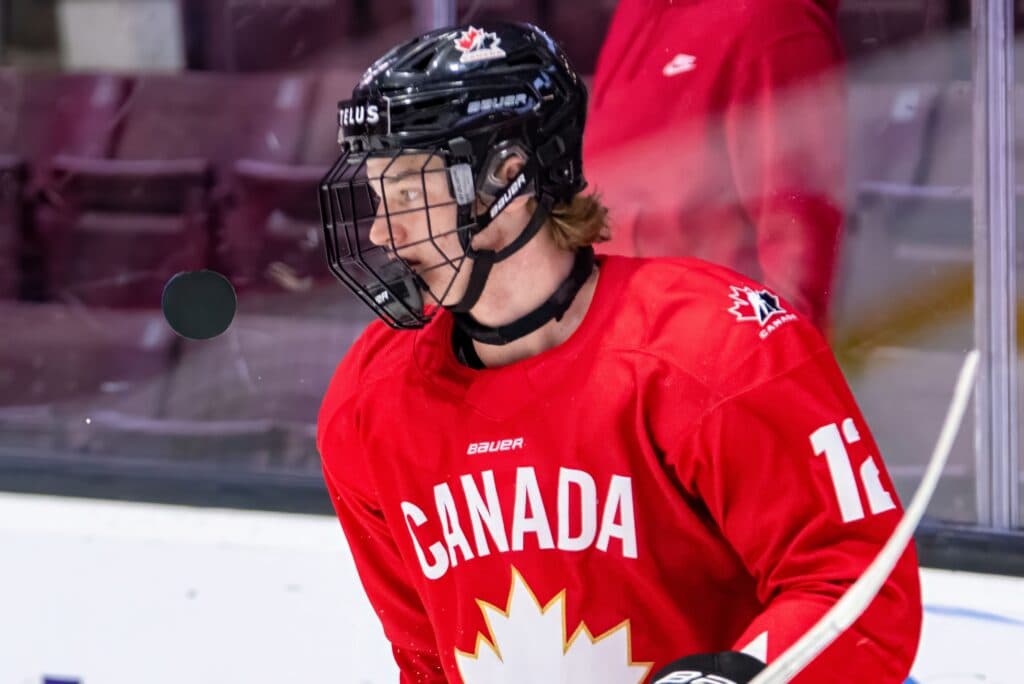
From a pure skill perspective, the London Knights forward is one of the most fascinating players in the OHL. Wassilyn is a gifted offensive threat, with his puck control being among the best in his age group. He might not be huge, but he’s tenacious, showing a willingness to take on just about anyone. Wassilyn loves to drive to the net, and while his all-around game can be a bit iffy, he’s best when the pressure is on and you need to generate something, anything, late in a game. Consistency is still an issue, though.
72. Landon Amrhein, RW (Calgary Hitmen, WHL)
Amrhein’s numbers won’t bring you out of your seat. But as a complete package, Amrhein has so much going for him. He’s an excellent playmaker, but he’s even better as an off-puck supporting winger. At 6-foot-4, Amrhein takes a lot of physical punishment to make sure his linemates get the puck. He also has flashes of offensive skill that allowed him to push himself up Calgary’s lineup all season long. I could see myself putting him even higher in my final rankings if he continues to thrive during the WHL playoffs.
73. Ethan MacKenzie, LHD (Edmonton Oil Kings, WHL)
MacKenzie was a surprise addition to Canada’s World Junior team, and he didn’t disappoint. It was a solid enough stretch that helped ensure he would be selected this year after being passed over twice. MacKenzie’s ability to win individual battles and shut guys down makes him intriguing. His maturity and hockey sense have really blossomed over time, and he can kill plays and play a lot of minutes if needed (as proven with the Oil Kings).
74. Colin Fitzgerald, C (Soo Greyhounds, OHL)
Fitzgerald was one of my favorite U-16 players two years ago, and I was hoping to see him explode offensively in the OHL. That never happened, but there are still plenty of translatable skills here. Fitzgerald plays a typical power forward game for a guy standing at 6-foot-2 and 207 pounds. He hits frequently, and he hits HARD. He uses that power to generate offense, but he’s more of a support guy than a play-driver. While Fitzgerald’s skating is still a heavy work in progress, and he’s not as offensively inclined as even a few others around this area, his game is highly projectable in a bottom-line role. I think he’ll make it work.
75. Vertti Svensk, LHD (SaiPa, Liiga)
The internet absolutely likes Svensk more than NHL scouting departments do. And I get it, Svensk is way too inconsistent in his own zone, even against his own age group. But he’s so fascinating. For starters, SaiPa, has tried him on the wing at points. He’s excellent with the puck, so it’s worth a try. He fires a lot of chances on net and has been very successful against U-20 competition as a result. It feels like something interesting is going to happen every time he hits the ice. Svensk is a good skater, and he has gotten better at dealing with physical challenges as the season has worn on. Svensk needs to improve his hockey sense if he’s going to be more than just a boom-bust pick. But I absolutely love the raw talent and upside here.
2026 NHL Draft Prospect Rankings (April Edition)
| # | Name | Position | Team/League |
| 1 | Gavin McKenna | LW | Penn State University (NCAA) |
| 2 | Ivar Stenberg | LW | Frolunda (SHL) |
| 3 | Chase Reid | RHD | Soo Greyhounds (OHL) |
| 4 | Keaton Verhoeff | RHD | University of North Dakota (NCAA) |
| 5 | Carson Carels | LHD | Prince George Cougars (WHL) |
| 6 | Caleb Malhotra | C | Brantford Bulldogs (OHL) |
| 7 | Alberts Šmits | LHD | EHC München (DEL) |
| 8 | Daxon Rudolph | RHD | Prince Albert Raiders (WHL) |
| 9 | Viggo Björck | C | Djurgardens (SHL) |
| 10 | Ryan Lin | RHD | Vancouver Giants (WHL) |
| 11 | Tynan Lawrence | C | Boston University (NCAA) |
| 12 | Ethan Belchetz | LW | Windsor Spitfires (OHL) |
| 13 | Oscar Hemming | LW | Boston College (NCAA) |
| 14 | Liam Ruck | RW | Medicine Hat Tigers (WHL) |
| 15 | Adam Novotný | LW | Peterborough Petes (OHL) |
| 16 | Xavier Villeneuve | LHD | Blainville-Boisbriand Armada (QMJHL) |
| 17 | Oliver Suvanto | C | Tappara (Finland U-20) |
| 18 | Markus Ruck | C | Medicine Hat Tigers (WHL) |
| 19 | Nikita Klepov | RW | Saginaw Spirit (OHL) |
| 20 | Elton Hermansson | RW | Modo (Sweden U-20) |
| 21 | J.P. Hurlbert | LW | Kamloops Blazers (WHL) |
| 22 | Malte Gustafsson | LHD | HV71 (Sweden U-20) |
| 23 | Juho Piiparinen | RHD | Tappara (Liiga) |
| 24 | Wyatt Cullen | LW | USNTDP |
| 25 | William Håkansson | LHD | Lulea (SHL) |
| 26 | Alexander Command | C | Orebro (Sweden U-20) |
| 27 | Mathis Preston | RW | Vancouver Giants (WHL) |
| 28 | Ilia Morozov | C | Miami University (NCAA) |
| 29 | Marcus Nordmark | LW | Djurgarden (Sweden U-20) |
| 30 | Egor Shilov | C | Victoriaville Tigres (QMJHL) |
| 31 | Maddox Dagenais | C | Quebec Remparts (QMJHL) |
| 32 | Tomas Chrenko | C | HK Nitra (Slovakia) |
| 33 | Ryan Roobroeck | LW | Niagara IceDogs (OHL) |
| 34 | Tobias Trejbal | G | Youngstown Phantoms (USHL) |
| 35 | Victor Plante | LW | USNTDP |
| 36 | Adam Gojler | RHD | Trencin (Slovakia) |
| 37 | Nikita Shcherbakov | LHD | Toros Neftekamsk (VHL) |
| 38 | Niklas Aaram-Olsen | LW | Orebro (Sweden U-20) |
| 39 | Jack Hextall | C | Youngstown Phantoms (USHL) |
| 40 | Simas Ignatavicius | RW | Geneve-Servette (NL) |
| 41 | Adam Valentini | C | University of Michigan (NCAA) |
| 42 | Giorgos Pantelas | RHD | Brandon Wheat Kings (WHL) |
| 43 | Alessandro Di Iorio | C | Sarnia Sting (OHL) |
| 44 | Casey Mutryn | C | USNTDP |
| 45 | Pierce Mbuyi | LW | Owen Sound Attack (OHL) |
| 46 | Tommy Bleyl | RHD | Moncton Wildcats (QMJHL) |
| 47 | Oscar Holmertz | C | Linköping HC (Sweden U-20) |
| 48 | Jaxon Cover | RW | London Knights (OHL) |
| 49 | Ben Macbeath | LHD | Calgary Hitmen (WHL) |
| 50 | Axel Elofsson | RHD | Orebro (Sweden U-20) |
| 51 | Charlie Morrison | LHD | Quebec Ramparts (QMJHL) |
| 52 | Lars Steiner | RW | Rouyn-Noranda Huskies (QMJHL) |
| 53 | Brooks Rogowski | C | Oshawa Generals (OHL) |
| 54 | Ryder Cali | C | North Bay Battalion (OHL) |
| 55 | Gleb Pugachyov | RW | Chaika Nizhny Novgorod (MHL) |
| 56 | Chase Harrington | LW | Spokane Chiefs (WHL) |
| 57 | Timofei Runtso | LHD | Victoria Royals (WHL) |
| 58 | Brady Knowling | G | USNTDP |
| 59 | Lavr Gashilov | C | Yekaterinburg (MHL) |
| 60 | Matias Vanhanen | LW | Everett Silvertips (WHL) |
| 61 | Vladimír Dravecký | RHD | Brantford Bulldogs (OHL) |
| 62 | Jakub Vaněček | LHD | Tri-City Americans (WHL) |
| 63 | Luke Schairer | RHD | USNTDP |
| 64 | Adam Nemec | LW | Sudbury Wolves (OHL) |
| 65 | Thomas Vandenberg | C | Ottawa 67s (OHL) |
| 66 | Mikey Berchild | LW | USNTDP |
| 67 | Landon Nycz | LHD | UMass (NCAA) |
| 68 | Beckham Edwards | C | Sarnia Sting (OHL) |
| 69 | Tomáš Galvas | LHD | Bílí Tygři Liberec (Czechia) |
| 70 | Egor Barabanov | LW | Saginaw Spirit (OHL) |
| 71 | Braidy Wassilyn | RW | London Knights (OHL) |
| 72 | Landon Amrhein | RW | Calgary Hitmen (WHL) |
| 73 | Ethan MacKenzie | LHD | Edmonton Oil Kings (WHL) |
| 74 | Colin Fitzgerald | C | Soo Greyhounds (OHL) |
| 75 | Vertti Svensk | LHD | SaiPa (Liiga) |
POST SPONSORED BY bet365
_____
Recent Articles by Steven Ellis
- Five NHL goaltending prospects who dominated the AHL in 2025-26
- Who is Kade O’Rourke, the 2029 NHL Draft prospect headed for exceptional status?
- Why Michael Hage will be a difference-maker for the Canadiens
- Top 10 NHL prospects to watch at the 2026 NCAA men’s Frozen Four
- April Calder Trophy Update: Nobody can catch Schaefer… right?