Eight trade destinations to watch for Canucks’ Elias Pettersson

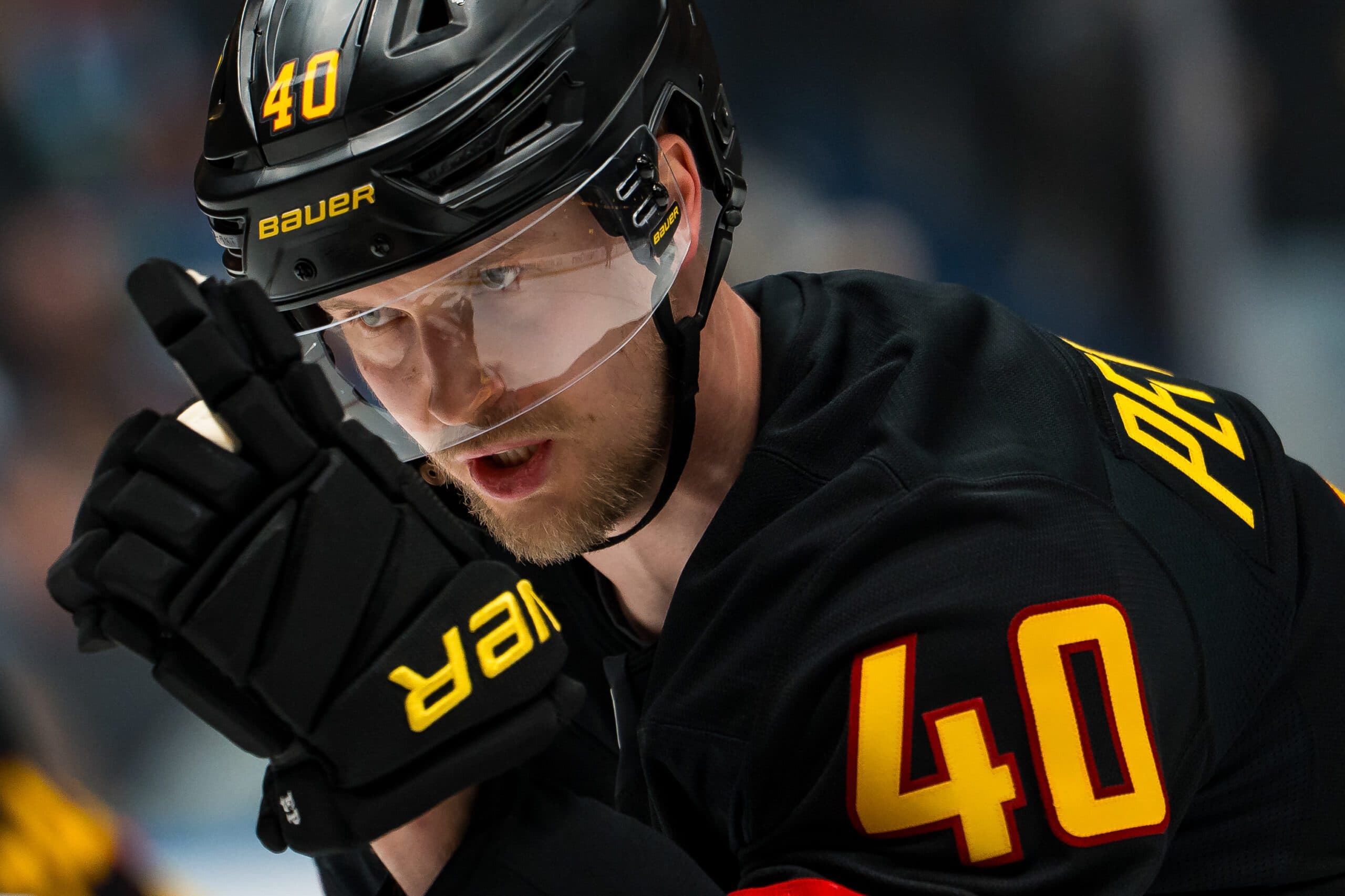
Does any player have a wider range of outcomes over the next decade than Elias Pettersson?
He’s worn so many different faces across his eight NHL seasons to date as a Vancouver Canuck. He’s been the Calder Trophy winner and rising face of a franchise; the all-situations dominator who topped 100 points and finished seventh in the Selke Trophy vote in the same season; the underachiever who attributed a career downturn to a nagging knee injury; the enigmatic, indifferent dressing-room personality that clashed so badly with J.T. Miller’s blowhard vibe that one of them had to go. This season, Pettersson is the talented but disappointing and fading star, clinging to a sinking ship that already hurled captain Quinn Hughes overboard.
Pettersson hasn’t been a star-level player for a couple years now. He doesn’t come close to justifying his $11.6-million cap hit. Yet he’s also just 27 and remains blessed with a unique array of skills, from a laser of a shot in the 91st percentile to strong two-way sensibilities. It sure feels like whichever team takes a chance on him will stumble into a resurgent star. League-wide interest has bubbled to a boil, too, with insider Frank Seravalli recently suggesting a trade could be imminent, possibly even executed before next week’s Olympic trade freeze.
Still, as is the case with Artemi Panarin, any deal involving a cap hit as huge as Pettersson’s will be complicated to execute, particularly with the playoff salary cap and the elimination of double salary retention to contend with. Pettersson also has six years remaining on his contract – and he’s already slowing down physically, ranking below the 50th percentile in top skating speed this season. So which teams make realistic sense as suitors with all those factors in play? Consider these eight, with contract data courtesy of our friends at PuckPedia.
Buffalo Sabres
Why he makes sense: The Sabres have waited 15 years to make the playoffs. They finally have a truly competitive and deep team. They have an aggressive GM on board in Jarmo Kekalainen, who has a history of taking bold swings to get what he wants, having once dealt Ryan Johansen for Seth Jones mid-season. The Sabres have long exceeded a critical mass of young talent in the system, which means (a) they have plenty to spare, whether it would mean including a Konsta Helenius or Jiri Kulich or someone else along with a first-round pick in a trade package; and (b) they’re ready to augment their core with veteran talent. Since they don’t yet hold a locked-in playoff position, they’re better off chasing players with term rather than rentals. Pettersson would add another high-ceiling player to their top six, and his two-way game would be quite valuable to a Buffalo team that still surrenders too many scoring chances.
Fly in the ointment: The Sabres don’t actually have a ton of cap space. Top four blueliners Rasmus Dahlin, Owen Power, Bowen Byram and Mattias Samuelsson alone chew up more than $30 million. Up front, Tage Thompson is a bargain at $7.14 million, but Josh Doan’s extension kicks in at $6.9 million next season, while the Sabres are still trying to figure out an extension with pending UFA Alex Tuch. With the Canucks unlikely to retain for six years on Pettersson – The San Jose Sharks and Tomas Hertl are the exception, not the norm – Buffalo would need to move significant money Vancouver’s way. British Columbia native Byram and his $6.25-million AAV would be a logical ask.
Carolina Hurricanes
Why he makes sense: General manager Eric Tulsky has established himself as a cowboy-tier GM, having traded for and traded away Mikko Rantanen in a six-week span last season and acquiring K’Andre Miller in the offseason. Tulsky’s Hurricanes maintain their typical identity: dominant play-driving, a little short on high-end scoring, questionable goaltending come playoff time. They have exactly one point-per-game player this season and a middling power play. They have a sneaky-decent group of prospects and young NHL-grade players; they could dangle some combination of a first-round pick and one of Bradly Nadeau, Jackson Blake or even Logan Stankoven in a package for ‘Petey.’ The Hurricanes also have oodles of cap space, north of $19 million at the moment, and could fit Pettersson into their payroll without much trouble. He straight-up fills a clear need on the team, too: No. 2 center behind Sebastian Aho.
Fly in the ointment: The Canes have so much cap space because they’re careful with their contracts. They don’t have a single player making even $10 million – and never have in their history, cheat code Jeremy Welsh cap hit from 2011-12 excepted. Would it be reckless to spend so much on a single player when he’s not 100 percent guaranteed to be an elite scorer ever again? And while Pettersson can score goals, he’s not a true sniper. His career high is 39 goals. The Canes might be better off pursuing more of a gunner.
Chicago Blackhawks
Why he makes sense: A couple years ago, not long before Pettersson signed his eight-year extension with the Canucks, a source close to his camp hinted to me that the Blackhawks were a franchise that interested Pettersson if things didn’t work out in Vancouver. He’d be hitching his wagon to an ascending franchise and speeding up that ascension. Assessing his fit in Chicago today: because of his 200-foot-game, Pettersson would be an ideal center to handle the tougher matchups and take pressure off Connor Bedard and Frank Nazar. The Blackhawks have more cap space than any other franchise in the NHL and will be fine next year, too, even once we factor in the upcoming extension for Bedard, a 2026 RFA. Chicago also has more prospect capital than it knows what to do with – to the point it’s one of the few teams that could build a compelling offer for Pettersson without dipping into its established NHL talent. When you have Bedard, Nazar, Artyom Levshunov and Sam Rinzel, with Anton Frondell on the way, you can afford to surrender a Sacha Boisvert or Oliver Moore or Marek Vanacker. Same goes for future first-round picks.
Fly in the ointment: We can’t forget about Pettersson’s full NMC. Yes, I was told he had interest in Chicago a couple years ago, but the Hawks still haven’t broken through as a playoff team since then, Pettersson is 27 now, and he may prefer to join a team further along in its Stanley Cup chase. He’d help Chicago get good faster but could still have to wait years before a realistic chance at a championship. Compare that scenario to landing in Carolina, which would give him an immediate shot at a deep playoff run.
Detroit Red Wings
Why he makes sense: For many of the same reasons I named them as a Panarin destination. Except Pettersson might be an even better fit. The Red Wings have the cap space, the prospect and draft capital and, finally looking like they’ll halt their playoff drought after nine seasons, the urgency. A second-line center behind Dylan Larkin is a clear team need. As a bonus, Detroit has a lot of Swedish talent on its roster, from Lucas Raymond to Simon Edvinsson to Axel Sandin-Pellikka to Albert Johansson, which could make the dressing room transition friendly for Pettersson.
Fly in the ointment: General manager Steve Yzerman’s tenure as Wings GM has been characterized by conservativeness a lot of the time – at least when it comes to pursuing top-tier players, unless we put Alex DeBrincat in that bucket. Is Yzerman willing to let go of a high-end prospect such as Trey Augustine or Nate Danielson or both in a deal for Pettersson? Also, while Pettersson would fill a need, the Wings arguably require a top-four defenseman even more than a center and might want to direct their resources accordingly. They sure could use someone like Filip Hronek right now, eh? Oops. Do-over trade? Could they try to land him and Pettersson in the same move? I’m just spitballin’.
Los Angeles Kings
Why he makes sense: The Kings already traded Phillip Danault in December, Anze Kopitar will retire at season’s end, and they’re looking incredibly shallow at center beyond Quinton Byfield in the long term. They currently have wingers Alex Laferriere and Joel Armia playing center with Kopitar and Alex Turcotte injured. That’s how bad it is. The Kings have an urgent need for a player of Pettersson’s ilk who could take over Kopitar’s role as a trusted all-situations horse. As a relatively laidback market with plenty of other pro sports teams attracting attention, L.A. might appeal to Pettersson’s aloof persona. Also worth noting: Pettersson is a client of Pat Brisson and J.P. Barry as part of CAA, an L.A.-based agency.
Fly in the ointment: While the divisional-trade conundrum is quite an overrated roadblock in my opinion, it’s still a consideration. I’m sure the Canucks would rather trade Pettersson out of their division if they’re breaking a tie between offers. The Kings have also graduated most of their best prospects. Daily Faceoff prospect analyst Steven Ellis ranks their pool 27th in the NHL. They do have a high-end piece they could dangle in Liam Greentree, but doing so would empty an already barren cupboard.
Minnesota Wild
Why he makes sense: We know Wild GM Bill Guerin and Canucks GM Jim Rutherford Patrik Allvin are capable of executing a blockbuster together, having done so with Quinn Hughes in December. After including Marco Rossi as part of Vancouver’s return in the deal, the Wild clearly need a top-end center, and it’s no secret they’re chasing one. Pettersson would fit their need nicely from a pure hockey standpoint.
Fly in the ointment: The Canucks already picked through the Wild’s prospect pool and plucked two of their best prospects in Zeev Buium and Liam Ohgren plus their 2026 first-round pick. Vancouver might prefer to harvest from a different farm this time; the Wild may or may not be willing to move goaltender Jesper Wallstedt, but the Canucks have Thatcher Demko and Kevin Lankinen locked up long term, so Wallstedt wouldn’t make sense as a target unless Vancouver sent a goalie to Minnesota. From an intangibles standpoint: the Canucks dressing room was pretty much a mess, so are we sure any team would want to reunite two of the leaders from a losing culture? It’s not like it’s Pettersson and Miller, but I wonder. I only have the Wild on this list because we know they need a scoring center.
Philadelphia Flyers
Why he makes sense: Trevor Zegras has been a revelation and was a fantastic buy low for Flyers GM Danny Briere. But franchise center? No. Zegras isn’t even playing center right now and at his best is more of a No. 2 center. The Flyers have been rebuilding for a couple years now yet somehow don’t have a can’t-miss future star pivot in the pipeline, with Jett Luchanko looking like he’ll top out as a middle-six type. A 1-2 punch of Zegras and Pettersson would give the Flyers two productive centers smack in their primes. Pettersson’s best seasons came with Rick Tocchet as his head coach, so perhaps a reunion in Philly could correct Pettersson’s trajectory. He might also unlock Matvei Michkov’s potential.
Fly in the ointment: For a rebuilding team, the Flyers’ pipeline isn’t quite elite. Putting together a strong enough offer for Pettersson might require Luchanko and another piece such as Oliver Bonk if the Flyers (presumably) would refuse to move Porter Martone in any scenario. It’s one thing to be a Detroit or Buffalo tossing around prospects like Halloween candy after so many seasons out of the playoffs, but the proposition of depleting the pool is riskier for a Philly team that hasn’t been that bad for that long.
San Jose Sharks
Why he makes sense: The Sharks kicked down the buyer door when they acquired Kiefer Sherwood earlier this month. With Macklin Celebrini’s MVP-grade play accelerating the franchise’s rebuild timeline, it seems like GM Mike Grier is ready to big-game hunt. The Sharks have already been linked to Artemi Panarin; if they’re in on him, why not chase Pettersson, who is seven years younger and could be a key contributor to San Jose’s core for years to come? The Sharks have plenty of picks and prospects they could package in a Pettersson offer. No problems there.
Fly in the ointment: The Sharks are building around Celebrini and Michael Misa as long-term pillars at center. They need a winger more than they need a center, which explains the Panarin pursuit. In the short term, they don’t quite have the cap space to fit Pettersson’s full AAV, so they’d have to send a meaningful NHL player Vancouver’s way to balance the ledger, and that’s always a delicate task to pull off for a rising team not wanting to upset its chemistry. Because Panarin is a pending UFA, the Rangers can eat 50 percent of his salary, so he’s a much easier piece to move logistically.
_____
POST SPONSORED by bet365
_____