Ranking every NHL team’s 2026 salary cap situation: #16-9

Heck yeah, everyone. NHL training camps are just around the corner. With very few transactions occurring these days, teams have most of their rosters locked down and a good idea of what their salary-cap situations will look like for the upcoming season.
That also means it’s time for the salary-cap rankings at Daily Faceoff, in which we look at all the different aspects of managing and excelling in the salary-cap era and rank teams based on how well they do. It’s all accomplished through a somewhat complex process and system, which I have outlined in a summary for your convenience.
We’ve already ranked teams from 17th to 24th and 25th to 32nd, but now we move on to the third part of the list, which features more teams in flux. Some are previously elite teams making their first mistakes, some are younger teams poised for Stanley Cup contention, and some are teams with unclear salary cap pictures as they try to sign key restricted free agents.
All contract information comes courtesy of our partners at PuckPedia.
Also, as teams return from summer breaks and make moves, we’ve finally seen some changes to previous rankings, although none to the point of teams jumping between articles. The Edmonton Oilers and Vancouver Canucks have swapped spots in the first part of the ranking, the only change in that article. In the second article, the Vegas Golden Knights and Minnesota Wild have swapped spots; the Nashville Predators dropped from 22nd to 24th and the St. Louis Blues from 19th to 23rd, while the Toronto Maple Leafs rose from 24th to 22nd, the Los Angeles Kings from 23rd to 21st, the Utah Mammoth from 21st to 20th and the Montreal Canadiens from 20th to 19th.
16. Florida Panthers
Last Year: 6th
Contract Rating: 5th
Contracts with No-Trade/No-Move Clauses: t-23rd
Dead Cap Space: 11th
Quality of Contractual Core: 9th
Cap Space to Team Quality Differential: t-21st
When talking about the Golden Knights last week, I alluded to a stretch of teams once considered the best of the best at managing the salary cap who are now taking a step back. The Panthers are the second of those three teams, and they were the model of consistency for cap management in the league, ranking first and second once each and never falling below sixth.
But like all elite teams, the window shuts eventually, and for the Panthers, it shouldn’t be a big surprise considering how much they’ve invested in a core group of players. To be fair, it’s a good core, and it’s impressive that it ranks in the top 10 despite Florida being the only team with more than 10 players signed for four or more years, as usually that leaves room for some unnecessary players in that group. But save for Sam Bennett and Aaron Ekblad, there aren’t any long-term contracts on the Panthers’ books my model views as bad just yet.

Cap Summary
Draft Picks
The only aspects my model views as an issue for the Panthers are the number of clauses they have signed to (which is a necessity of playing in a no-tax state and locking in players to cheaper contracts) and their cap space to team quality differential (which is only a -2; my model considers them the fifth-best team but they’re spending the third-most, so it’s inconsequential). Otherwise, their contract rating is great (even if they’re lacking in valuable contracts beyond Lars Eller’s and Sandis Vilmanis’), and the only dead cap space on the books is bonus overage. It’s far from a bad spot to be in, even if it is a step back from what we’re used to seeing from the Panthers.
15. New Jersey Devils
Last Year: 21st
Contract Rating: 11th
Contracts with No-Trade/No-Move Clauses: t-23rd
Dead Cap Space: 18th
Quality of Contractual Core: 7th
Cap Space to Team Quality Differential: t-10th
The Devils have moved on from Tom Fitzgerald as general manager, and in his place is the stats-savvy Sunny Mehta, best known for his work with the Panthers. He’s only been on the job for a few months now, but already we’re seeing him improve New Jersey’s cap situation. In fact, the two categories where they finished in the bottom half of the league aren’t even really on Mehta: all 12 contracts with clauses were Fitzgerald signings, and the $1.25 million in bonus overages came from Simon Nemec’s ELC and Evgenii Dadonov’s one-year contract.
Otherwise, Mehta has made significant strides in setting the Devils up to compete now and maintain that success for the long term. He moved on from Jacob Markstrom’s poorly aging contract (-34 rating), avoided spending a ton of money on Nemec (-114), and found great value on the market with players like Luke Evangelista (+208), Anthony Mantha (+86), Evan Rodrigues (+84) and David Rittich (+33), not to mention also signing Arseny Gritsyuk to a great deal as well (+180). Add that to an already strong core of Jack Hughes, Nico Hischier, Jesper Bratt, Luke Hughes, Brett Pesce, Johnathan Kovacevic and Jake Allen, and the Devils appear poised to consistently contend for Stanley Cups like we expected them to four years ago.
14. Anaheim Ducks
Last Year: 14th
Contract Rating: 15th
Contracts with No-Trade/No-Move Clauses: t-1st
Dead Cap Space: t-1st
Quality of Contractual Core: 20th
Cap Space to Team Quality Differential: 32nd
Don’t let the Ducks finishing in the top half fool you: their cap situation still isn’t one to completely envy. It’s largely driven by having zero dead cap space and the lack of clauses (only five). The latter doesn’t account for four more coming at some point with the contracts signed to Lukas Dostal, Jackson LaCombe, Jeff Malott and Pavel Mintyukov, with the former three coming in the next two years. With the three categories which involve the dollar and term amounts for their players, Anaheim is in the bottom half of the league, and they reared their ugly head this summer.
Pat Verbeek learned the hard way why he shouldn’t put the cart before the horse when committing financially to his team. Overpaying for players like Mikael Granlund, A.J. Greer, Alex Killorn, Ryan Poehling and Frank Vatrano seem fine when you enter the summer with close to $40 million in salary cap space. But bringing in all that money before locking up the Ducks’ young core left them vulnerable, and when Danny Briere struck with the Leo Carlsson offer sheet, it put them in a bind. Now they’re overpaying for Carlsson, Gauthier and Mintyukov compared to what the RFA market looked like even before the summer.
Anaheim was lucky Chris Kreider was willing to rip up his contract to go back East, otherwise they would have had a trickier time getting Gauthier’s deal done as well. This is just poor cap management all around, and Verbeek learned the hard way that playing hardball can sting when the throw comes back your way.
13. Buffalo Sabres
Last Year: 15th
Contract Rating: 8th
Contracts with No-Trade/No-Move Clauses: t-3rd
Dead Cap Space: 30th
Quality of Contractual Core: 21st
Cap Space to Team Quality Differential: t-7th
After 14 long years, the Sabres finally ended their playoff drought. With a young core of players, they appear set to contend for years to come, and thanks to their smart cap management over the years, that core is locked in for the long term. While not every player signed long term makes sense (like Peyton Krebs, Beck Malenstyn, and to a lesser extent, Josh Norris), they signed a good chunk of their best players for the long haul right before the market exploded, particularly the recent extensions to Zach Benson and Josh Doan.
Buffalo also excelled this summer by being diligent with who they signed to contracts. They could have overpaid for Alex Tuch to keep a top-six forward around, but they opted to move on from him, and will likely replace his minutes with a younger and much cheaper Konsta Helenius. Buffalo also could have signed Bowen Byram to his shocking new extension, but instead sold high on him, got a fourth-overall pick in return to draft his long-term replacement in Daxon Rudolph, and then acquired a slightly better and much cheaper defenseman in Olen Zellweger. It might mean the Sabres take a step back this season (my model has them as a Wild Card team instead of a division winner like last season), but it means they’ve avoided taking on too many bad contracts with term.
The Sabres’ only blemish is their dead cap space, which totals $6,444,444 for the 2026-27 season, entirely because of the buyout to Jeff Skinner. Fear not, Buffalo: after this season, that cap hit shaves off $4 million for the remaining three years, a much more reasonable hit. Otherwise, this team has plenty to look forward to for the next little while, and with the King Kong-sized monkey off their back, expect them to live up to it.
12. Colorado Avalanche
Last Year: 3rd
Contract Rating: 6th
Contracts with No-Trade/No-Move Clauses: t-26th
Dead Cap Space: 23rd
Quality of Contractual Core: 6th
Cap Space to Team Quality Differential: t-7th
The Avalanche are the third of the “former elites,” and much like the Panthers, it’s not because they got sloppy with their contracts. Gabriel Landeskog’s $7 million cap hit is a bit lofty for the player he is now (although it’s an understandable situation with his injury history) and Brett Kulak’s new contract is a bit dicey considering he’s signed until he’s 37, but otherwise the bad contracts on Colorado’s books are on the cheaper side, such as Noah Juulsen or Fedor Svechkov’s. Even then, the Avs more than make up for it by getting excellent value out of players like Brent Burns, Parker Kelly, Zachary L’Heureux, Artturi Lehkonen, Sam Malinski, Josh Manson, Logan O’Connor and Scott Wedgewood.
Where the Avalanche go wrong is in two categories which is just the nature of being an elite team operating so close to the salary cap. They have 13 players locked in with clauses, but most of them are to key parts of the lineup. It may leave them with little flexibility should they look to free up cap space, but save for Jaden Schwartz, you can’t fault the Avs for any of those players with clauses. The other “issue” is the $2,291,841 in bonus overage from Burns’ performance bonuses, footing the bill for this season in order to get him at $1 million last season. Considering how good Colorado was last year, they probably don’t regret that choice – and Burns is back for even cheaper (but also with $2.15 million in performance bonuses again). The Avs are letting some things slip through the cracks now, but they’re managing the cap just fine for where they’re at in their competitive window.
11. New York Rangers
Last Year: 22nd
Contract Rating: 18th
Contracts with No-Trade/No-Move Clauses: t-12th
Dead Cap Space: t-1st
Quality of Contractual Core: 5th
Cap Space to Team Quality Differential: 29th
The Rangers have finished all over the place in my cap rankings over the years. While the height of their previous window resulted in a couple Eastern Conference Final appearances, my model often disagreed with the team’s performance, largely because of their top players’ one-way play. Thankfully for them, of the three players remaining from that era in Adam Fox, Igor Shesterkin and Mika Zibanejad, the former two were players my model loved, often ranking in the top five at their respective positions (including this year).
The fact that New York has moved on from most of their previous core of paper tigers is why they look favorable this year. There are still some bad contracts on the books (Zibanejad’s, Juusso Parssinen’s, Braden Schneider’s, and Joonas Korpisalo’s deals are the biggest culprits), but otherwise all of their top forwards, defensemen and goaltender are signed to reasonable deals, and these are the only players who make up their core. The Rangers’ only blemish is that they’re not good enough to be spending close to the salary cap, but otherwise they’ve done a good job of not investing too much into this group as they find more pieces to properly transition back into a consistent contender.
10. Philadelphia Flyers
Last Year: 27th
Contract Rating: 19th
Contracts with No-Trade/No-Move Clauses: t-3rd
Dead Cap Space: 17th
Quality of Contractual Core: 22nd
Cap Space to Team Quality Differential: t-2nd
The Flyers are tied for the biggest rise from last year’s rankings, and a lot of it has to do with their young core. Having effective young players like Denver Barkey, Porter Martone and Matvei Michkov on entry-level contracts in addition to locking in impact players like Noah Cates, Tyson Foerster, Travis Sanheim and Owen Tippett creates a solid foundation to build around for the long term. With only six contracts with clauses on the books, Philadelphia also maintains flexibility to move off pieces if they need to move money around. For a young team still on the rise, this is exactly where they want to be cap wise.
The only issue for the Flyers is that the players they do have signed to bad contracts have significantly bad value, and a lot of them are long-term problems. While some of these deals are to younger players worth betting on (while also signed in the wake of the recent cap explosion) like Jamie Drysdale and Trevor Zegras, some were much more avoidable. The biggest culprit is Christian Dvorak, who after having the second-least valuable cap hit last year, signed slightly less for five more years during the season. It grades out as the 20th-worst contract rating among forwards now. That in addition to giving more than seven figures to replacement level players like Noel Acciari and Simon Benoit, along with Travis Konecny’s slip in play last season making his new contract look bad, has hindered what’s otherwise a good cap picture to build around for the long run.
9. Winnipeg Jets
Last Year: 23rd
Contract Rating: 23rd
Contracts with No-Trade/No-Move Clauses: t-12th
Dead Cap Space: t-1st
Quality of Contractual Core: 14th
Cap Space to Team Quality Differential: t-7th
While Kevin Cheveldayoff being the longest-tenured general manager in the sport will never not confuse me, I can’t say he’s put too many feet wrong as far as the Jets’ cap management right now. They’re in the clear for dead cap space right now, are more diligent with handing out clauses to their players, and are slightly saving money on their overall team. While Connor Hellebuyck’s trade request could alter this situation a bit, it’s not a bad spot for a team in the murky middle.
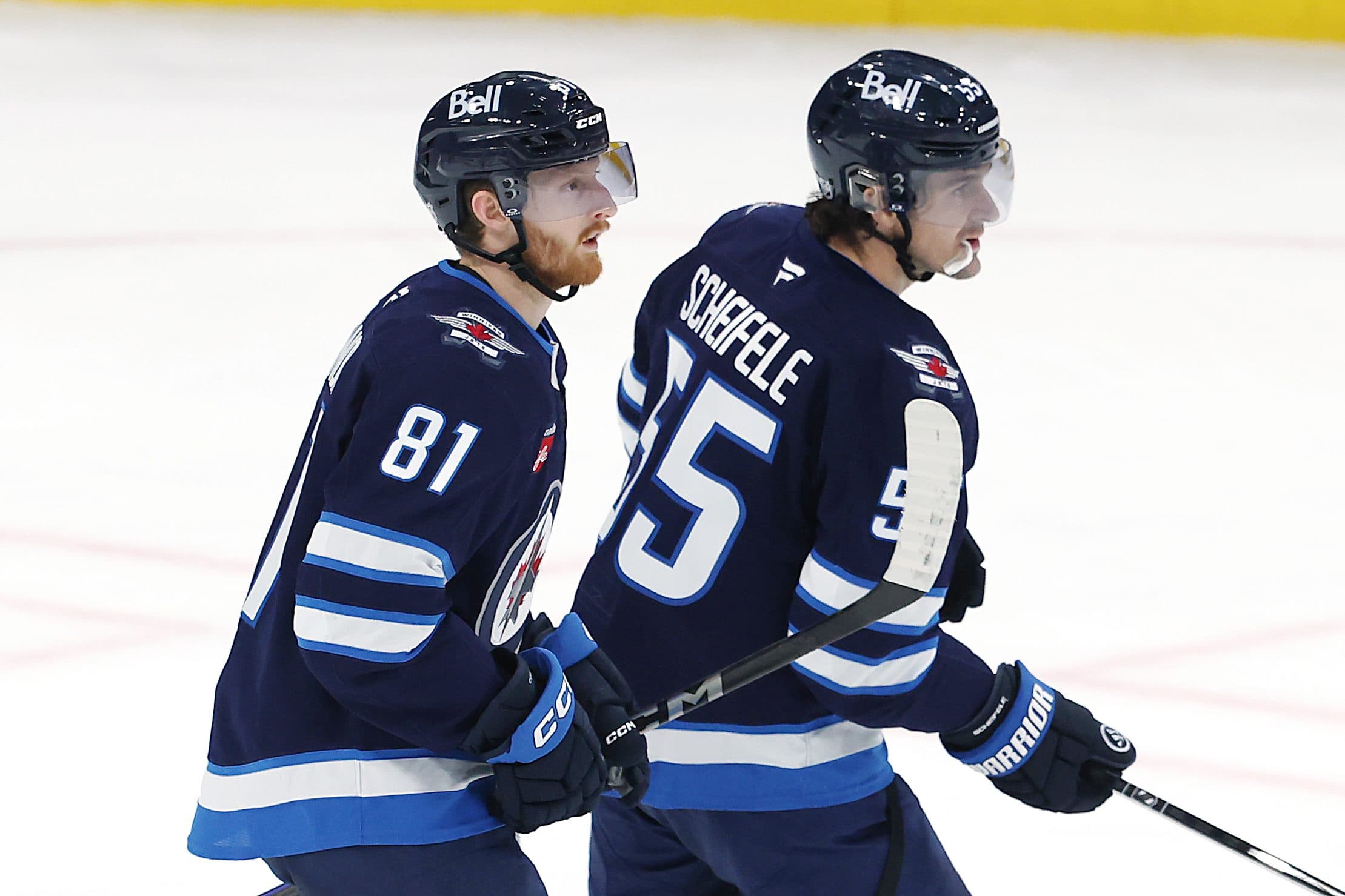
Winnipeg’s biggest problem is one that has plagued them for many years: Kyle Connor and Mark Scheifele’s overall on-ice impact just isn’t good enough to be the top guys on a team, both in terms of deployment and salary. Scheifele’s contract at least looks fine now with the recent explosion in the market, but Connor signing right after Kirill Kaprizov set it on fire put the Jets in a situation where they overpaid to retain the goal-scoring winger. Don’t get me wrong, Connor is a great goal scorer, and he’s done a better job at not relying on the power play and empty net points to inflate his numbers, but I’m not sure if it’s enough to justify having him as the ninth-highest paid forward in the league. Again, it more comes down to bad timing, and with Winnipeg’s market situation, they’ll lock in anyone they can, but it does hurt some of their categories here. Josh Morrissey only having two years left on his deal doesn’t help either.
PRESENTED BY THE DAILY FACEOFF NEWSLETTER

Recently by Scott Maxwell

