When star goalies get traded in their primes: A case study

Congratulations to Connor Hellebuyck. After a public trade request and holdout, the star goaltender finally escaped the wintry wasteland of Winnipeg to reach the sunny climes of… Newark, New Jersey? OK, Hellebuyck’s move from the Winnipeg Jets to the New Jersey Devils may not have gotten him the palm trees and tax breaks that have been so en vogue for NHL players lately, but the 33-year old might just be the final piece for a talented young team that has been trying to get over the proverbial hump for years now.
Will the deal put the Devils over the top? Will it help nourish a successful new era for the Jets? Well, there’s already been sharp analysis on the trade as we still sit in its aftershock, but truly, none of us can see the future, and only time will give us a definitive answer. In the meantime, maybe the best we can do, as a wise mandrill once said, is learn from the past.
So, to map out the possible outcomes of this Jets-Devils deal, let’s look back at six times since over the past 25 years that an established, star-level goalie of Hellebuyck’s stature was traded in his prime.
2014: Sabres trade Ryan Miller to the Blues
The Deal: Buffalo sent Miller, along with forward Steve Ott, to St. Louis in exchange for goaltender Jaroslav Halak, forwards Chris Stewart and William Carrier, a first-round pick, and a third-round pick.
Why did it happen?: Miller was still playing at an elite level entering the 2013-24 season, but the Sabres had missed the playoffs in each of the previous two years and were seemingly headed in a direction that would be of no interest to a 33-year-old goaltender. The 2010 Vezina Trophy winner was in the last year of his contract, so the writing was on the wall for Buffalo to move him at the deadline before he bolted in free agency. There was plenty of speculation (and paranoia in Buffalo) at the time that Miller wanted to play in California in order to be closer to his wife, actress Noureen DeWulf. Moving to St. Louis didn’t help much in that regard, but Miller eventually completed his manifest destiny by finishing his career with the Anaheim Ducks.
How did it work out for the Blues?: Pretty rough. Miller was supposed to be the equalizer that would help the Blues beat the likes of the Blackhawks and Kings in the Western Conference at the time. Instead, he was mediocre to finish that regular season and was outplayed by Corey Crawford in St. Louis’ first-round playoff loss to Chicago. Then the Blues watched Miller sign with the Canucks as an unrestricted free agent that summer.
How did it work out for the Sabres?: Honestly, not that much better. Neither Stewart or Carrier stuck with the Sabres for long (though they did flip Stewart to the Wild for the pick that became current starting goaltender Ukko-Pekka Luukonen), and that 2015 first-rounder was sent to the Jets as part of the deal that netted them Evander Kane, who turned into another headache for Buffalo.
How similar is this to the Hellebuyck situation?: I mean, the idea of a 33-year-old American goalie wanting out of a small Canadian (or honorary Canadian, as is the case with Buffalo) market sounds pretty familiar to Jets fans these days, but the Miller trade was pretty typical contract-year, deadline-rental stuff. Hellebuyck, on the other hand, forced his way out while still in just the third season of a seven-year, $59.10-million deal that New Jersey will now absorb. Plus, the Sabres were much more obviously in a downturn than the current Jets are.
2006: Panthers trade Roberto Luongo to the Canucks
The Deal: Florida sent Luongo, along with defenseman Lukas Krajicek and a sixth-round pick, to Vancouver in exchange for forward Todd Bertuzzi, defenseman Bryan Allen, and goaltender Alex Auld.
Why did it happen?: Luongo had emerged as a bona fide star in Florida, but the two sides couldn’t agree on a long-term extension upon the expiration of Luongo’s entry-level deal during the 2004-05 lockout. Luongo played the 2005-06 season for the Panthers on a one-year deal that was awarded via arbitration, while turning down a five-year, $30-million offer from Florida in January of that season. Despite Luongo later saying that he “thought we were going to get something long term” with the Panthers, Florida general manager Mike Keenan decided to trade the 27-year-old goalie to the Canucks before he became an unrestricted free agent in July of 2006.
How did it work out for the Canucks?: So good. Almost perfect, actually. In 10-plus seasons in Vancouver, Luongo won one Jennings Trophy and finished in the top five for Vezina Trophy voting three times. Heck, he was even a rarely seen goalie captain for a couple years there. Unfortunately, he had trouble consistently raising his game in the playoffs, falling short of winning a Stanley Cup despite being on some loaded Sedin-led teams.
How did it work out for the Panthers?: It’s hard to expect much from a trade made just days before a player hits free agency, and this was no exception. Bertuzzi played just seven games for the Panthers before going down with injury and getting shipped to the Red Wings. Allen had a decent four-plus year stretch on some bad Panthers teams. Auld was beaten out by Ed Belfour for Florida’s starting job in the 2006-07 season, and then literally beaten so badly by Belfour he had to go to the hospital. Or, sorry, they were just “horsing around.”
How similar is this to the Hellebuyck situation?: From an age and contractual standpoint, Luongo was at a completely different part of his career. If anything, it’s closer to the goalie version of the Mitch Marner trade between the Leafs and Golden Knights. But if you squint, these Devils aren’t too dissimilar to those Canucks.
2001: Sabres trade Dominik Hasek to the Red Wings
The Deal: Buffalo sent Hasek to Detroit in exchange for forward Vyacheslav Kozlov, a first-round pick, and future considerations.
Why did it happen?: By 2001, the Dominator was undeniably the best goalie in the world. He had just won his sixth Vezina Trophy in the 2000-01 season, took the Sabres to the Stanley Cup final in 1999, and won an Olympic gold medal with Czech Republic in 1998. He was also 37 years old, and without a Stanley Cup. Hasek informed Sabres general manager Darcy Regier that he wanted to play one more year on a true Cup contender, and Detroit was looking for an upgrade over Chris Osgood.
How did it work out for the Red Wings?: Exactly as planned. Hasek helped the Red Wings win the third Stanley Cup of the Yzerman era in 2002, going 16-7 in 23 playoff starts while putting up a brilliant .920 save percentage and 1.86 goals-against average. He wound up playing three more seasons with Detroit after that, interspersed with a retirement, the 2004-05 lockout, and a stint with the Ottawa Senators.
How did it work out for the Sabres?: About as well as could’ve been expected, which is to say not great. Kozlov, a former member of the Red Wings famous Russian Five, played just 38 games with Buffalo before getting dealt to the Atlanta Thrashers. That first-round pick was packaged along with forward Mike Pandolfo to trade up and select forward Daniel Paille in the 2002 draft. Nothing came of those ‘future considerations.’
How similar is this to the Hellebuyck situation?: Hasek left the Sabres to ring chase at the tail end of his career, which is a pretty easy motive to understand. Hellebuyck’s motivations are a lot murkier. At 33, he’s too young to ring chase, especially for a goalie. Even he were, the present-day Devils are a far cry from the 2001-02 Red Wings.
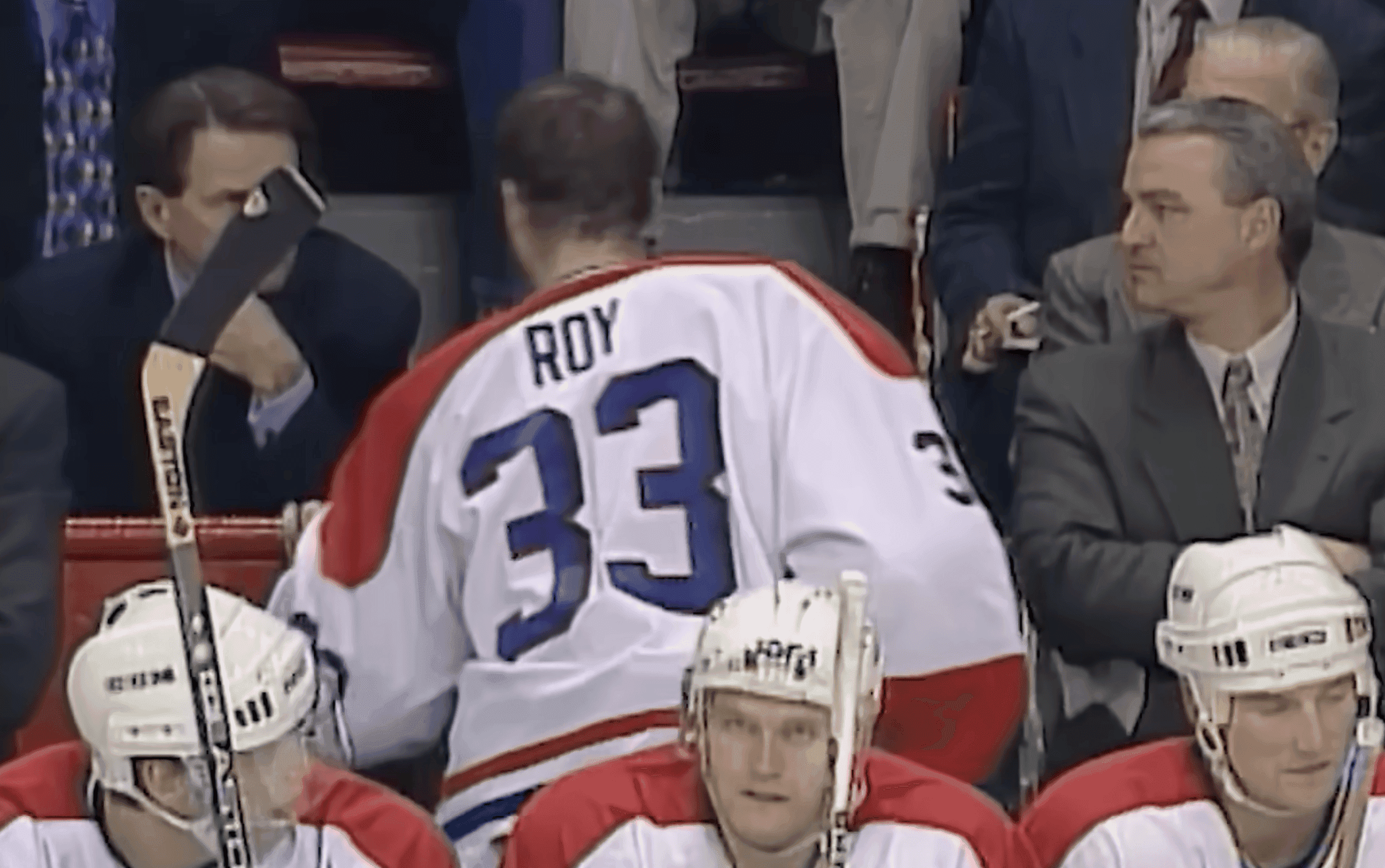
1995: Canadiens trade Patrick Roy to the Avalanche
The Deal: Montreal sent Roy, along with forward Mike Keane, to Colorado in exchange for forwards Martin Rucinsky, Andrei Kovalenko, and goaltender Jocelyn Thibault.
Why did it happen?: This side of Wayne Gretzky tearing up on his way out of Edmonton, this is probably the most infamous trade in NHL history. Roy and new head coach Mario Tremblay weren’t exactly getting along, and a December home game against the Red Wings turned out to be the last straw. After giving up nine goals on 26 shots, Roy was furious that Tremblay hadn’t pulled him from the game earlier, and Roy told Canadiens president Ronald Corey, “It’s my last game in Montreal” when he finally got the hook in the second period. Four days later, the Habs pulled the trigger on the deal that sent their 30-year-old franchise goaltender to the Avalanche.
How did it work out for the Avalanche?: Tremendously. Colorado was an up and coming superpower having just relocated from Quebec. Roy turned out to be the final piece required to launch a quasi-dynasty, as he won two Stanley Cups over seven-plus seasons with the Avalanche, finishing top five in Vezina Trophy voting five times.
How did it work out for the Canadiens?: Roy’s ultimatum made it nearly impossible for Montreal to get an equal-value return in the deal. Thibeault started for the Habs for a few years before getting dealt to the Blackhawks, and Rucinsky was actually solid player in Montreal for seven-plus seasons. Kovalenko played out the remainder of that season for the Canadiens before getting traded to Edmonton.
How similar is this to the Hellebuyck situation?: Unsurprisingly when it comes to Roy, this situation was a lot more emotional and embittered than the Hellebuyck situation seems to be. And I don’t think anyone believes the Devils are a Connor Hellebuyck away from turning into the late-90s Avalanche.
1997: Blackhawks trade Ed Belfour to the Sharks
The Deal: Chicago sent Belfour to San Jose for goaltender Chris Terreri, forward Ulf Dahlen, defenseman Michal Syroka, and a conditional second-round pick.
Why did it happen?: As should come as no great surprise, tensions involving Belfour had begun to brew in Chicago. The 31-year-old goalie was reported to have had a spat with backup Jeff Hackett, and Belfour was in the final season of his contract. With the two sides having difficulty agreeing on an extension, the Blackhawks shipped the two-time Vezina winner to the Sharks in January of 1997.
How did it work out for the Sharks?: Disastrously. Belfour was dreadful in 13 starts for San Jose, going 3-9-0 with a .884 SV% and a 3.41 GAA, before leaving for the Dallas Stars as a free agent that summer. In retrospect, it’s bizarre they traded for Belfour in the first place.
How did it work out for the Blackhawks?: Pretty much a nothing burger. Terreri, Dahlen, and Syroka all had negligible stints in Chicago, and that second-round pick never got conveyed.
How similar is this to the Hellebuyck situation?: Not at all. San Jose snagged Belfour in a desperation rental that blew up in their face, whereas Hellebuyck is a relatively long-term play for New Jersey.
1995: Blues trade Curtis Joseph to the Oilers
The Deal: St. Louis sent Joseph, along with forward Mike Grier, to Edmonton in exchange for two first-round picks.
Why did it happen?: Joseph broke out as an elite goalie in the early ’90s, finishing top five in Vezina voting in 1993 and 1994, and famously backstopping the Blues to the brink of an upset over the Leafs in the ’93 Campbell Divison finals. He had a slightly disappointing 1994-95 season, however, and then played poorly in a first-round loss to the Canucks in the ’95 playoffs. Keenan, then St. Louis’ general manager, decided to pivot away from the 28-year-old goalie. The Blues signed veteran Grant Fuhr in free agency before moving Joseph to the Oilers.
How did it work out for the Oilers?: Well, it got off to a pretty weird start. After trading for Joseph’s rights, the Oilers couldn’t agree on a contract with their new netminder and instead rolled with Bill Ranford as their starter to begin the 1995-96 season, forcing Joseph to go play with the Las Vegas Thunder of the IHL. In January of 1996, Edmonton finally capitulated and signed Joseph while trading Ranford to the Bruins. Joseph had a strong two-plus seasons with the Oilers before leaving for the Leafs as a free agent in 1998.
How did it work out for the Blues?: Not terribly, honestly. Fuhr led St. Louis to four straight playoff appearances while playing pretty well through his mid-30s. One of those picks was used on forward Marty Reasoner, who would later get flipped to the Oilers in the Doug Weight trade. The other pick was sent to the Kings for 18 games of Gretzky in 1996.
How similar is this to the Hellebuyck situation?: This is the first case we’ve looked at in which the team clearly initiated the parting of ways, which is certainly different than the Hellebuyck situation. Probably not a lot of lessons here for Jets or Devils fans.
Takeaways
If you’re a Jets fan, this isn’t the most auspicious history. There’s not one example of a team trading their star goalie and getting a franchise-rejuvenation bounty in return, with the Blues probably making out the best with the Joseph deal. Though you argue Winnipeg’s return for Hellebuyck is better than anything here.
For Devils fans, you’re hoping for something close the Luongo situation. Even though Luongo was six years younger than Hellebuyck is now, today’s Devils are relatively close to the mid-2000s Canucks, with a clutch of promising young players who could use an elite goaltender to bring them up to contender status.
_____
POST SPONSORED BY bet365