Five NHL players off to unsustainably cold starts in 2026-27

Now that we’ve reached the quarter mark of the NHL season, we can begin drawing takeaways from what’s happened thus far. When teams have only played a handful of games, it’s tough to properly analyze what’s happening because it could be a step forward in a player’s career just as much as it could be a hot start. Now that we can finally distinguish between the two, let’s break down some of the players and teams off to surprisingly hot or slow starts driven by luck, which will probably return to normal later in the season.
After examining the hot starters earlier this week, it’s time to look at the players off to slow starts who we’re used to seeing more production from. Of course, luck isn’t always consistent, and sometimes a cold start can stretch out to an entire season. But just note that the players mentioned below are currently playing below their expected levels.
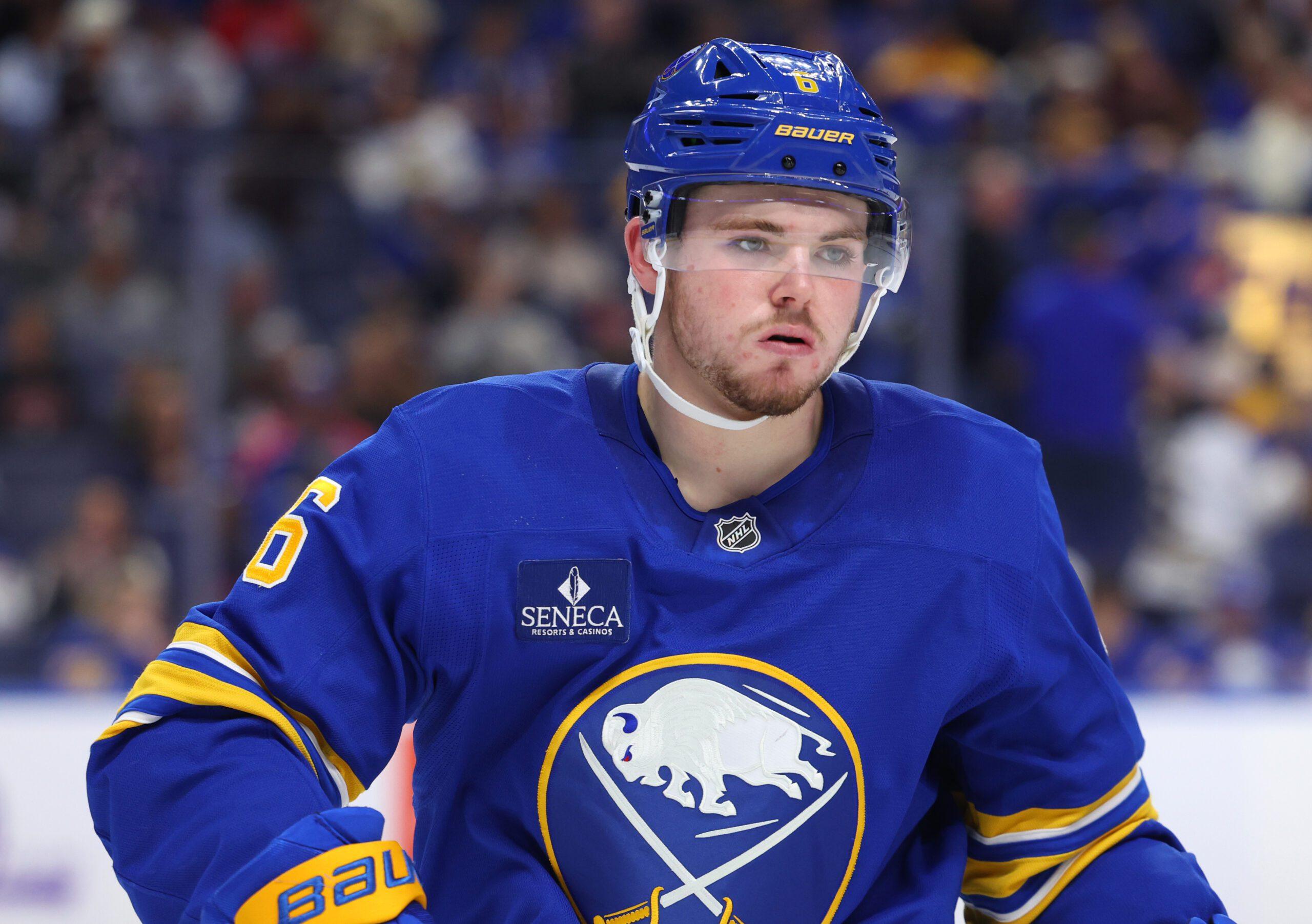
Zach Benson, Buffalo Sabres
Stats: 21GP, 2G, 14A, 16P
On a Sabres team whose return to the playoffs was one of the top stories of the 2025-26 season, Benson’s breakout was one of the biggest stories. Fans fell in love with him, as his combination of skill, defensive smarts and snarl made him an ideal all-around player, particularly in the playoffs. He’s a weird addition to this list because, based purely on output, he’s actually performing better than last season: his 16 points in 21 games would project to 49 points over 65 games, as opposed to the 43 he got last year. Especially since the other breakout from last year on the Sabres, Josh Doan, is struggling even more with just six points, why is Benson getting the attention?
The reason is because there is an unsustainability to his game, and that comes from having only two goals on the year. While Benson has never been known for scoring goals so far in his NHL career (last year’s 13 were a career high), he’s actually producing shots and individual expected goals at the highest rates of his career so far this season. He’s already generated 8.98 individual expected goals, indicating that he should have a lot more than two so far. But a 3.9% shooting percentage, which is 5.5% lower than his career average, is causing him to fall below expectations so far. Compare that to Doan, who is shooting only 1.8% lower individually and has an on-ice rate that is 1.59% lower, and it’s clear that his performance is actually just a drop-off in play, not because of luck like Benson’s.
Quinton Byfield, Los Angeles Kings
Stats: 17GP, 5G, 2A, 7P
Expectations were high for Byfield this season, as the 2020 second-overall pick was finally going to take over from the retired Anze Kopitar as the Kings’ top center. Obviously people weren’t expecting Byfield to hit the same highs as Kopitar, especially not this season, but at the very least another step forward in Byfield’s career would have been nice. But like the team as a whole, Byfield has fallen short of those expectations and is producing at the rate he did before his breakout 2023-24 season.
Thankfully for Byfield and the Kings, this is less an issue of Byfield’s play and more just a symptom of bad luck. While his individual shooting percentage is on par with his career (11.1% this season vs. 12% in his career), the performance of his teammates seems to be letting him down. His 5v5 on-ice shooting percentage is just 4.42%, and despite the fact that the team is generating 2.72 5v5 expected goals for per 60 when he’s on the ice, they’re only scoring 1.35 5v5 actual goals per 60. That will certainly cut your production down to just two assists. There aren’t too many signs that Byfield has taken a step forward, but he hasn’t taken a step backward like his numbers indicate. Expect him to return to form over the rest of the season, especially as the Kings finally get all their forwards back and can surround him with proper talent.
Jet Greaves, Columbus Blue Jackets
Stats: 11GP, 2-8-0, .875 SV%, -1.5 5v5 GSAx
Greaves had an excellent breakout season in 2025-26, living up to the hype surrounding him going into the year and emerging as the Blue Jackets’ goalie of the future. With a .908 save percentage and 19.18 5v5 goals saved above expected, all signs pointed to Greaves being one of the better goalies in the league for years to come, and potentially even becoming one of the top options for Canada in international competition. But this season has been a massive step back, as his .875 SV% is by far the worst output of his career, and he’s losing the starting goalie role in Columbus to 39-year-old Cam Talbot.
But here’s where concerns about Greaves can be alleviated: under the hood, he’s still performing fine, or at least better than his boxcar stats suggest. His -1.5 5v5 goals saved above expected isn’t great, but it is much better than you would expect from a goalie with an .875 SV%. The driving force behind his low save percentage just stems from the Blue Jackets’ performance as a whole; they are the sixth-worst team in 5v5 expected goals against per 60. Now, goaltending isn’t as guaranteed to bounce back like skater performance is, because sometimes a goalie just loses their game and that’s it. But considering Greaves is only 25, I’d expect this to be just a blip in his prime years and not already a sign of decline.
Juraj Slafkovsky, Montreal Canadiens
Stats: 22GP, 2G, 12A, 14P
Slafkovsky will always have high expectations, not just because he plays in one of the league’s top markets, but because he comes with a first-overall pedigree. Even if the 2022 draft was weaker, Slafkovsky’s draft position will always draw comparisons to other top picks like Rasmus Dahlin and Jack Hughes before him or Macklin Celebrini and Matthew Schaefer after him, even if Slafkovsky doesn’t have the same ceiling. He came awfully close to hitting that ceiling in 2025-26 with 30 goals and 73 points, but he has since taken a step back to where he was in prior seasons, producing two goals and 14 points – a seven-goal, 53-point pace for the season.
Fret not, Habs fans. While his performance this season hasn’t quite hit the highs of 2025-26, it’s not this bad. In fact, his 1.13 individual expected goals per 60 is the second-best rate of his career, and with 7.58 generated overall, he should have more than just two goals. Shooting just 4% when your career rate is 13.3% will certainly drop your totals. If there is one concern with his performance, the Canadiens as a unit are producing fewer 5v5 expected goals for per 60 with Slafkovsky on the ice than they have in the three years prior, but we’re talking about a difference of 2.77 this season compared to rates in the range of 2.83-2.89 before. Even then, his 8.84% 5v5 on-ice shooting percentage is still a bit below his career total of 10.27%. At 22, there’s still plenty of growing room for him as a part of Montreal’s core.
Logan Thompson, Washington Capitals
Stats: 14GP, 7-6-0, .885 SV%, -1.23 5v5 GSAx
Just as it looked like Canada’s crease problems were starting to improve, this season has put them back in disarray. First we talked about Greaves’ step back after many expected him to be one of the future options for Canada, and now Thompson, who was thought of as a safe option right now and in future tournaments, is also underperforming. After two impressive seasons with Washington showcased him as one of the league’s most underrated goaltenders, this season has been a disaster for Thompson, as his .885 SV% is the worst rate of his career. In fact, it’s the first time he’s dropped below .908. Is it time to panic in Canada?
Thankfully, like Greaves, Thompson’s performance is more due to the sloppiness of the team in front of him than a sign of decline on the netminder’s end. Again, a -1.23 5v5 GSAx isn’t great, but it’s far better than what you would expect from a starting goalie with an .885 SV% to have. The reality is, the Capitals have been horrible defensively in front of him, as they allow the seventh-most 5v5 expected goals against per 60. That gives Thompson a 5v5 expected Fenwick save percentage of 93.06%, the third lowest among goalies with at least 10 games. Washington is throwing Thompson to the wolves right now, and he’s struggling as a result. Some of that is due to injuries on the Capitals’ blueline, with both Vincent Desharnais and Rasmus Sandin out long term, but even then, the team was expected to perform better this season. The fact that Thompson is 29 is a slight cause for concern, as goalies can fall off at any time once they approach their 30s. But all signs point to Thompson’s struggles being a product of his environment, not his talent.
All advanced statistics courtesy of Evolving Hockey unless stated otherwise.
_____
PRESENTED BY DAILY FACEOFF GEAR

Daily Faceoff has new merch. Rep the game you love with premium Nation Gear x Levelwear tees, hoodies, hats and layers — designed for hockey fans on game day and every day. The home for hockey fans.
SHOP DAILY FACEOFF → nationgear.ca
Recently by Scott Maxwell
- Five NHL players off to unsustainably hot starts in 2026-27
- Home gauntlet has proven Leafs are far from Stanley Cup contention – and maybe even the playoffs
- Has Elias Pettersson finally returned to form for the Canucks?
- Kirill Kaprizov’s hot start is more sustainable than you think
- Gavin McKenna and Ivar Stenberg are living up to early career expectations