With Matthews on the clock, Chayka has gone all in with first Leafs’ offseason

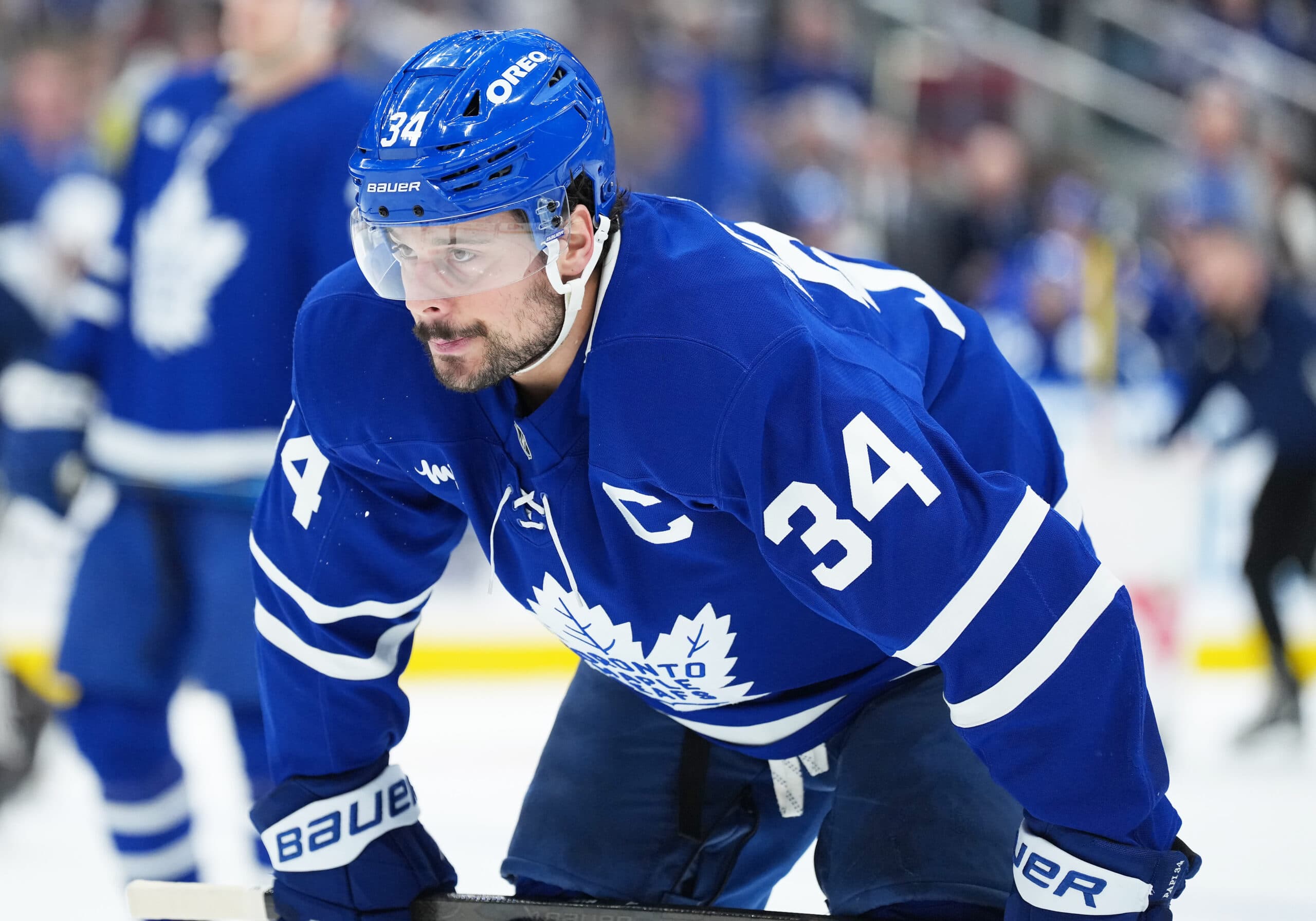
It’s still hard to believe how quickly the scope of the Toronto Maple Leafs‘ offseason changed.
A disastrous 2025-26 season which saw the Leafs finish with the fifth-worst record in the league created many questions for their future. Mitch Marner was already gone, there were questions surrounding Auston Matthews’ future, and there was potential the Leafs could give their division rivals in the Boston Bruins a sixth- or seventh-overall pick in the 2026 NHL Draft, with another first-round pick having to go to the Philadelphia Flyers in the next season or two.
All this reached a boiling point when John Chayka was initially hired as general manager on May 3. The press conference announcing his and Mats Sundin’s hirings the following day was as close to a disaster as it could be, with Maple Leafs Sports & Entertainment CEO Keith Pelley giving questionable answers regarding the hiring process and The Toronto Sun’s Steve Simmons berating Chayka’s character in front of his family. For any fan hoping for a swift turnaround during a pivotal point of this era in Leafs history, this was not a great start.
The Leafs’ mission was clear: make the most of Matthews’ final two years of his contract and hope it’s good enough to convince him to stay beyond it. But it wasn’t going to be easy. Toronto had lots of cap space going into the offseason, but a dwindling free agency pool left them very few options to work with. The trade market had plenty of options, but the Leafs had limited assets to move. The Leafs needed a miracle.
And then the day after the disastrous introductory press conference, the final lottery ball was No. 12, and everything changed. Now with Gavin McKenna in the picture, the Leafs’ chances of turning things around were not only possible, but probable. Inserting a player with the upside of Nikita Kucherov or Patrick Kane alongside the best goal-scorer of the last 10 years could rejuvenate a Leafs’ top-six forward group which felt underwhelming without Marner. It wouldn’t solve all the Leafs’ problems, but it was a great start. All they needed now was to make the right moves to fill out the edges of their roster, and make the team more well-rounded compared to last season’s, while also maximizing this two-year window. Risks needed to be taken, something Toronto had failed to do for the past three seasons with Brad Treliving.
Chayka clearly didn’t want to make the same mistake.
In an effort to overhaul the group surrounding the core, the Leafs were one of the busiest teams in the summer. Before the draft, they dealt Joseph Woll and Simon Benoit (with Emil Andrae as part of the return), and acquired the signing rights to Darren Raddysh. During the draft, Toronto cut bait on the sunk cost fallacy who was Brandon Carlo, and also moved on from Nick Robertson. Come free agency, the Leafs added Sergei Bobrovsky in net and loaded up their depth with Teddy Blueger, Brandon Duhaime, Jack Roslovic and Colton Sissons, in addition to acquiring Nick Paul. There were also rumours of the possibility of acquiring Zach Werenski, but that did not come to fruition.
To say Chayka made his mark on the team quickly would be an understatement. Not even three months into his tenure, he’s made six trades and five signings which impacted the NHL roster, and now 36 percent of the Leafs roster is composed of his additions (not counting McKenna). Sure, the hiring of Jim Hiller as head coach felt like a conservative approach. But even then, bringing in the guy who coached a Los Angeles Kings team with the best defensive metrics during his tenure (2.33 5v5 expected goals against per 60 minutes from 2023 to 2026) and ran a top-five power play unit as an assistant coach with the Leafs may have more promise than initially thought.
While Treliving’s biggest flaw was making moves that confused many about the team’s vision, Chayka’s vision is much clearer thus far. The Leafs needed more options on their blueline in terms of puck movement and offense (especially on the power play), so he swung for the biggest fish he could get without giving up assets in Raddysh, and also added a younger option with upside in Andrae. The Leafs needed more stability in net from an availability standpoint while also creating some space in a crowded pipeline and got the consistently healthy Bobrovsky while moving on from Woll and Dennis Hildeby. Toronto’s depth was inconsistent at both ends of the ice (which in turn forced Matthews to face the toughest minutes in the league over the past two seasons and hinder his production), so Chayka acquired bottom-sixers known for their defensive ability AND their speed, creating more versatility and potentially allowing Matthews to play a more offensive role again.
That’s not to say Chayka’s moves were perfect. In fact, most of them come with high ceilings and low floors. Raddysh could be the puck-mover and power play shot the Leafs’ blueline needs, but signing him for $8.5 million a year for a majority of his 30s when he has only one season at this level of play is a risk. Bobrovsky has one of the best resumes of any goaltender in the 2020s, but he’s also entering his age-38 season and coming off of a very poor season with an .877 save percentage and -5.19 5v5 goals saved above expected. Each depth signing on its own is fine, but as a collective whole, was it wise to commit $16.5 million to all of them for multiple years and bring the Leafs above the salary cap on the first day of free agency, leaving them little flexibility to make more additions this summer?
If the Leafs have more or less wrapped up their moves for the summer, it’s easy to see where this can go very well and where it can go very wrong. But it’s also easy to see why this was done: the stakes are at an all-time high as they try to convince arguably the best player in franchise history to stay with them. For now, Matthews isn’t counting his days in Toronto, but the Leafs aren’t in the clear yet either. But the pleasant surprise of McKenna joining this mix not only put the Leafs in a much better position to turn things around, it also lowers the stakes of Matthews’ eventual decision.
McKenna gives Matthews the playmaking winger he’s needed since Marner’s departure, and perhaps McKenna’s skillset may even prove to be what the Leafs need in the playoffs. If he gets Matthews back to scoring 50-60 goals a season, it could keep the captain happy and in Toronto. And if he stays, McKenna acts as a much-needed second wave for the Core Four along with Matthew Knies and (depending on development) Easton Cowan. Before that, the Leafs’ competitive window was clinging on to a 30-year-old William Nylander and soon-to-be 29-year-old Matthews, especially with Marner out of the picture and John Tavares entering his age-36 season and past his prime (but god does he still try his best not to be). Now, there are players whom the old core can eventually pass the torch to.
What McKenna also provides the Leafs is a solid backup plan should Matthews look to leave in the next couple years. Before McKenna, Matthews’ departure would have led to a bleak point for the Leafs, as years of trading picks and prospects to chase the Stanley Cup left them with a depleted cupboard, one which would require a lengthy rebuild to properly restock before contending again. And that’s even if they knew with enough notice to trade Matthews and Nylander and get a good return for them. With McKenna, the Leafs already have a key piece for their next core, and with Knies and Cowan also possibilities to join that group, it means a rebuild may only need a couple seasons to get the team back on track.
Suddenly, those concerning risks surrounding the Leafs’ offseason moves feel much more tolerable. If the best-case scenario happens, all is well. But now the worst-case scenario isn’t a bleak future which the Leafs can’t come back from. McKenna gives them a much-needed safety net to work around.
Was the Leafs offseason exactly what I had in mind? Of course not. I would have targeted the much more established John Carlson as the Leafs right-shot top-four defenseman, especially when he signed for the same cap hit as Raddysh for only two years (there’s probably a reason the Tampa Bay Lightning replaced Raddysh with Carlson). I would have given some time to see what came out of the goaltending group of Joseph Woll, Artur Akhtyamov and Hildeby before moving on from one of the younger goalies instead of spending a ton of money on an aging Bobrovsky. I probably would have looked to add some savvy depth scoring in players like Oliver Bjorkstrand, Patrik Laine or Eeli Tolvanen instead of allocating it all to defensive forwards. It certainly felt like the safer way to go this season while still giving the team the kind of upside a lot of Chayka’s moves did anyway – though it might still be possible to add another piece depending on Max Domi’s LTIR situation and/or a freeing up cap space with a Morgan Rielly trade if it ever happens.
But at the end of the day, it’s easy to see a world where the Leafs’ risks pay off and give the team exactly what they need for the next two years. Without McKenna, most of Leafs Nation would be incredibly anxious about this last big swing at winning with this core before years of mediocrity. But with McKenna in the fold, the risks feel justified again. Toronto is trying to maximize what is left of their time with Matthews and the three years they have McKenna on his entry-level contract. And if it doesn’t work out, the future has a lot more hope than it did three months ago.
_____
SPONSORED BY bet365
Recently by Scott Maxwell
- Five NHL players in danger of negative regression in 2026-27
- Five NHL players who may benefit from positive regression in 2026-27
- The five best contracts signed in 2026 NHL Free Agency so far
- The five worst contracts signed in 2026 NHL Free Agency so far
- Buyer Beware: Which UFAs might get too much money and term this summer?