Five NHL teams off to unsustainably hot starts in 2026-27

Now that we’ve reached the quarter mark of the NHL season, we can begin drawing takeaways from what’s happened thus far. When teams have only played a handful of games, it’s tough to properly analyze a trend, because it could be a step forward in a player’s career or a team’s trajectory just as much as it could be a hot start. Now that we can finally distinguish between the two, let’s break down some of the players and teams off to surprisingly hot or slow starts driven by luck, which will probably return to normal later in the season.
After examining the hot- and cold-starting players earlier this week, it’s time to look at the teams off to hot starts that aren’t actually playing to that level. Of course, luck isn’t always consistent, and sometimes a hot start can stretch out to an entire season. And just because a team is listed below doesn’t mean they’re a bad team, just that they are currently playing above their expected level.
Edmonton Oilers
17-6-4, 53.34% 5v5 GF%, 47.57% 5v5 xGF%
After playing average hockey from top to bottom for the 2025-26 season, this year has seen the Oilers appear to return to the form that got them to the Stanley Cup Final in consecutive seasons. Connor McDavid, Leon Draisaitl and Evan Bouchard are scoring at borderline record-setting paces; controversial head coach Mike Babcock is getting them to play structured defensive hockey again; and they’re finally getting good goaltending from Devon Levi and Tristan Jarry. By all means, this looks like a squad that’s ready to contend, especially in a Pacific Division that looks like it will be a “pillow fight” again.
However, one glaring issue could hold the Oilers back from Cup contention again this season: their chance generation. Yes, I know I just talked about McDavid, Draisaitl and Bouchard scoring at extreme paces. However, the reality is that the Oilers are generating just 2.15 5v5 expected goals for per 60 minutes, the fourth-lowest rate in the league. Only the Philadelphia Flyers, Chicago Blackhawks and Vancouver Canucks are worse, and it’s not exactly a feat of wonder to be better than any of those teams this season. When the McDavid, Draisaitl and Bouchard trio are on the ice, things are normal with a 2.98 5v5 xGF/60 (which would rank third behind only the Carolina Hurricanes and Utah Mammoth). But when the trio is off the ice, the Oilers’ offensive problems become apparent: they generate just 1.61 5v5 xGF/60 in those minutes. Yes, those three play a ton of minutes for the team, but there’s still another half of the game where none of them is on the ice, and the team loses those minutes significantly. Edmonton needs to drastically improve their depth if they want to truly go toe-to-toe with the other Cup contenders.
Minnesota Wild
18-3-5, 65.72% 5v5 GF%, 54.32% 5v5 xGF%
If I had to pick one team on this list to have the best chance of winning a Stanley Cup this season, it’s probably the Wild. It’s clear how much adding Quinn Hughes to this lineup has drastically altered this team, as his dynamic offensive game has impacted Minnesota’s lineup, especially when Kirill Kaprizov, Matt Boldy and Joel Eriksson Ek are on the ice with him. When these four are on the ice, they generate a whopping 4.49 5v5 xGF/60. It’s an insane rate, and the impact of those four along with elite goaltending from Jesper Wallstedt has turned them into a force in the Western Conference.
The reason the Wild crack this list is because they just aren’t “Presidents’ Trophy” good like their record indicates, or at least based on their underlying play this season. A lot of that comes from Wallstedt’s performance. It’s not that the Wild’s defense is bad. In fact, I’d consider them an elite defensive team, as their 2.26 5v5 expected goals against per 60 is tied for fifth in the league with the New Jersey Devils. But if you looked only at their goals against, you’d consider them to be on par with the neutral zone trap-era Devils, not this year’s iteration. Minnesota’s 1.56 5v5 goals against per 60 is the highest in the league, and going back to the 2007-08 season, it’s tied with the 2011-12 St. Louis Blues for the lowest mark among any team in that span. Again, the Wild are really good, but they aren’t this good, so expect the trend to normalize a bit more over the course of the season.


Cap Summary
Draft Picks
Montreal Canadiens
14-7-4, 55.89% 5v5 GF%, 49.92% 5v5 xGF%
I’ve documented my pessimism for this Canadiens group for a couple of seasons, particularly since their run to the Eastern Conference Final last season had many ready to annoint them as Stanley Cup champions to be. While I do think the Habs have an excellent core and that, considering the contracts they’re locked into, they are poised to be an elite team for years to come, they still have plenty of issues to sort out. That pessimism is backed by the numbers too, as once again, they are slacking in their own end.
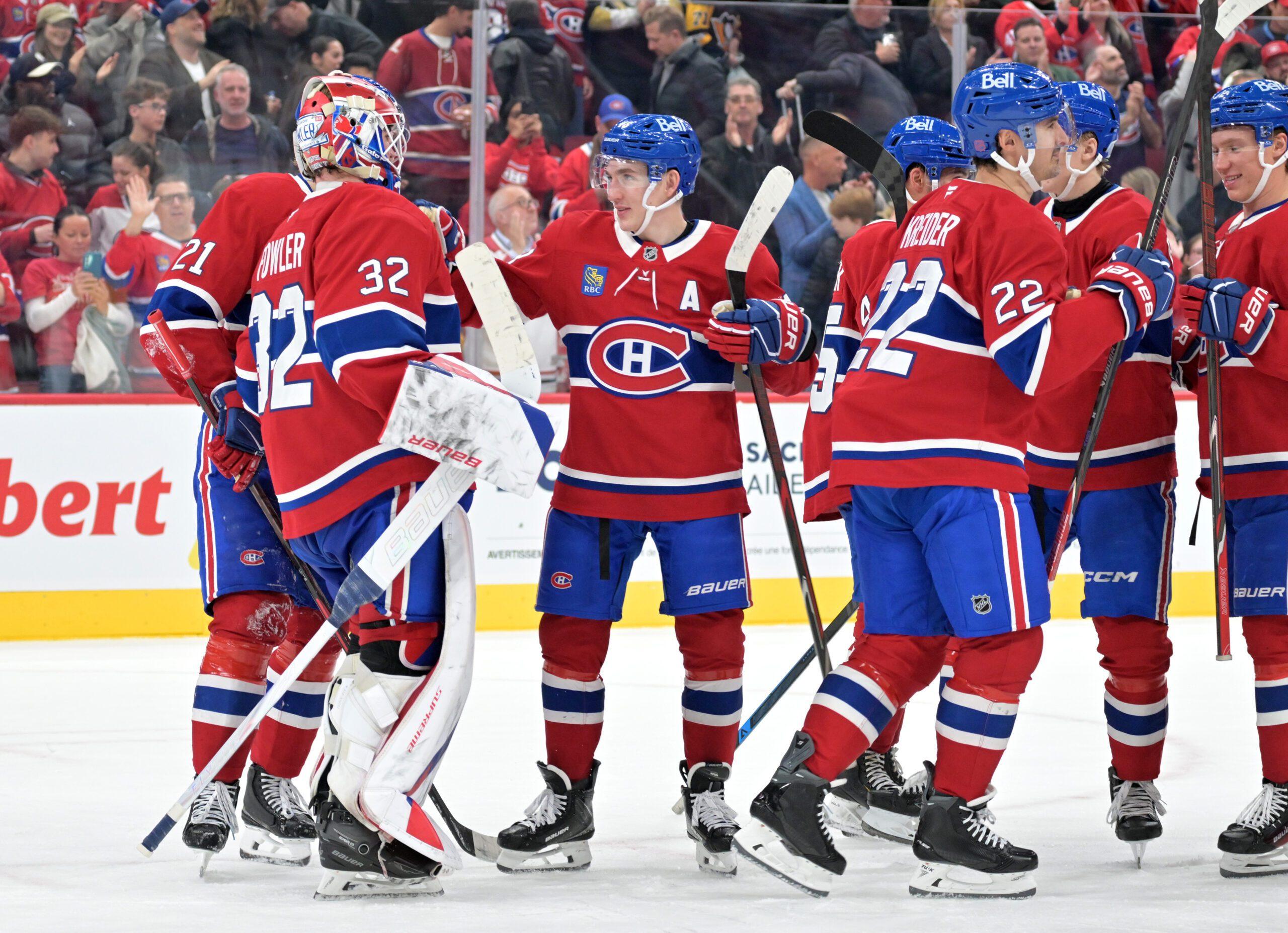
For a team with the reigning Selke Trophy winner in Nick Suzuki and one of the top defensemen in the league in Lane Hutson, the Canadiens have consistently struggled defensively, and this season is no different: their 2.62 5v5 xGA/60 ranks only 19th in the league. The most concerning part is that this is the best result the team has produced in five years under Martin St. Louis; their next lowest mark was 2.89. True Cup contenders are more structured defensively, which isn’t the Habs right now. Suzuki and Hutson can only do so much, and the fact that the number drops to 3.01 when both players are off the ice is a solid indicator that their depth is causing many of the problems there. Right now goaltender Jacob Fowler is masking a lot of those issues, and perhaps the Dylan Larkin addition will improve that, but it’s also a consistent trend under St. Louis. I’m willing to give him the benefit of the doubt regarding the improvement Montreal has made this season, but if this is the best defensive structure he can get from them, perhaps St. Louis doesn’t have the ability to instll that defensive discipline in this group.
New York Islanders
11-7-5, 55.3% 5v5 GF%, 49.69 5v5 xGF%
The Islanders have often played hockey that looks unsustainable by the numbers; the 2020 and 2021 teams that made runs to the final four weren’t exactly the elite of the elite. But those numbers were largely driven by a lackluster offense, and they at least made up for it with elite defensive play that could overwhelm their opponents. But while New York’s 55.3% 5v5 goals share suggests this group is playing high-level hockey, the underlying numbers say otherwise.
The Isles’ 2.2 5v5 xGA/60 is akin to the elite defensive totals that the team put up in the early 2020s under Barry Trotz. But unlike those teams, these numbers are not driven by defensive structure and discipline. Instead, it’s driven by elite goaltending, as Ilya Sorokin’s .917 SV% is fourth among goalies with at least 15 starts, and his 6.92 5v5 GSAx is fifth overall. To be fair, Sorokin is just that good, so the Islanders shouldn’t be fully discredited for having an elite goaltender playing normally. And considering that the end result of their defensive struggles (combined with their chance generation) is a 49.69% 5v5 xGF%, they’re playing well enough to remain in the playoff conversation, positioning them to benefit from the advantage a goalie like Sorokin gives them.
Seattle Kraken
11-9-1, 53.25% 5v5 GF%, 44.9% 5v5 xGF%
It’s hard to talk about the Kraken without mentioning how middling and lost this franchise has been since their iteration in 2021. Their lack of star talent is well-documented, and while they’ve certainly tried to change that in recent seasons, their inability to accept a rebuild as the path to true consistent contention has left the team in a state of mediocrity. They thought they had cheated the contention cycle again by going 7-3-1 to start the year, which had them sitting in fifth in the league at the time. But surprise surprise, everyone’s favorite mediocre team is still mediocre, and we’re already seeing them drift back to normal.
The Kraken have been getting an unsustainable amount of offense this season; while their 2.89 5v5 GF/60 ranks eighth in the league, their xGF/60 is only 2.3, the seventh-worst rate in the league. When 10 of your 21 regular skaters are outscoring their individual expected goals, that outcome is likely, especially when five of those (Berkly Catton, Frederick Gaudreau, Mackie Samoskevich, Kaapo Kakko and Ryker Evans) are outperforming it by roughly two goals or more. While Catton’s breakout has been a great story for a Kraken team in need of a star player, the rest of their offense just isn’t good enough to maintain this performance. They’ve also benefitted from some relatively soft wins, as only two of their 11 victories have come against teams with a 5v5 xGF% above 50%: the Mammoth and the Washington Capitals. Otherwise, their wins have come against very weak teams, including three against the Calgary Flames and two against the Detroit Red Wings. All that’s to say, this team isn’t suddenly a playoff team again, and their 4-6-0 stretch since that start indicates their regression to mediocrity has already begun.
All advanced stats courtesy of Evolving Hockey.
All player combination stats courtesy of Natural Stat Trick.
_____
PRESENTED BY DAILY FACEOFF GEAR

Daily Faceoff has new merch. Rep the game you love with premium Nation Gear x Levelwear tees, hoodies, hats and layers — designed for hockey fans on game day and every day. The home for hockey fans.
SHOP DAILY FACEOFF → nationgear.ca
Recently by Scott Maxwell
- Five NHL players off to unsustainably cold starts in 2026-27
- Five NHL players off to unsustainably hot starts in 2026-27
- Home gauntlet has proven Leafs are far from Stanley Cup contention – and maybe even the playoffs
- Has Elias Pettersson finally returned to form for the Canucks?
- Kirill Kaprizov’s hot start is more sustainable than you think

